Opening an Islamic online shop lets you serve buyers who want genuine attar, good prayer mats, Islamic books and thoughtful gifts without searching through crowded markets. This guide is for small attar and tasbih sellers, bookshop owners, panjabi labels and family shops in Bangladesh that already take orders on Facebook and want a proper website. We cover what to sell, how to list it honestly, how to pack fragile items and how to set up the store.
Running a shop like this is a little different from selling general goods. Buyers expect honesty about where a scent comes from and which edition a book is. They expect respectful handling of the Quran and religious texts. They also shop in strong seasonal waves around Ramadan, the two Eids and Hajj. A good plan, and a store that reflects these values, makes the difference between a one-time order and a loyal customer.
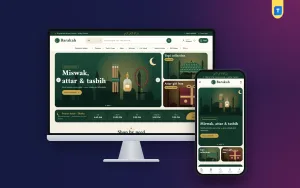
Our example store is built with Barakah – Islamic Store WordPress Theme. It is dressed in ivory, emerald and gold, with Amiri headings and girih patterns, and it is made for shops selling panjabi, jubba, topi, attar, miswak, tasbih, prayer mats, Quran stands, books, dates and gift boxes. It also includes a prayer times panel and a daily hadith reminder.
Who Buys From an Islamic Online Shop
Your buyers are wider than you might think. Young professionals look for a quality attar for Jumu'ah. Parents buy children's Islamic books and small prayer mats. Families send gift boxes of dates and attar to relatives during Ramadan. Men want panjabi, pajama and topi before Eid, and pilgrims look for travel prayer mats and tasbih before Hajj or Umrah. Many of them arrive on a phone from a Facebook post.
What unites them is trust. They want to know the attar is original, the book is a proper edition and the parcel will arrive in good condition. An Islamic online shop that answers these questions on the page, with clear descriptions and honest photos, earns repeat orders and recommendations within families and mosque communities, which is still the strongest marketing you can get.
Planning Your Range: Books, Attar and Prayer Items
Start with what you know well, then add related items. An attar seller can add miswak, tasbih and gift boxes. A bookshop can add Quran stands, prayer mats and children's activity books. A panjabi label can add topi, attar and pajama for a full Eid outfit. Keep the first range focused so you can stock it properly and describe every item with care.
Islamic books
For each book, list the title, author, translator, publisher, language and number of pages, and photograph the cover and a sample page. Buyers often want a specific translation, so say clearly whether a book is in Bangla, Arabic or English. Keep books in good condition, store them off the floor and wrap them carefully. Respectful handling of religious texts is part of the service buyers expect.
Attar, miswak and tasbih
Attar is personal, so describe each scent in simple words: woody, floral, fresh or sweet, and say how long it usually lasts on skin. Give the bottle size clearly. Avoid health or miracle claims about any product, and only call an attar original if you can stand behind its source. For tasbih, state the material and bead count, and for miswak say how to store it so it stays fresh.
Prayer items and gift boxes
Prayer mats, Quran stands and topi sell steadily all year. Give mat sizes and fabric details, and size topi by head size. Gift boxes are especially useful in Ramadan and Eid. A ready box of attar, tasbih and dates solves the problem of a buyer who wants something meaningful but does not know what to choose, and it raises the value of each order.
Honesty, Respect and Trust
In this market your reputation is your biggest asset. Write honest product pages, show real photos and keep prices clear. If a product is out of stock, say so rather than taking the order and delaying it. Answer messages politely, even when a buyer is unhappy. Many shops also choose to keep their branding calm and modest, without loud flashing banners, because buyers associate that calm with sincerity.
Write clear pages for delivery, returns and exchange, and explain how you handle damaged parcels. Mention whether you have a physical store and where it is. These pages take an hour to write and save many hours of repeated questions in chat. They also show new visitors that a real, accountable business stands behind the website.
Choosing an Islamic Website Template
A general shop theme can sell attar and books, but it rarely feels right. An Islamic website template should look the part from the first second, with colours, patterns and typography that match the products, while still working as a full store with checkout, payments and courier delivery. It should also handle faith content naturally, such as a reminder or prayer times, without turning the shop into a blog.
Check that the theme loads quickly on a phone, that you can change the homepage for Ramadan and Eid without code, and that it supports local payments and couriers. If WordPress is new to you, the WordPress documentation explains themes, pages and menus. Then open the demo on your own phone and imagine your products inside it.
Inside Barakah: An Islamic Online Shop That Feels Right
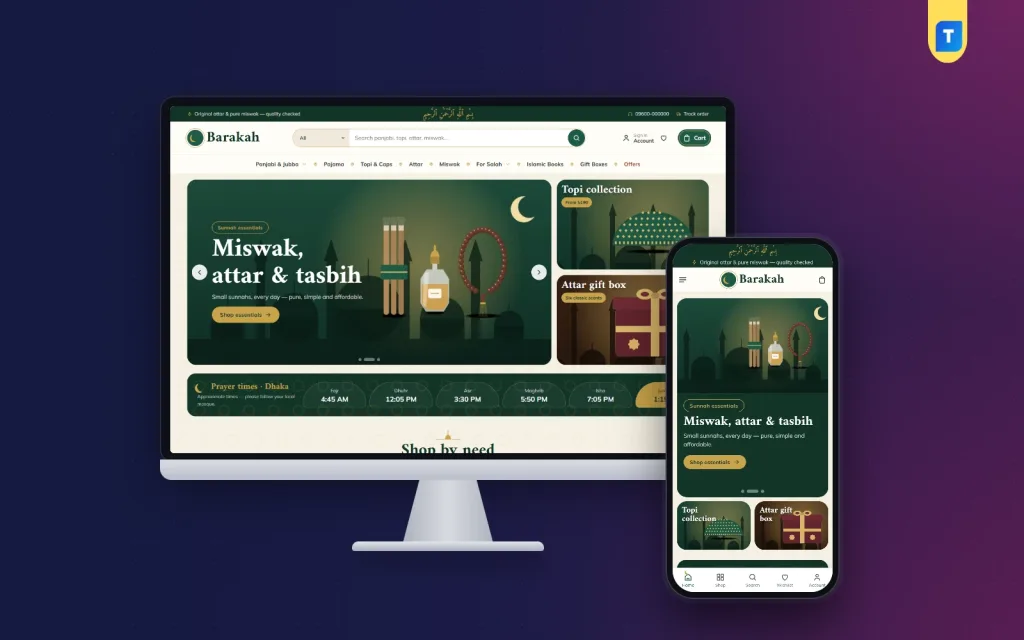
Barakah is a working store, not only a pretty front page. The bundled Themeve Commerce plugin runs the cart, checkout, payments and courier side, and a one-click demo fills the site with 43 sample products from 6 makers. Up top, a deep green bar carries the Bismillah line, which you can switch off. Below sit a crescent logo, a round search with a category picker and a menu with gold separators.

The desktop screenshot shows how this comes together. The demo menu lists Panjabi & Jubba, Pajama, Topi & Caps, Attar, Miswak, For Salah, Islamic Books, Gift Boxes and Offers. A night-sky hero slide with mosque silhouettes presents miswak, attar and tasbih as sunnah essentials, with side cards for a topi collection and an attar gift box. Beneath them, the prayer times panel lists the five daily prayers and Jumu'ah for Dhaka.
Prayer times and a daily reminder
The prayer times block lists the five daily prayers plus Jumu'ah. You type the times yourself in Theme Options, so there is no outside service involved. In the demo, a short note asks visitors to follow their local mosque. The daily reminder block shows a short hadith or ayah with its reference. Both give the homepage a respectful, familiar feel for regular visitors.
Shop by need, gift boxes and blessed moments
Shop by need uses four arch cards shaped like a mihrab to send people straight to what they came for. Round medallion categories cover panjabi, attar, tasbih and the rest of your range. The gift boxes block sets a banner beside your ready gift sets, and Blessed moments brings four picture cards for Jumu'ah, Ramadan, Eid, and Hajj & Umrah. Islamic lifestyle pulls in your latest three blog posts.
Twenty-two blocks you can reorder
The homepage has 22 blocks, and every one can be switched off and dragged into a new order. Put gift boxes on top before Eid and move prayer times higher in Ramadan. Selling blocks include today's offer with a countdown and stock bars, new arrivals, most loved tabs, popular this week, highly rated, three department blocks, small-price tiles, maker logos, a maker in focus and a grid with Load more.

Most buyers will arrive on a phone, often from a Facebook post. On small screens the header keeps only the menu, logo and cart, and product cards stay compact so two fit side by side. In the mobile screenshot, the Bismillah line and a quality note sit above the logo, and the topi and attar gift box cards line up under the hero. Visitors can sign in through a popup, and panjabi and topi have their own size guides.
Setting Up Your Store Step by Step
Go to Appearance, Themes, Add New, Upload Theme, choose the Barakah zip and click Activate. Open Barakah, Setup and install the bundled Themeve Commerce plugin in one click. Enter the licence key from your Themeve account in Barakah, License so updates arrive. Barakah runs on WordPress 6.0 or newer with PHP 7.4 or newer and is tested up to WordPress 7.1.
Run Barakah, Demo Import to load 43 sample products, posts, menus and every page, including About, Contact, Delivery, FAQ, Size Guide, Returns & Exchange, Track Order, Wishlist and Our Stores. Then open Theme Options to set your palette, Emerald, Madinah, Night, Oud or Sand, a font pair, your prayer times and the block order. Explore the live demo and the demo dashboard before you start.
Packing, Payments and Delivery
Customers can pay by bKash, Nagad, SSLCommerz, cash on delivery or manual payment, and you decide which appear at checkout. Checkout is a single page that ends with an Order placed popup, and the Track Order page lets buyers check their parcel without calling. Steadfast and Pathao courier are supported, and coupons, invoices, SMS and OTP and Telegram order alerts are included.
Packing needs extra care in this category. Wrap attar bottles in bubble wrap and seal the caps so nothing leaks onto books or fabric. Pack books flat in clean covers and keep religious texts away from anything that could stain them. Dates and food items should be sealed and dated. Confirm larger cash on delivery orders by phone, especially gift boxes being sent to another address.
Planning Around Ramadan, Eid and Hajj
Seasons shape this business more than almost any other. Start stocking for Ramadan at least a month early, with dates, prayer mats, Quran stands and gift boxes. Before Eid, push panjabi, topi and attar sets. Before Hajj season, highlight travel prayer mats, tasbih and small attar bottles. Barakah has the Facebook Pixel with Conversion API, so you can see which seasonal ads bring orders and adjust quickly.
Mistakes to Avoid
The most common mistake is vague listings: a book without its translator, an attar without a size, a tasbih without its material. Another is making claims you cannot prove, which damages trust quickly. Poor packing of bottles and books causes damage and refunds. Some sellers also leave Eid offers on the homepage weeks after Eid, or start Ramadan stock too late and run out in the first week.
Do not overlook the website itself. A loud, cluttered design makes even genuine products look cheap, and a slow page loses mobile buyers before they see your range. Test checkout on a phone with mobile data, keep policies written and visible, and update your homepage blocks for each season so your Islamic online shop always feels current.
Frequently Asked Questions
Where do the prayer times come from?
You type them yourself in Theme Options. The panel shows the five daily prayers and Jumu'ah and does not rely on any outside service, so you stay in control of the times and can update them through the year as they change with the seasons.
Can I sell clothing and books in the same store?
Yes. Three department blocks each show a banner and eight products, and round medallion categories cover your whole range. The demo includes panjabi, jubba, topi, attar, books and gift boxes together, and size guides for panjabi and topi help with the clothing side.
Is there an option for a larger Islamic bazaar?
If you want a busier, many-merchant bazaar feel, look at Mihrab – Islamic Bazaar WordPress Theme. Barakah suits a calm, respectful single shop that sells attar, books, prayer items and clothing, and still has the selling blocks it needs for Eid.
Open Your Shop With Barakah
A successful Islamic online shop is built on honest listings, careful packing, respectful handling and good seasonal planning. Choose an Islamic website template that matches those values and still sells well on a phone. When you are ready to bring your attar, books, prayer items and gift boxes online, start with Barakah – Islamic Store WordPress Theme.