If you have been wondering how to start a boutique business that feels premium rather than crowded, this guide is for you. It is written for Bangladeshi designers, tailoring houses and small labels in Dhaka or Chattogram that sell dresses, linen shirts, trousers, bags and shoes to buyers who care about quality. We cover choosing a niche, building small collections, pricing, sourcing and branding, and finally opening a boutique website that keeps selling while you sleep.
A boutique is different from a general clothing shop. It sells fewer pieces, chosen with care, and it asks a higher price because the buyer trusts the eye behind the selection. That trust is built slowly: through fabric, finishing, photos, packaging and the way you answer a message at eleven at night. Almost every decision in this guide comes back to protecting that feeling of being chosen.
For the online side we use Shaaj – Luxury Boutique WordPress Theme as the working example. It is a quiet, ivory-toned theme for premium fashion labels, with serif headlines, a private sale countdown and 17 homepage blocks. The first half of this guide, though, is about the business itself, because a beautiful website cannot rescue a boutique that has no clear point of view.
How to Start a Boutique Business: Find Your Point of View
The first step is not a trade licence or a logo. It is one sentence that explains who you dress and why they should come to you. 'Linen workwear for women who commute through Dhaka heat' is a point of view. 'All kinds of clothes for everyone' is not. A narrow promise makes buying decisions easier, keeps your photos consistent and gives your Facebook ads a clear audience to find.
Look at what you already know. Someone raised around a tailoring shop understands cuts and finishing. A former garments merchandiser knows fabric mills and minimum orders. A stylist knows what clients ask for and cannot find. Your boutique should grow out of that advantage. Then test demand honestly: ask twenty possible buyers what they paid for a similar piece last time, where they bought it and what disappointed them.
Plan Small Collections and Honest Pricing
Boutiques rarely win on volume. Plan collections of eight to fifteen pieces around a season or a fabric, produce them in small runs and let them sell out. Scarcity is not a trick here. It protects your cash flow and keeps the label feeling special. It also means fewer leftover sizes when the next season arrives.
Price from the bottom up. Add fabric, trims, cutting and stitching, finishing, labels, packaging, photography and a share of rent and salaries. Then add delivery losses, returns and payment fees, and only then your margin. Many new boutique owners in Bangladesh copy a competitor's price and find out months later that they are paying customers to wear their clothes. Write a full cost sheet for every piece before it goes on sale.
Sourcing fabric and makers
Visit wholesale fabric markets yourself for the first few collections, and buy short lengths for samples before committing to a full roll. Keep a notebook of each supplier, fabric code, width and shrinkage. For stitching, a small trusted workshop usually beats a large factory at this stage. Pay on time and hand over clear measurement sheets, because consistent sizing is what brings premium buyers back for a second and third order.
Build a Brand That Feels Premium
Premium is mostly restraint. Choose one or two typefaces, a short colour palette and a photo style you can repeat every season. Shoot on a calm background in natural light, with a fabric close-up for every piece. Your packaging, thank-you card and even the courier label belong to the same brand.
Tell your story honestly. Buyers want to know who designs the pieces, where they are made and why a fabric was chosen. One short paragraph about small runs or hand finishing does more than a long mission statement. Add clear policies for delivery, returns and alterations too, because a premium price only feels safe when the after-sale promise is written down where everyone can read it.
Opening Your Boutique Website
Once the product and the brand are ready, you need a home that belongs to you. A Facebook page is a useful shop window, but posts sink within days and you cannot control how a collection is shown. A boutique website keeps every piece, size guide and policy in one place, takes orders at any hour and gives your Facebook and Instagram ads a better destination than a crowded inbox.
WordPress is a sensible base because you own the site and can grow it over time. If it is new to you, the WordPress documentation explains themes, pages and menus in plain language. The theme then decides how your clothes look and how a buyer moves from a photo to a paid order. For a premium label, the theme should stay quiet so the clothing can carry the page.
How Shaaj Presents a Premium Label
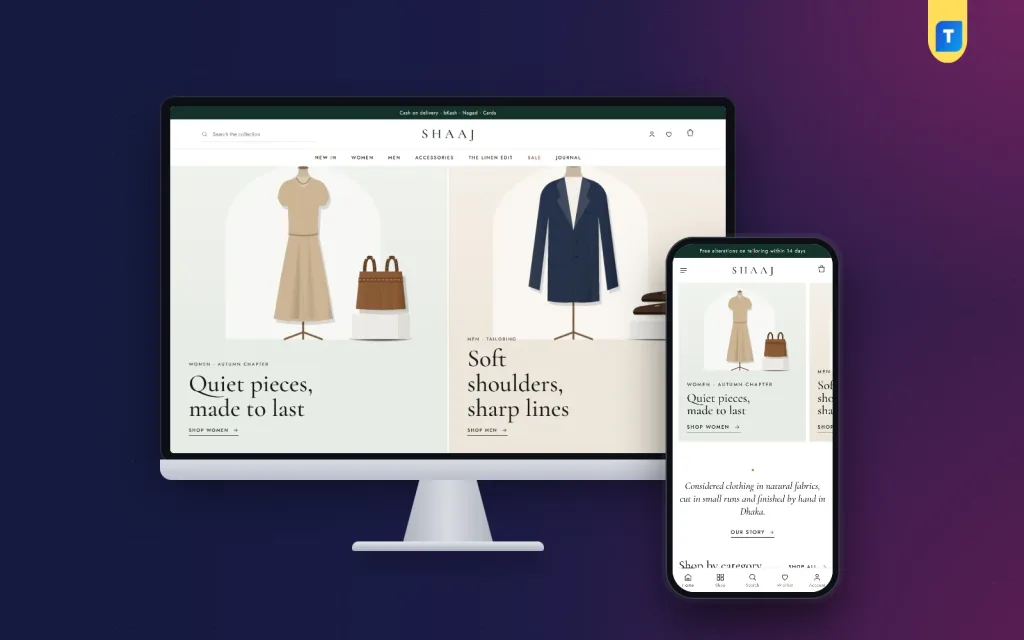
Shaaj is built on the idea that a premium label wins with a few strong pictures and a clear point of view, not fifty products on one screen. Pages are ivory, headlines are serif and details are drawn with thin hairlines. Sections have room to breathe, product photos stand tall and category pictures sit inside soft arches, so a good linen shirt can look worth its price without a single flashing badge.
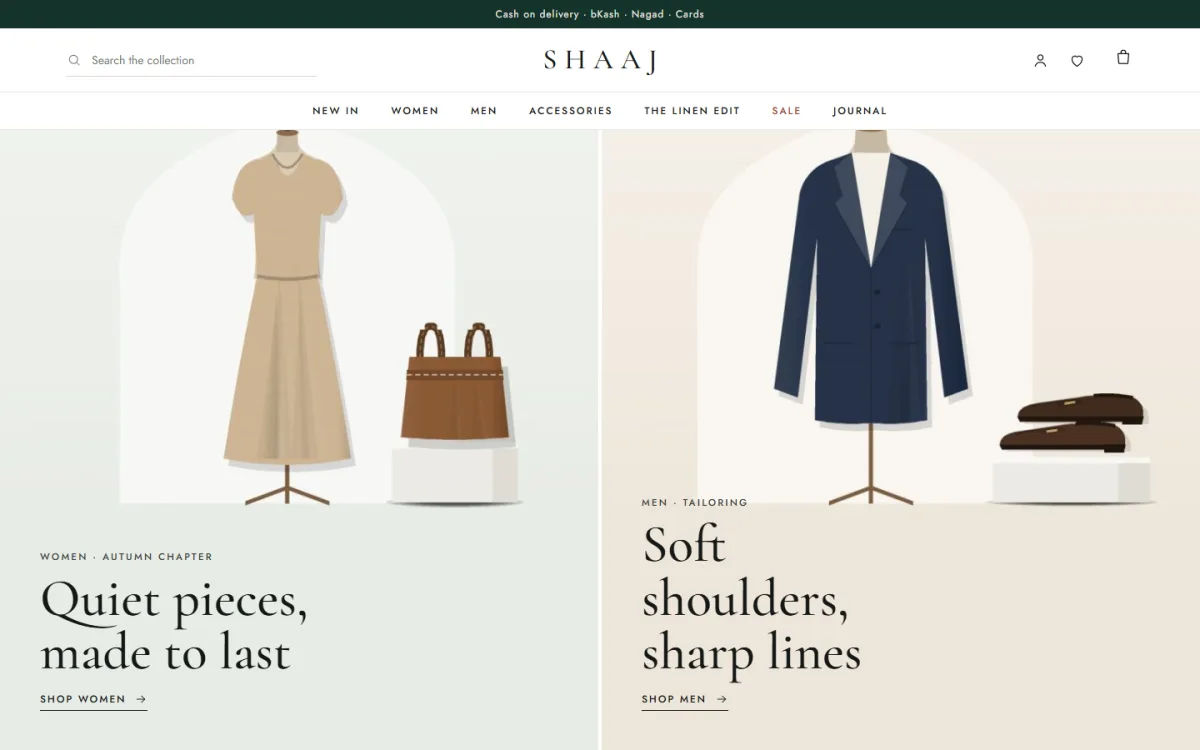
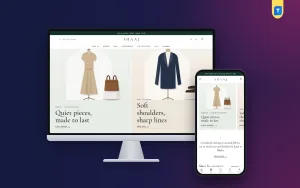
The desktop screenshot shows the idea in practice. A thin dark top bar in the demo lists cash on delivery, bKash, Nagad and cards. Below it sit a search field for the collection, a centred logo and account, wishlist and bag icons. The demo menu runs New In, Women, Men, Accessories, The Linen Edit, Sale and Journal. Then come the two hero panels, each with a short serif headline over a mannequin and a shop link.
Seventeen blocks you can switch and reorder
The homepage has 17 blocks, and each can be switched on or off and dragged into any order under Homepage layout. On a phone, small arrows do the same job. After the hero panels come a brand statement line, a category row with arched pictures and New arrivals in a sliding row. The edit sets one large picture beside four products, Best sellers sit in tabs by department and Most loved shows a numbered top five.
Further down, Shop the look places a picture with dots next to a product list, Occasions shows four arched tiles, Spotlight pairs a mirrored picture with four products and Evening edit runs a dark band with a sliding row. Gifts by price, an Accessories row, customer words, the Journal and a promise row for delivery, COD, alterations and gifting complete the set. A small label can switch most of these off and launch with just a handful.
Sales and gifting without cheapening the brand
Discounts are tricky for premium labels. The Private sale block shows a countdown next to the pieces on sale, so a markdown reads like a short invitation rather than a clearance rack. Gifts by price groups pieces into price tabs, which helps the buyer who knows a budget but not a size. Together with the gifting note in the promise row, it fits Eid and wedding season well.
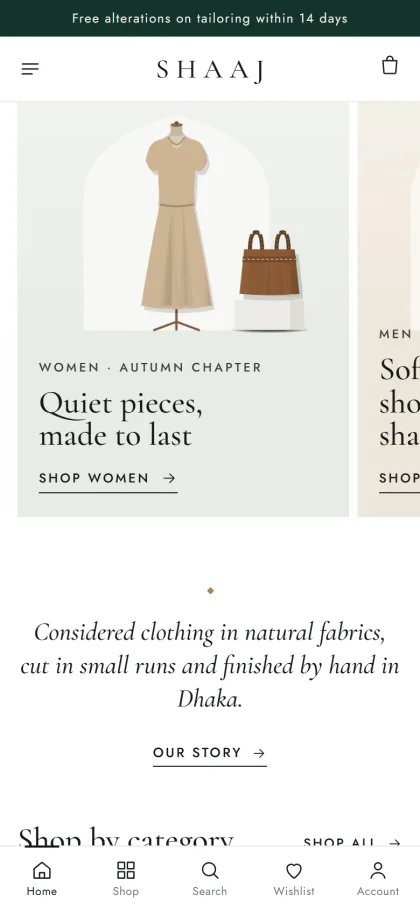
Most of your buyers will meet the store on a phone. The mobile header carries just the menu button, your logo and the cart, and product cards shrink so nothing feels crowded. In the mobile screenshot, the demo's top bar announces free alterations on tailoring, and the brand statement talks about natural fabrics cut in small runs and finished by hand in Dhaka. Both are sample text that you replace with your own promise.
Setting Up Shaaj Step by Step
Upload the theme zip from Appearance, Themes, Add New, Upload Theme and press Activate. Then open Shaaj, Setup and install the bundled Themeve Commerce plugin in one click. It handles everything after add to bag: cart, checkout, payments, delivery and tracking. Enter the licence key from your Themeve account under Shaaj, License, so updates arrive through your account. Shaaj needs WordPress 6.0+ and PHP 7.4+ and is tested up to WordPress 7.1.
Next, import the Luxury Boutique demo from Shaaj, Demo Import. It sets up a women's, men's and accessories store with 40 products, sizes, colours and size guides, plus menus and pages such as Our Story, Size Guide, Returns & Alterations, Delivery, Our Stores, Journal and Track Order. The artwork and names are invented, so swap in your own photos, product names and policies before you open the doors.
Then choose a look in Shaaj, Theme Options or the Live Customizer. There are five palettes, Emerald, Noir, Bordeaux, Midnight and Sand, each adjustable one colour at a time, and four font pairs called Classic, Editorial, Couture and Modern. You can search settings, save from a sticky bar, reset, and export or import your setup. Before buying, try the live demo on your phone and look around the demo dashboard.
Payments, Delivery and Marketing in Bangladesh
Premium buyers still want choice at checkout. With Shaaj they can pay by bKash, Nagad or SSLCommerz, choose cash on delivery or use manual payment. Checkout is a single page, an Order placed popup confirms it and customers follow the parcel on a tracking page. Steadfast and Pathao courier are supported, Telegram can alert you to each new order, invoices are built in and SMS with OTP is available.
Cash on delivery remains popular, but it carries real risk on high-value pieces. Call to confirm large COD orders, and consider asking for a small advance on made-to-measure work. Pack every parcel as if it were a gift, because the unboxing is often photographed and shared. State delivery charges and your alteration window clearly.
For marketing, Facebook and Instagram are still the main channels for fashion in Bangladesh. Shaaj has the Facebook Pixel and Conversion API connection in place, so you can see which ads turn into orders. Send ads to one edit rather than the homepage, and reply to comments quickly. Bangla captions with clear fabric and size details usually earn more trust than clever slogans.
Mistakes New Boutique Owners Make
The biggest mistake is launching too wide. Fifty designs in five sizes and four colours ties up cash that a new boutique cannot spare. Start small, learn which pieces sell, then repeat them. The second mistake is discounting too often. Constant sales teach buyers to wait, and a premium label loses its reason to exist. A short private sale once or twice a season works better than a permanent red banner.
Other common errors include unclear sizing, no written return or alteration policy, photos shot in different light every week and a website that is never tested on a phone. Some owners also pick a busy multipurpose theme and fill it with sliders and badges that fight the clothes. When you plan how to start a boutique business, set aside time for these basics, because buyers notice every one of them.
Frequently Asked Questions
Can I sell online before opening a physical store?
Yes, and many labels do exactly that. Selling online first lets you test designs and prices without paying shop rent. The Shaaj demo already includes an Our Stores page, so when you open a counter or studio later, you can add its address and opening hours without rebuilding anything.
Will Shaaj work for a label with only a few products?
Yes. Every one of the 17 homepage blocks can be switched off, so a small collection can run on just the hero, the edit, new arrivals and a few others. As the range grows, you switch more blocks back on and drag them into the order you want.
Do I need a developer to change colours and fonts?
No. Pick one of five palettes and four font pairs in Shaaj, Theme Options, and adjust single colours if you like. The Live Customizer shows each change before you save, so you can try a new look for the season without touching any code at all.
Is there a theme for menswear or activewear instead?
If your boutique focuses only on men's clothing, look at Babu – Menswear WordPress Theme. For gym and sports clothing, Dour – Activewear WordPress Theme is the closer fit. Shaaj suits premium labels that want calm, unhurried pages and a quieter way of selling.
Final Thoughts
Learning how to start a boutique business comes down to a clear point of view, small honest collections, careful pricing and service that matches the price you ask. Your boutique website should carry that calm into every screen, from the first photo to the tracking page. If you sell premium dresses, linen, tailoring or accessories and want a store that lets the clothes speak, start with Shaaj – Luxury Boutique WordPress Theme.