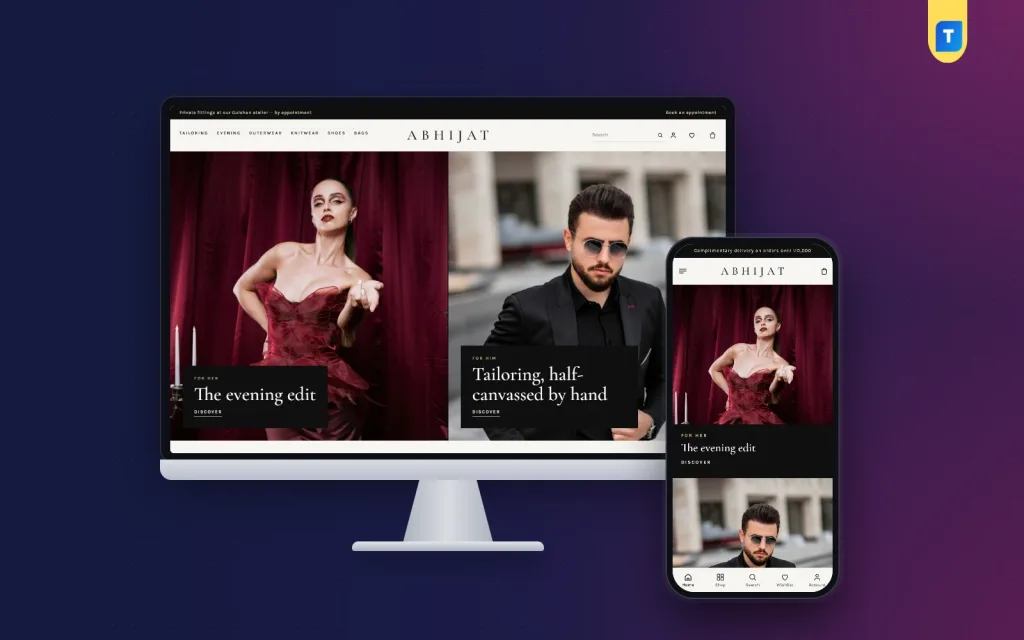
A fashion house website template has a different job from a busy marketplace theme. This guide is for tailoring houses, eveningwear labels and premium boutiques in Bangladesh that sell suits, gowns, coats and leather goods, and for the freelancers who build their sites. We cover how to present cut and cloth online, how to plan services such as alterations and fittings, and how to take orders that local buyers trust.
Premium clothing is bought slowly. A client may visit your page several times, study the lapel of a jacket or the fall of a gown, ask about a fitting and only then order. A crowded boutique website with flashing sale banners and tiny photos works against that. What the house needs is room for photographs, a calm layout and clear information about services and sizes.
As the example we use Abhijat – Tailor Shop WordPress Theme, a theme made for premium tailoring and eveningwear houses. It has a two-half hero for her and for him, an atelier story block, a services block, quiet centred product cards and a one-click demo with 49 pieces. First, though, comes the planning, because a calm site needs a clear idea behind it.
What a Fashion House Website Template Has to Do
Start with the photographs. In tailoring and eveningwear, the product is the cut, the fabric and the finish, so images need large, uncluttered space. The template should let a jacket be seen front and back and give a gown its full height. Small square thumbnails packed eight to a row make a premium suit look like a market stall item.
Next comes the story. Clients paying for a hand-finished suit want to know who makes it, where the workroom is and how long the house has been cutting cloth. A good fashion house website template gives you a place for that story on the homepage, not only on an About page that few visitors ever open.
Third, services. Many tailoring houses earn as much from alterations, fittings and made-to-measure orders as from ready pieces. Those services should be visible next to the products, with a short line on each, so clients know they can ask. Finally, the shop part still has to work: sizes, payments, delivery and order tracking that suit Bangladeshi buyers.
Planning Your Atelier's Collections, Services and Sizes
Group your pieces the way clients think, for example tailoring, evening, outerwear, knitwear, shoes and bags. Then choose three collections to lead with each season, such as a wedding season edit, a winter coat story and an office tailoring line. Three strong collections read better than ten thin ones on a premium site, and they are far easier to photograph well.
Photography that sells cloth
Shoot every piece on the same backdrop with soft, even light. Add a detail shot of the fabric, the buttons or the embroidery, and a second angle such as the back of a jacket. For eveningwear, a full-length photo is a must. Keep the colours true, because a client who orders a deep maroon gown and receives a bright red one will rarely order again.
Size guides and fittings
Write separate size guides for men's tailoring and women's sizes, with real measurements from your own patterns. Explain what happens if a piece needs adjusting, whether alterations are free within a set period, and how clients can arrange a fitting. Clear rules here turn a nervous first order into a calm one and save long phone calls later.
Services and policies
Decide which services you will promote, for example alterations, appointments and made to measure, and write one short line for each. Then write your delivery, returns and alterations pages, and add your atelier address and opening hours. Premium buyers often want to visit once before they order online, so make it easy for them to find you and to know when you are open.
How Abhijat Presents a Tailoring House
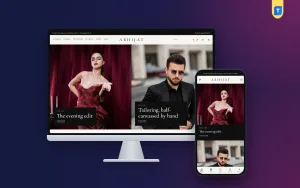
Abhijat uses paper-coloured pages, ink-black type, a thin gold hairline and Cormorant Garamond headings. The header puts your categories on the left in small spaced capitals, the house name in the middle and a slim search line on the right, with account, wishlist and bag icons. A black top bar above it carries short messages, such as a line about private fittings by appointment.
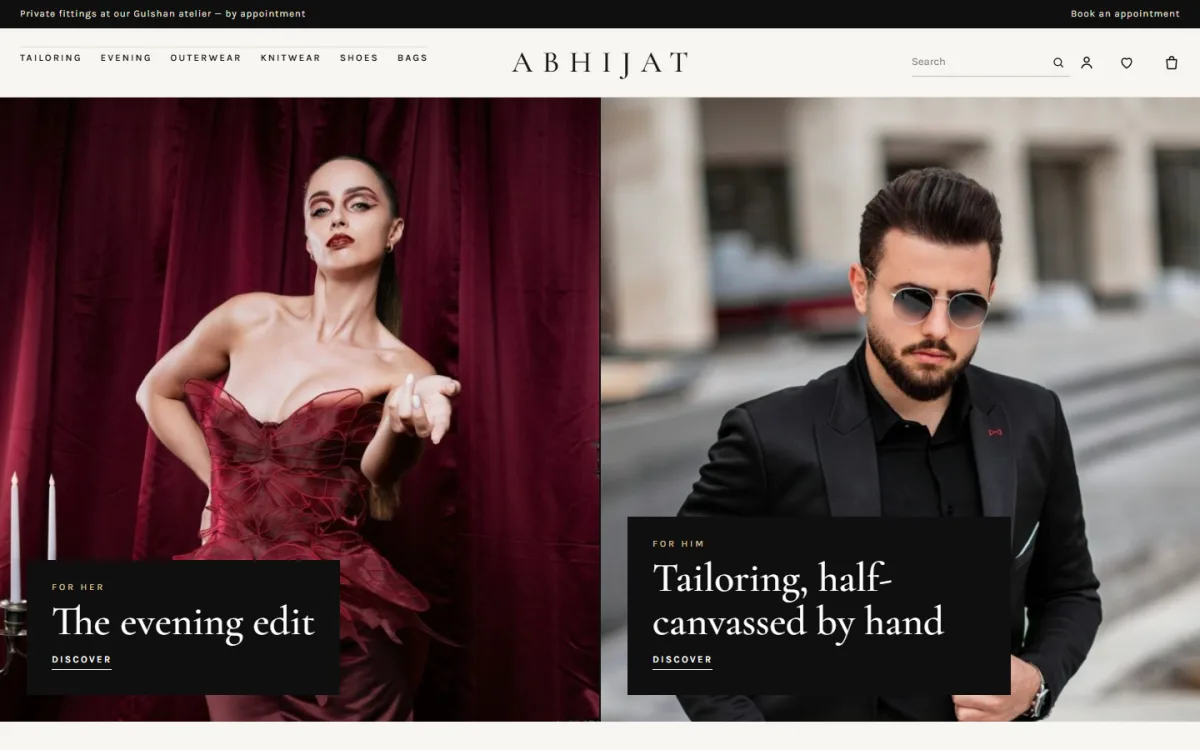
The homepage has 10 blocks that you switch on or off and drag into order under Homepage layout. The hero splits the screen into two full-height photos, for her and for him, each with a black caption strip holding a label, a title and a link. In the demo an evening gown faces a dark suit, so a visitor understands the house in one look.
Collections, the quote band and the atelier
The collections block shows three tall photo cards, each with a title, a line and a link, which fits the three-collection plan above. The new season shows eight pieces under your own title and line. The quote band sets a wide photo behind a quote, a signed-by line and a button, a good place for a line from your head cutter or a loyal client.
The atelier block tells your story with a photo, a small line, a title, a short note, a signature and a link. Most requested groups your best pieces in tabs, one per category, and Leather goods pairs a portrait photo and short text with products from a category you choose. From our clients shows your latest five-star reviews, and the journal shows three recent posts.
Services, product cards and the product page
Our services lists three services, each with a name and a short line. The demo uses alterations, appointments and made to measure, and you can rename them in Theme Options. Product cards are centred and calm: a 3:4 photo, a second photo on hover and sizes that rise up for a one-tap add. You can show or hide the category, star ratings and colour dots.
The product page can show delivery charges and times, a Frequently bought together row, your return and exchange text and default care instructions, which matter a lot for wool and silk. Size guides are switched on, and the demo has guides for men's tailoring and women's sizes that you can edit to match your own patterns.
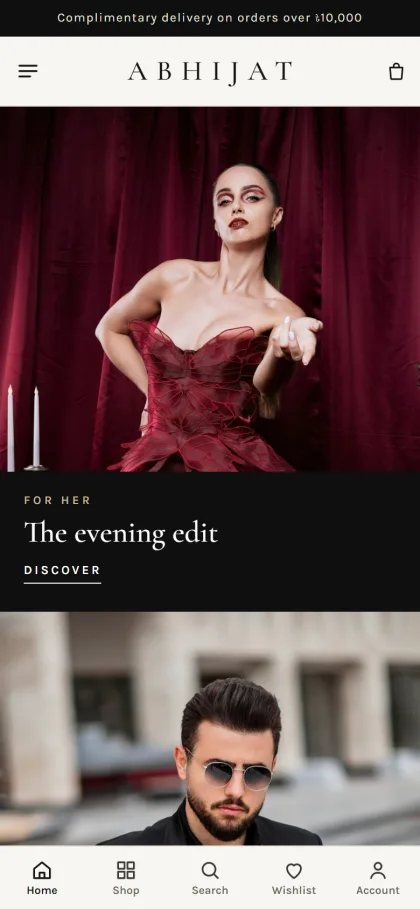
On phones, the header becomes menu, logo and bag, the hero halves stack one above the other, and a bottom bar keeps Home, Shop, Search, Wishlist and Account in reach. Sign in and register open in a popup, so a client never has to leave the piece they were looking at just to create an account.
Setting Up the Fashion House Website Template
Abhijat needs WordPress 6.0 or higher and PHP 7.4 or higher, and it is tested up to WordPress 7.1. Upload it under Appearance → Themes → Add New → Upload Theme and activate it. Then open Abhijat → Setup and install the bundled Themeve Commerce plugin in one click. It runs the cart, the one-page checkout, payments, couriers and order tracking.
Activate your license from your Themeve account (My Account → Licenses) under Abhijat → License so updates arrive. Then run Abhijat → Demo Import. The Tailoring & Eveningwear demo loads 49 pieces with brands: suits, dinner suits, gowns, coats, knitwear, shoes, bags and silk scarves, plus collections, the atelier story, services, size guides, journal posts, menus and every page, including The House, Returns & Alterations, Size Guide and Our Stores.
Demo photos are free stock photos for the preview, and every house and product name is invented, so replace them with your own. Then open Abhijat → Theme Options, grouped into Start here, Design, Homepage and Pages. Choose one of four palettes, Paper & ink, Bone & espresso, Stone & navy or Ivory & bottle, or set each colour yourself, and pick one of five font pairs.
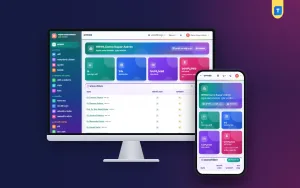
Before you commit, open the live demo on your own phone and walk through a purchase as a client would. Then look around the demo dashboard to see where products and orders sit under the Shop menu. If WordPress menus and pages are new to you, the WordPress documentation covers the basics.
Taking Orders and Payments in Bangladesh
Checkout in Abhijat fits on one page and ends with an Order placed popup. Clients pay by bKash, Nagad, SSLCommerz, cash on delivery or manual payment, and you send parcels through Steadfast or Pathao courier. The Track Order page shows where each order stands, so clients can check without calling the atelier.
Premium orders need extra care. For made-to-measure or high-value pieces, many houses ask for an advance by mobile payment before cutting the cloth, and confirm every cash on delivery order by phone. Pack suits and gowns properly, on hangers or folded with tissue, and tell the client honestly when to expect a fitting or the parcel.
New-order alerts can reach you on Telegram, SMS and OTP help you contact clients, and invoices and coupons are built in. Facebook Pixel and the Conversion API let your ads measure who visited and who bought. Instagram and Facebook are where many premium clients discover a house, so post short fitting videos and fabric close-ups, and send ads to a collection page rather than the homepage.
Common Mistakes on a Premium Boutique Website
The biggest mistake is noise. Discount stickers on every card, pop-ups and five banners fighting for attention make a premium house look like a clearance sale. A fashion house website template works best when most of the page is photo and white space. Show a sale price only when you really mean it, and keep it quiet when you do.
Other common mistakes are hiding services on a page nobody visits, skipping size guides for tailoring, and mixing photos shot on different days against different backgrounds. Test the whole store on a phone with mobile data as well. Large photos are the point of a premium site, so compress them before upload to keep every page quick to open.
Frequently Asked Questions
Is a fashion house website template only for menswear?
Not this one. Abhijat's hero has one half for her and one for him, and the demo mixes suits and dinner suits with gowns, coats, knitwear, shoes, bags and silk scarves. A house that dresses both men and women can lead with tailoring on one side and eveningwear on the other.
Can I show alterations and made-to-measure services?
Yes. The Our services block holds three services, each with a name and a short line. The demo uses alterations, appointments and made to measure, and you can rename them in Abhijat → Theme Options to match the way your atelier actually works, for example home visits or bridal fittings.
Do I need to code to change the layout?
No. Switch the 10 homepage blocks on or off and drag them into order under Homepage layout. Theme Options works well on a phone too, where arrows move the blocks, so you can update the hero, the collections or the quote band between two fittings.
Are there other themes for premium fashion?
Yes. If you dress mostly men, compare Babu – Menswear WordPress Theme. For a luxury boutique look, see Shaaj – Luxury Boutique WordPress Theme. Abhijat fits houses where tailoring and eveningwear share the spotlight and the story of the workroom matters.
Final Thoughts
A tailoring or eveningwear house sells online on true photographs, a clear story, visible services, honest size guides and a checkout that suits Bangladeshi clients. Plan those first, then choose a fashion house website template that gives your pieces room to breathe. If that sounds like your atelier, start with Abhijat – Tailor Shop WordPress Theme and let the cut speak first.