If you are wondering how to start a cosmetics business in Bangladesh, small-batch skincare is one of the most realistic ways in. This guide is for home makers of soap, face oils and creams, small labels already selling on Facebook, and freelancers who build shops for them. It covers how to plan a first range, how to label and price it honestly, how to build trust online, and how to take payments and ship parcels.
Skincare is a personal purchase. A buyer is putting your product on their face, so they want to know what is inside it, how to use it and who made it. Big brands answer those questions with advertising budgets. A small maker answers them with honesty: clear labels, real photos, a simple routine and a founder who is easy to reach. That honesty is your main advantage, and your website is where it should show.
In this guide we use Snigdho – Skincare Brand WordPress Theme as the example. It is made for small makers of serums and face oils, moisturisers, cleansers and toners, handmade soap and gift sets, in pale sage, moss green and apricot. First, though, the business side, because a good shop starts with a plan rather than a theme.
How to Start a Cosmetics Business on a Small Budget
Start narrow. Pick one product family you can make well and consistently, such as cold-process soap, a face oil or a simple moisturiser, and build a range of four to six items around it. A short range is easier to make in clean, repeatable batches, easier to photograph and easier to explain. Many successful small labels began with one soap or one oil that people kept reordering.
Next, sort out your workspace and records. Keep a clean, separate area for making, weigh every ingredient, and write down each batch: date, quantities, supplier and batch number. Those notes let you repeat a good batch and trace a problem if a customer ever raises one. Buy raw materials from suppliers who can tell you what they are selling, and keep their invoices.
Then handle the paperwork. Get a trade licence, open merchant accounts for mobile payments, and check with BSTI, the Bangladesh Standards and Testing Institution, whether your product types need certification before you sell widely. Rules change, so ask directly rather than relying on what another seller heard. Getting this right early protects the brand you are about to build.
Labels, sizes and honest wording
Your label is part of the product. List every ingredient, the net size in ml or g, the batch number, how to use it and how to store it. Describe texture, scent and how the product is meant to be used, and avoid promising results such as clearer or brighter skin. Buyers trust a maker who explains rather than promises, and honest wording keeps you out of trouble with customers and regulators alike.
What an Online Cosmetics Store Needs to Earn Trust
An online cosmetics store has to do the job a friendly shop assistant does at a counter. A first-time visitor wants to know where to start, which products were made for their skin type, and what goes into each jar. If the site answers those questions on the homepage, the inbox stays quieter and more visitors turn into buyers.
That means a few clear features. A simple routine helps new buyers choose a first set. Browsing by skin type or concern helps people find the right shelf without guessing. An ingredient section explains the oils, butters and extracts you use in plain words. Real reviews from real buyers carry more weight than anything you write yourself. And every product needs its size, its price and an easy way to buy.
It also has to work on a phone. Most skincare buyers in Bangladesh find small labels through Facebook and Instagram posts, then tap through on mobile data. The pages must load quickly, the bag must be easy to find, and checkout must accept the payment methods people already use.
How Snigdho Presents a Small-Batch Skincare Brand
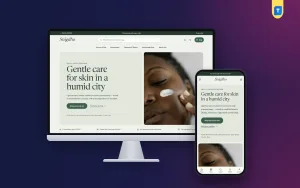
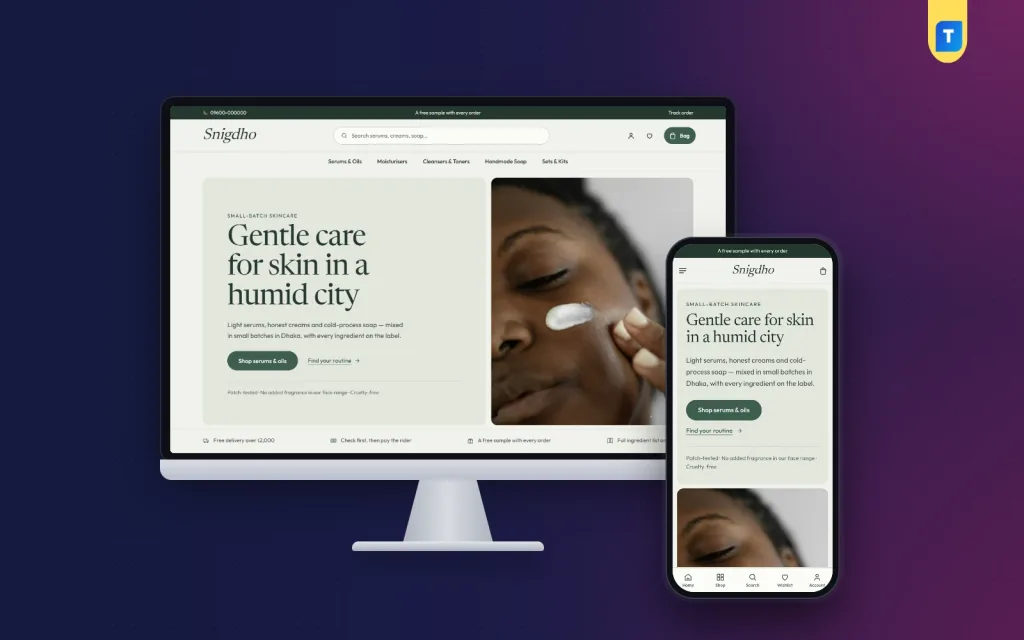
The Snigdho demo opens with a dark green top line for your phone number, a short message and a Track order link. The header shows the shop name in italic serif, a wide rounded search in the middle and a green bag button, with the categories on a second row. In the demo those read Serums & Oils, Moisturisers, Cleansers & Toners, Handmade Soap and Sets & Kits.
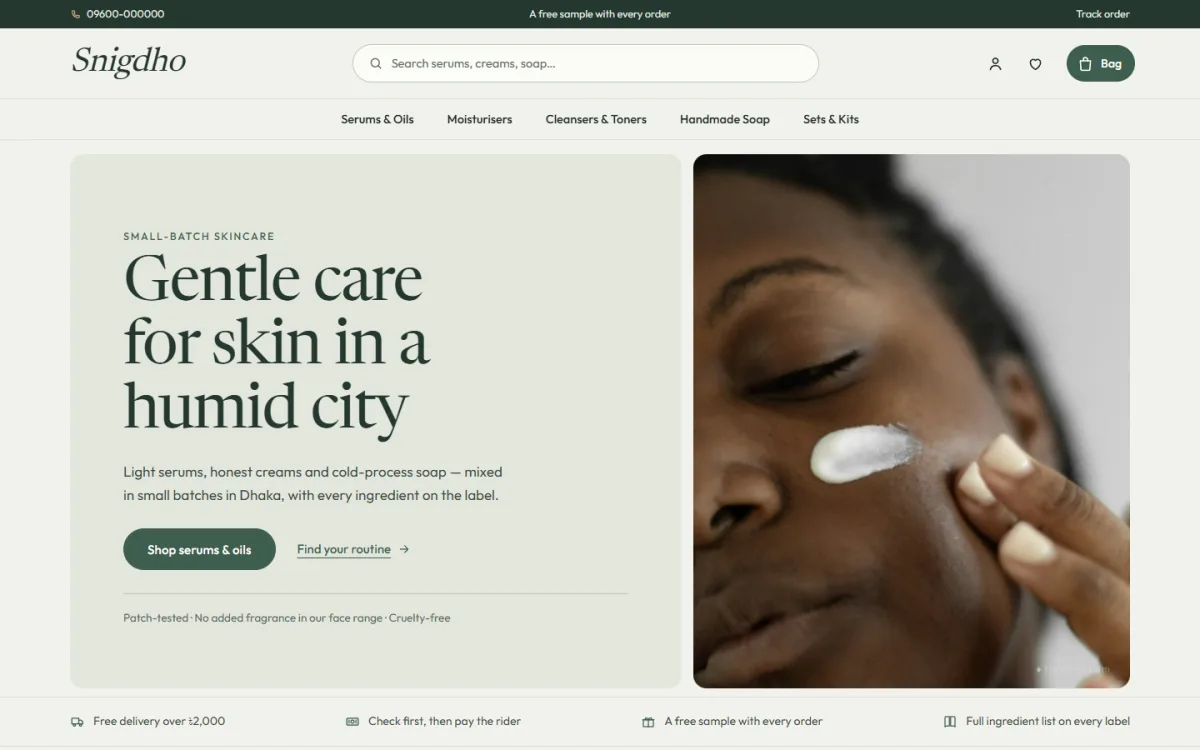
The hero puts your headline, a button, a link and a promise line on a soft sage panel beside one tall photo. Below it, a promise line covers delivery, cash on delivery and samples. Shop the shelf shows round category tiles, Fresh from the batch is a grid of the newest products, and Loved on repeat groups best sellers into tabs by category.
Routine in three steps
New buyers often ask where to start. Routine in three steps lays out cleanse, treat and moisturise, each with its own square photo, a name, one line and a link to the right products. It turns your range into a simple path, which is exactly what a nervous first-time buyer needs, and you can rename the steps to fit what you actually make.
Shop by skin concern and What goes in
Shop by skin concern shows coloured cards linked to product tags, each with a short description. In the demo the tags include dry, oily, sensitive and dull skin plus fragrance-free, so buyers browse by type. What goes in is an ingredient glossary on deep green, with six ingredients beside a photo, each with a name and one line, where you explain your oils and butters in plain words.
Fourteen blocks you can switch and move
Snigdho has 14 homepage blocks, and each one can be switched off or moved. Alongside the ones above there are Two edits with two wide photo links, a deal with a countdown that the demo uses for a batch ending, Our kitchen with a photo and a short note from the founder, five-star reviews, a More to try grid with Load more, and Skin notes with your latest three posts.
Product Plates, Product Pages and the Phone View
Products sit on rounded plates with their ml or g sizes. On hover the sizes rise up, and one tap adds the chosen size to the bag. A star rating, the category, colour dots and a second photo on hover can each be switched on or off. That suits a maker who sells the same cream in a travel size and a full jar.
The product page can show delivery charges and times from your store settings, your return and exchange text, default care instructions and a Frequently bought together row, handy for pairing a cleanser with a moisturiser. Reviews sit in a fold, with a popup inviting the first review. A wishlist and back-in-stock alerts are built in, which helps when a popular batch sells out.

On a phone, the header turns into a menu icon, the name and a bag, with the top line still showing your message. The sage panel holds the headline, the button and the link, and the photo follows below it. A bottom bar keeps Home, Shop, Search, Wishlist and Account within reach of a thumb, and product cards turn compact so buyers see more of your range on each screen.
Setting Up Your Online Cosmetics Store With Snigdho
Snigdho needs WordPress 6.0 or newer and PHP 7.4 or newer, and it is tested up to WordPress 7.1. Upload the zip under Appearance, Themes, Add New, Upload Theme and click Activate. Open Snigdho, Setup and install the bundled Themeve Commerce plugin in one click; it runs the cart, checkout, payments, couriers and orders. Then activate Snigdho under Snigdho, License from your Themeve account (My Account, Licenses), so updates reach your dashboard.
Run Snigdho, Demo Import to load “Snigdho — Small-batch Skincare”: 47 serums, oils, creams, cleansers, handmade soaps and sets with sizes, skin-concern tags, notes, menus and every page, including About Snigdho, Delivery, Returns, Skin Notes, Our Stores and Track Order. Every label and product name is invented and the photos are samples, so replace them with your own. The WordPress documentation helps if menus and pages are new to you.
Styling happens in Snigdho, Theme Options, which also works well on a phone with its own bottom bar. Homepage layout lets you switch blocks on or off and drag them into order, or move them with arrows on a phone. Pick one of four palettes, Sage & apricot, Clay, Lilac or Sea glass, or set each colour yourself, and choose from six font pairs, starting with Newsreader and Outfit. The routine steps, concern cards and ingredients share one settings section.
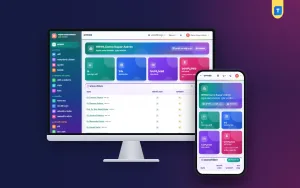
Before you decide, open the live demo on your phone and walk through it as a first-time buyer would: pick a routine step, browse a skin concern and add a size to the bag. Then look around the demo dashboard to see where products, orders and Theme Options sit.
Payments, Couriers and Facebook Sales in Bangladesh
Snigdho’s checkout fits on one page, with sign in and registration in a popup and an Order placed popup at the end. Buyers can pay with bKash, Nagad, SSLCommerz, cash on delivery or manual payment. Orders ship through Steadfast or Pathao courier, and a Track Order page shows where each parcel is. Coupons, invoices, offers and returns are included, which makes gift-set deals easy to run.
Pack skincare with care. Wrap glass bottles, seal jar lids with tape, and add a small card with the batch number and how to use the product. Confirm larger cash on delivery orders by phone. SMS and OTP messages reach buyers, new-order alerts arrive on Telegram, and the Facebook Pixel with Conversion API shows which posts and ads bring real orders.
On Facebook, show the making as well as the product: a soap being cut, an oil being poured, a label being stuck on. Short videos like these build more trust than polished adverts. Write Bangla captions that list the main ingredients and the size, and link each post to the right product or concern rather than the homepage.
Mistakes to Avoid When Selling Skincare Online
The biggest mistake is promising results. Words like cure, whitening or guaranteed glow invite complaints and can break advertising and product rules. Describe what the product is, what it contains and how to use it, and let reviews speak for the rest. Another mistake is a vague label. A missing ingredient list or size makes even a good product look careless.
Sellers also grow the range too fast, then struggle to keep each batch consistent. Keep the line short until you know what people reorder. Use your own photos rather than supplier pictures, and keep backgrounds simple. Finally, test checkout on a cheap Android phone with mobile data before launch, and read Google’s Search Central documentation for simple advice on titles and descriptions.
Frequently Asked Questions
Can I sell handmade soap and skincare in the same shop?
Yes. The Snigdho demo already mixes serums and oils, moisturisers, cleansers and toners, handmade soap and sets, each as its own category. Shop the shelf and Loved on repeat let you give every category its own tile and tab on the homepage.
Does the theme make claims about what products do?
No. The demo text and names are samples, and you write every product description, concern card and ingredient line yourself. Keep that wording honest and focused on ingredients, texture and use rather than promised results.
Can I sell one product in more than one size?
Yes. Product plates show ml or g sizes, and buyers add the size they want in one tap from the card. That works well for a travel size and a full size of the same cream or oil.
Which theme suits a luxury brand or a routine-led shop?
For a premium cream and dry oil house with editorial styling, look at Kuasha – Luxury Skincare WordPress Theme. If you want a Build your routine block and shop-by-ingredient tiles, Komol – Skincare Shop WordPress Theme is worth a look. Snigdho suits the small maker who mixes in batches.
Final Thoughts
Knowing how to start a cosmetics business comes down to a short range made consistently, honest labels, real photos and payment and delivery options your buyers already trust. A clear website then carries that honesty to people who will never visit your kitchen. For a calm, small-batch skincare shop with a routine, concern cards and an ingredient glossary ready on day one, start with Snigdho – Skincare Brand WordPress Theme and list your first batch.