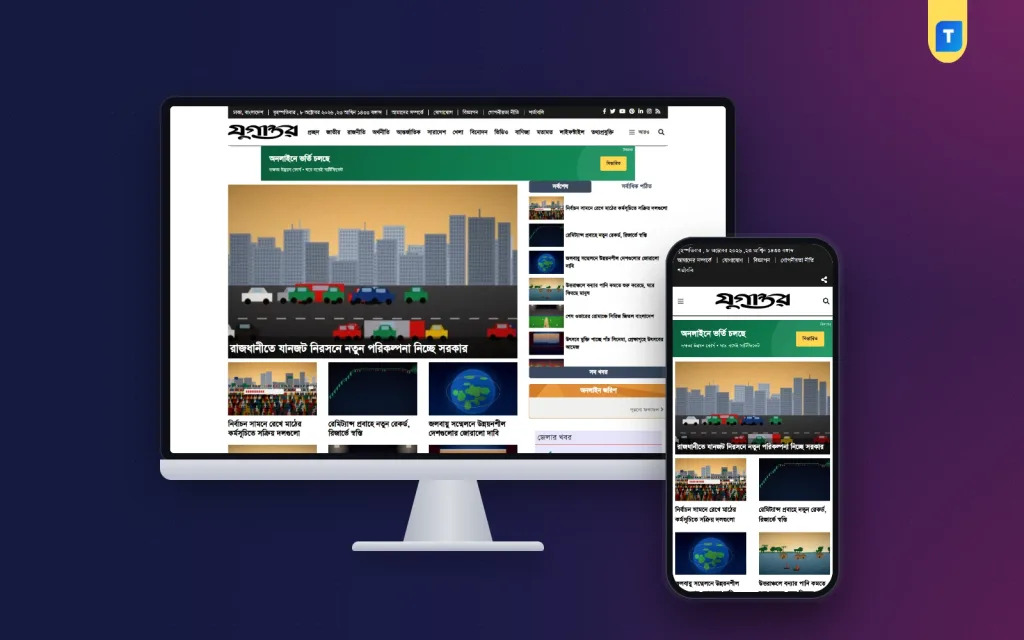
Choosing a newspaper website template WordPress can run is often the first real decision a printed daily makes when it moves online. Your paper may have come out every morning for twenty years, yet many of your readers now see the news on their phones long before the hawker reaches their door. This guide is for editors, owners and the web freelancers who work with them in Bangladesh. It explains how to turn a print operation into a full online newspaper without losing the character that readers already trust.
Going online is not only a design job. A printed paper works to one deadline a day, while a website has no deadline at all. Stories need to go up as they happen, photos need captions written for small screens, and the front page changes several times before lunch. Desks that used to hand copy to the makeup room now publish directly. The template you pick shapes how easily that shift happens, so it pays to plan the move before you install anything.
Throughout this guide we use the Jugantor WordPress Theme Unlimited License as a working example. Its design is inspired by the layout of the Bangla daily Jugantor, so it already looks and feels like a printed broadsheet carried over to the screen. It is responsive, AdSense-ready and supports both Bangla and English content. First, though, we look at what a print team actually needs from its new home on the web.
Why a PDF of Today's Paper Is Not Enough
Many Bangladeshi papers start their online life by uploading a PDF of each day's pages. It is a fair first step, and readers living abroad often like flipping through the e-paper. But a PDF is hard to search, awkward to read on a phone, and every story is locked inside one big file. Google has little to index, Facebook has nothing to preview, and a reader who wants one district report has to zoom and scroll across an entire page to find it.
A real online newspaper breaks the printed edition into individual stories, each with its own address, headline, photo and category. That is what lets a reader share one report on Facebook, lets search engines send visitors to a specific story years later, and lets you place ads next to the content people actually read. The e-paper can still live beside the website as a bonus for loyal readers, but the website itself should be built from single articles that stand on their own.
Mapping Your Print Desks to Online Sections
Start with what you already have. Every printed daily is organised into desks and pages: the front page, national, politics, economy, international, the country or district pages, sports, entertainment, jobs and the editorial page. These map almost one to one onto WordPress categories. Write your desk list on paper and turn each desk into a category, using the same Bangla names your readers see in print. Familiar names help loyal readers find their favourite page on day one.
Next, decide what replaces the front page. In print, the editor chooses the lead story and the stories above the fold once a night. Online, the homepage needs a lead story, a row of secondary stories and blocks for each major section, and it should be refreshed through the day. Agree who owns that decision during each shift. A small paper may give it to the duty editor, while a larger one may have a homepage editor in the morning and another at night.
District pages and correspondents
The country or district pages are often a printed daily's hidden strength. Correspondents in every district send stories that the big national portals ignore. Online, these deserve their own section with sub-categories for divisions or districts, so a reader from Rajshahi or Sylhet can open a page full of local news. Give correspondents Contributor or Author accounts so they can file directly, and let a desk editor approve each story before it goes live.
What to Look for in a Newspaper Website Template WordPress Can Run
A template for a former print title needs a few things a normal blog design does not. The homepage must hold many stories at once in a clear order, with a big lead, smaller secondary items and separate blocks for each section. The header should leave room for your masthead, the date and links to the e-paper. Typography matters more than most people expect, because long Bangla headlines need a font size and line height that read cleanly on a desktop and on a cheap Android phone.
Speed and ad space come next. A newspaper website template WordPress publishers use every day should load quickly even when a big story pulls in a crowd, and it should offer sensible places for display ads without burying the news. Finally, check how easily your team can change it. Editors should not need a developer to change the logo, rearrange menus or swap a colour. Settings that live in the WordPress dashboard save you money and waiting time every single month.
How the Jugantor Theme Mirrors a Printed Front Page
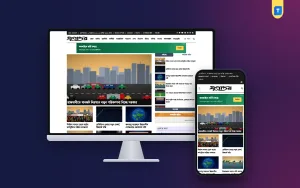
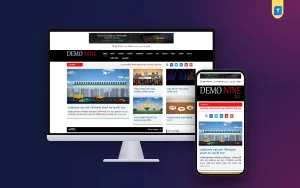
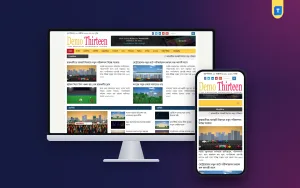
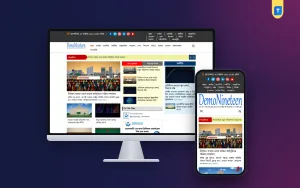
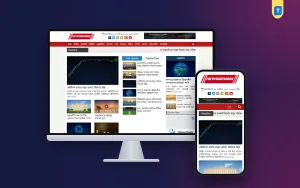
The Jugantor theme was designed to reflect the structured layout of the Bangla daily it is named after, and that shows on the homepage. At the top sits a centred masthead with the Bangla date on the left and a menu button beside it. On the right, the demo shows two buttons labelled for today's paper and the e-paper, plus small icons for Facebook, X, LinkedIn, Instagram and YouTube. Below that runs one menu line with familiar sections: latest, national, politics, economy, international, country, sports, entertainment and jobs.
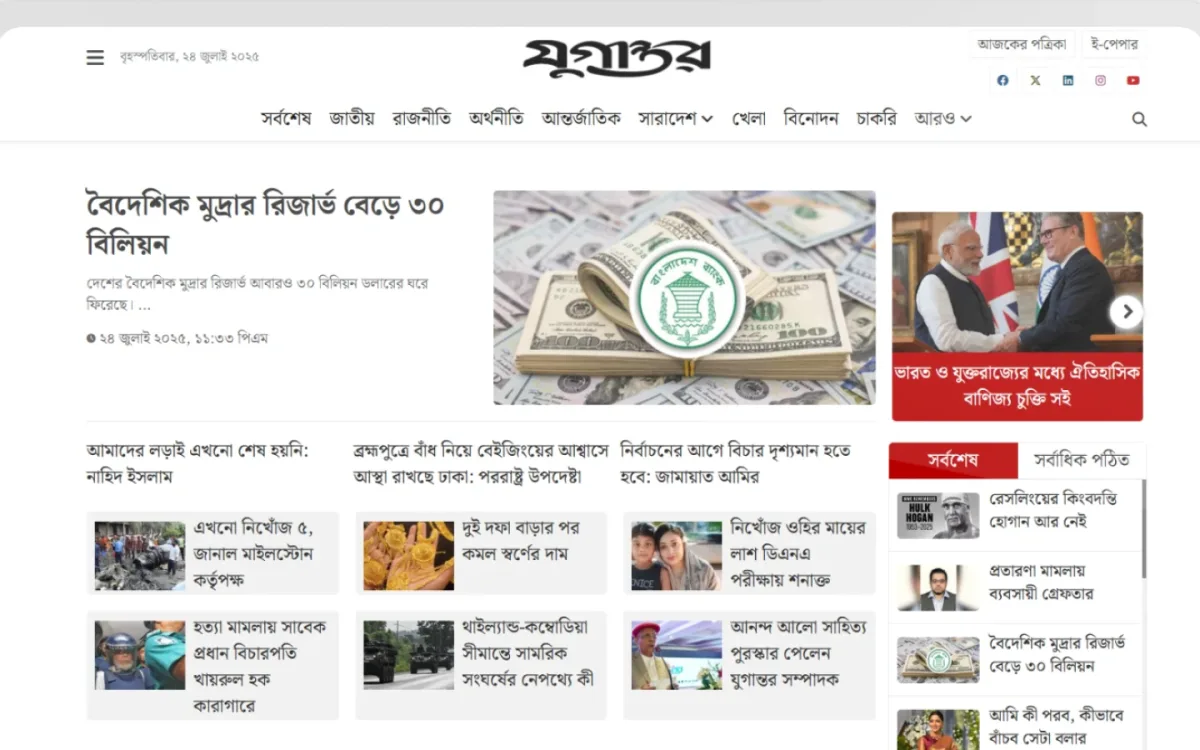
The lead story takes the space a front-page splash would take in print. A large Bangla headline sits on the left with a short summary and the publishing time, and a wide photo sits beside it. To the right, a slider shows another major story with its headline on a red band. Under the lead, three text-only headlines run across the page, followed by a grid of six story cards with thumbnails. A sidebar carries tabs for the latest and the most-read stories, which is exactly what readers expect from a big Bangla daily.
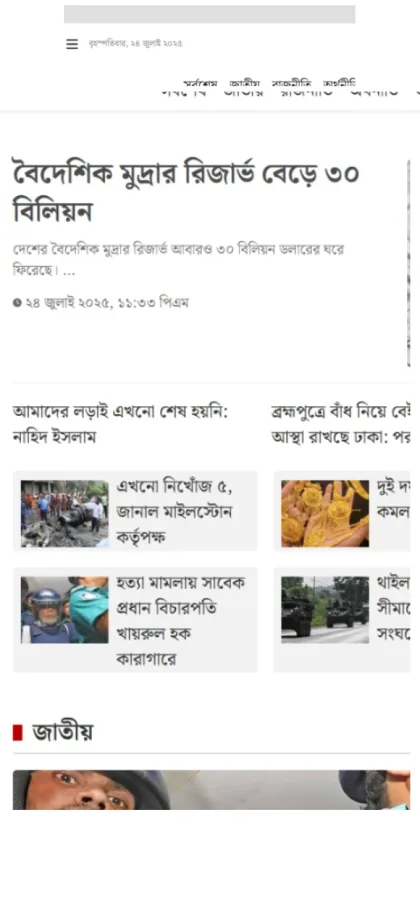
On a phone, the same page keeps the date and menu button at the top, puts the lead headline and summary first, and then shows section blocks such as national news under a clear heading with a red marker. Because the theme is fully responsive, the layout adjusts to the screen instead of asking readers to pinch and zoom the way they would with a PDF. Clean typography keeps long headlines readable, which matters when most of your audience arrives from Facebook links on mobile.
Moving Your Print Workflow Online, Step by Step
Install and set the basics
Install WordPress on hosting with enough storage for years of photos, then upload and activate the theme from Appearance, Themes. Set the site language, set the time zone to Dhaka and choose a short permalink structure based on the post name. Add your masthead logo and site icon. The WordPress documentation covers each of these screens if your staff is new to the dashboard, and a short training session before launch saves a lot of confused phone calls later.
Build categories, menus and pages
Create the categories from your desk list, then build the main menu in the same order your print pages run. Add pages for About, Contact, Advertise, Editorial Policy and Privacy Policy, since readers and ad networks both look for them. If you keep publishing an e-paper, link it from the header so print loyalists can still find it. Then publish a few real stories in each section, so the homepage blocks fill with actual Bangla headlines instead of empty placeholders.
Change the newsroom routine
The hardest part is human, not technical. Agree that breaking stories go online first in a short version and are updated as details arrive, while the print edition still carries the full, polished report the next morning. Set a rule for photos: resize before upload, write a caption and an alt text, and credit the photographer. Within a few weeks, reporters stop thinking of the website as a copy of the paper and start treating it as the main product.
Earning From Your Online Newspaper
Printed papers earn from circulation and display ads. Online, the early money usually comes from Google AdSense and from banners sold to the same local businesses that already advertise in print. The Jugantor theme is AdSense-ready, so you can place ad units without fighting the layout. Before you apply, make sure you have original stories in every section, clear About and Contact pages and a privacy policy. Copied or thin content is one of the most common reasons for rejection.
Your existing advertisers are an advantage most new portals do not have. Offer them a package that combines a print ad with a website banner and a boosted Facebook post. Many local shops already pay through bKash or Nagad, so say which payment methods you accept on your Advertise page. Keep a simple rate card and send a monthly report showing how many people saw each banner. Advertisers who see clear numbers renew far more often than those who only get a vague promise.
Growth for an online news portal Bangladesh readers return to comes mainly from Facebook and Google. Post every story on your page with a short Bangla summary and a strong photo, reply to readers, and avoid clickbait headlines that spend the trust your print brand built. For search, write headlines that say clearly what happened, use proper categories and link related stories inside each report. Google's Search Central documentation explains how pages are crawled and indexed.
Mistakes Print Teams Make When They Go Online
The most common mistake is publishing the print edition once a day at midnight and calling it a website. Readers who find stale news in the afternoon stop coming back. Another is copying the print headline unchanged. A clever pun works on paper, but online a headline must say plainly what happened so readers and search engines understand it. Many teams also forget photo sizes and upload huge camera files that make the homepage crawl on mobile data.
Avoid running nulled or pirated themes taken from random websites. They often hide malicious code, cannot be updated safely and can get your domain flagged. Do not fill every gap with ads either, because a page that jumps around while banners load drives readers away. Finally, test on real phones before launch. Open the homepage, a category page and a long article on two or three handsets, because that is how most people will meet your newspaper online.
Frequently asked questions
Can we keep our e-paper after launching the website?
Yes, and many Bangladeshi dailies keep both. The Jugantor demo header shows buttons for today's paper and the e-paper, so you can point readers who prefer the printed page to your e-paper while fresh stories go up on the website as individual articles.
Does the theme handle both Bangla and English?
Yes. The theme supports Bangla and English content. Most Bangla dailies publish mainly in Bangla, but if you run an English section or a separate English edition, the same layout can carry it without a second design.
Can one licence cover our sister publications?
The theme comes with an unlimited use license, so a media house with a daily, a weekly and a district paper can use it on each of those websites. That keeps the look consistent across titles and means your web staff only has to learn one theme.
Which other print-style themes should we compare?
If you want a different look, compare the Bangla News Kalbela WordPress Theme and the Dhaka Post WordPress Theme. Look at how each one handles the lead story, section blocks and ad space with your own headlines in mind.
Bringing Your Daily Online
A printed daily already has what most new portals lack: a trusted name, a newsroom, correspondents and advertisers. Moving online means splitting the edition into single stories, refreshing the homepage through the day and meeting readers on their phones. A good newspaper website template WordPress teams can manage without a developer makes that change much easier. If you want a layout that already feels like a respected Bangla broadsheet, start with the Jugantor WordPress Theme Unlimited License and build your sections around it.