Starting a nightwear brand is one of the quieter ways into the clothing business, and one of the steadiest. Everyone sleeps, pyjamas wear out, and comfort is something people will happily pay for again and again. This guide is for home-based sellers making pyjama sets, small labels adding nighties and robes, and freelancers who build stores for them. It covers choosing a niche, picking fabrics for the Bangladeshi climate, sizing, photos and setting up an online store.
Nightwear sells for different reasons than party clothes. Nobody buys pyjamas for the logo. People buy them because they sleep hot through a Dhaka summer, shiver on a January night, want something soft after a long day, or want matching sets for Eid morning photos. A label that understands those reasons, and explains them clearly, earns repeat buyers instead of one-time orders.
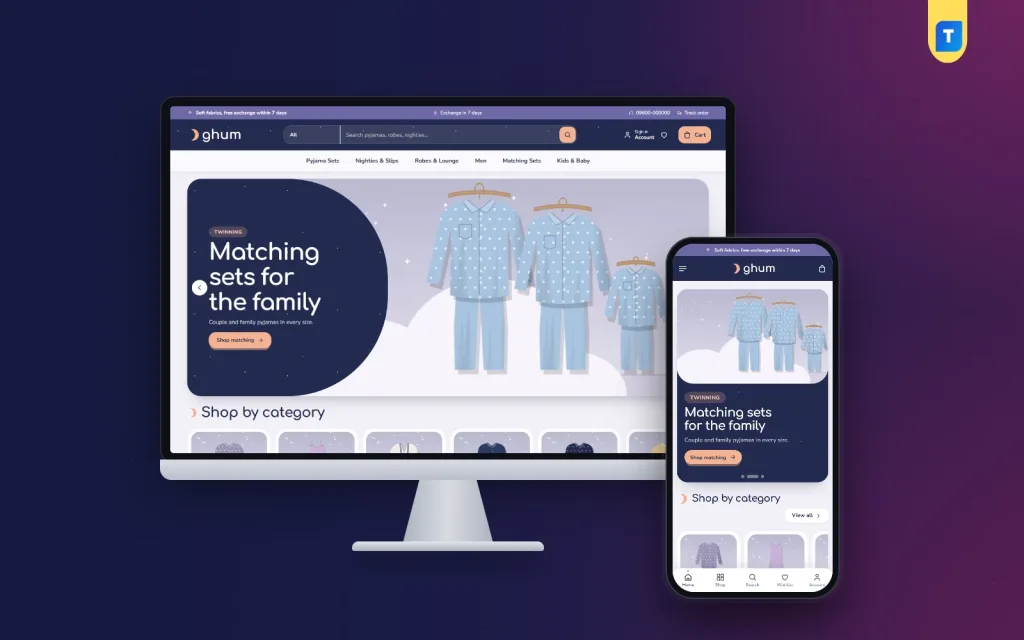
Our example store in this guide is Ghum – Sleepwear WordPress Theme, made for shops that sell pyjama sets, nighties and slips, robes and loungewear, men's sleepwear, matching family sets and kids and baby nightwear. It helps buyers choose by how they sleep, not only by colour. The groundwork comes first, though.
Why a Nightwear Brand Is a Good Small Business
Nightwear has three useful traits for a small label. Demand runs all year, because people need light sets for summer and warmer ones for winter. Fit is more forgiving than formal wear, so exchanges are fewer when your sizing is honest. And it makes an easy gift, for newly married couples, new mothers, parents and friends, which gives you reasons to advertise in every season.
It also suits small-batch production. You can start with a few patterns in two or three fabrics, test what sells and grow from there. A nightwear brand does not need a big studio shoot or a fashion week calendar. What it does need is good fabric, clean stitching, fair sizing and a clear story about comfort, told in words your buyers recognise from their own nights.
Choosing Your Niche and Range
Decide who you are dressing
Pick a starting audience. Women's pyjama sets and nighties are the obvious first range, but men's sleepwear, kids and baby nightwear, and matching couple or family sets are all growing. A new nightwear brand usually does better by doing one or two of these well than by listing everything at once. You can add the rest as orders and feedback come in.
Pick fabrics for the climate
Fabric is the heart of the product. Light cotton and bamboo suit hot, humid nights, satin feels special for gifts and wedding trousseaus, and flannel works for the short cold spell in winter. Write the fabric and how it feels on every product. Buyers who sleep hot and buyers who feel the cold need different things, and they will thank you for helping them choose.
Plan matching sets
Matching sets for couples, families and mother and child are some of the most shared photos on Facebook around Eid and family events. Plan them as real sets with every size covered, not as separate products that happen to look alike. Families will buy the whole set only if each person can get the right fit in a single order.
Sizing, Photos and Packaging
Write a size chart with chest, waist, length and inseam for every pattern, and note whether a style is cut loose or close. Nightwear should feel relaxed, so tell buyers when to size up for a roomier fit. Photograph each set on a hanger or flat on the same background, plus one close-up of the fabric. Model photos help, but clean product shots with honest colours matter more.
For a nightwear brand, packaging is part of the comfort story. A simple fabric pouch or a neat box with a thank-you card turns a pyjama set into a gift that people remember and share. It also reduces damage in transit. Keep packaging consistent so your parcel is recognisable, and add a small card with washing instructions so the fabric stays soft longer.
Setting Up a Nightwear Online Shop With Ghum
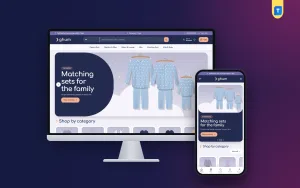
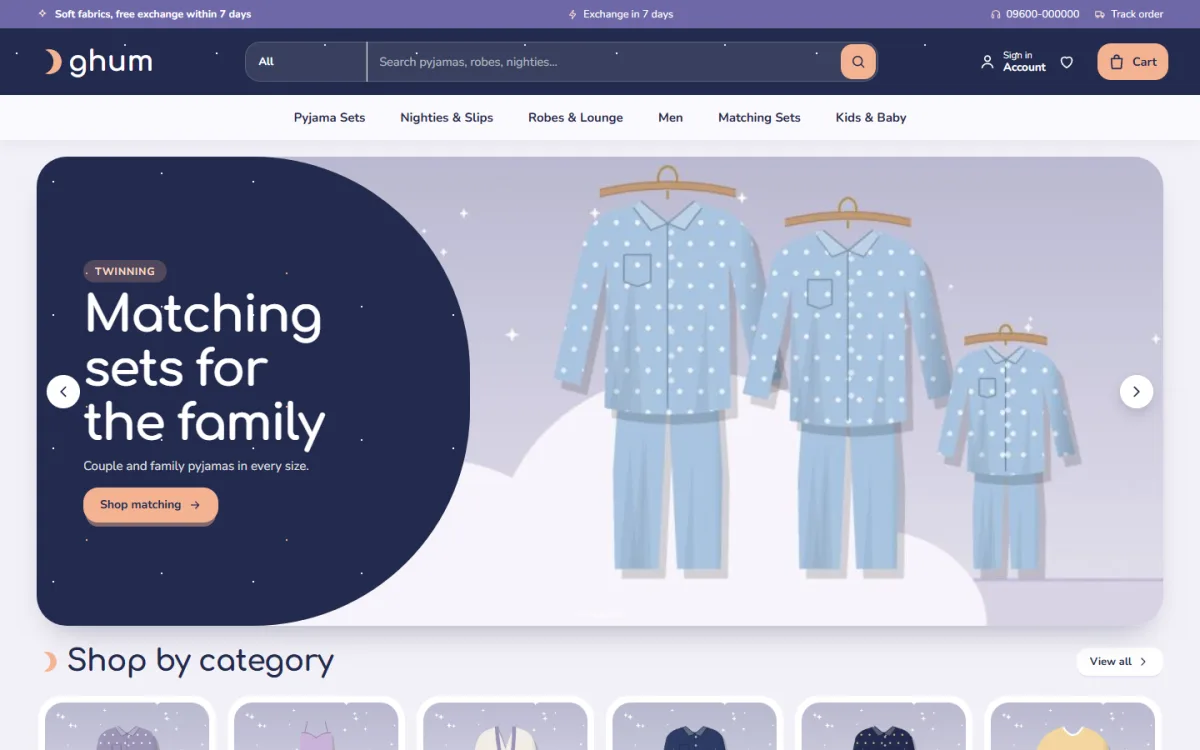
Ghum gives the store a calm, bedtime feel: a midnight header full of stars, lavender and peach tones, pillow-soft cards and rounded Comfortaa headings. In the demo, the menu lists Pyjama Sets, Nighties & Slips, Robes & Lounge, Men, Matching Sets and Kids & Baby, and the search bar sits inside the starry header beside the account, wishlist and a peach cart button.
Sleep match: help by how people sleep
The Sleep match block starts with a bedroom-temperature slider and one simple choice: do you sleep hot or cold? From those two answers it names a fabric, bamboo, cotton, satin or flannel, and lists the pieces you sell in it. A shopper who wakes up sweaty and one who pulls up a blanket get different suggestions, which is the kind of advice a good shopkeeper gives across the counter.
Matching sets with a size for each person
The Matching sets block has four tabs: couple, family of three, family of four and mom and me. Each tab lists the pieces in the set with a size picker for every person, a set total and one button that adds the whole set to the bag. Nobody has to order four pyjama sets one by one and mix up whose size was whose.
A homepage that can grow with the brand
Ghum ships with 24 homepage blocks. Seventeen are on in the demo and seven rest until you need them, and Homepage layout lets you switch blocks and drag them into order, with arrow buttons on phones. The hero shows night-sky slides, Shop by category uses cloud-shaped tiles, and you also get New arrivals, Best sellers in tabs, Night sale with a countdown and stock bars, Shop by who, three departments, Shop by budget and a Sleep journal for your latest posts.
Product Pages, Phones and Late-Night Orders
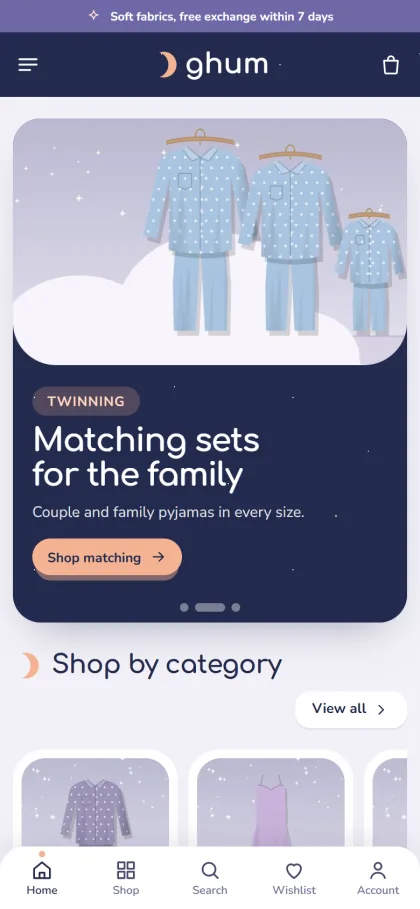
Sleepwear is often bought late in the evening, in bed, on a phone. Ghum keeps the phone header to the menu, logo and cart, with compact product cards. The mobile screenshot shows the hanging pyjama sets above the dark Twinning card with its Shop matching button, then the cloud tiles of Shop by category, and a bottom bar with Home, Shop, Search, Wishlist and Account.
Product pages show a fit meter, fabric and feel details and an expected delivery date, so a gift arrives on time. Customers sign in through a popup, reviews sit in a fold with a popup asking for the first one, and the wishlist keeps gift ideas safe. Checkout fits on one page and ends with an Order placed popup, and size guide, back-in-stock, offers and returns are switched on from the start.
Payments, Delivery and Marketing
Ghum runs on Themeve Commerce, which comes with the theme and installs during setup. At checkout buyers choose bKash, Nagad, SSLCommerz, cash on delivery or manual payment, and Steadfast and Pathao courier deliver, with coupons, invoices and a Track Order page built in. New-order alerts can reach your Telegram, so orders placed at midnight are waiting for you in the morning. SMS and OTP help with customer contact.
For a nightwear brand, marketing works best when it is warm and practical rather than flashy. Talk about fabric, sleep and comfort, and share honest customer photos of matching family sets. Ghum supports the Facebook Pixel with the Conversion API, so you can see which ads lead to orders. Evening ads often do well, since that is when people think about sleep. Bangla captions about cool cotton in summer or soft flannel in winter feel natural.
Cash on delivery is common for first orders. Confirm larger or gift orders by phone, check sizes for each family member in a matching set, and encourage repeat buyers to pay through bKash or Nagad. Keep your exchange rule simple and visible, because a relaxed buyer is more likely to try a second fabric or style.
Installing Ghum and Loading the Demo
Ghum needs WordPress 6.0 or above and PHP 7.4 or above, and it is tested up to WordPress 7.1. Go to Appearance, Themes, Add New, Upload Theme, select the Ghum zip and activate it. Install the bundled Themeve Commerce plugin from Ghum, Setup in one click, then add the licence key from My Account, Licenses in Ghum, License so updates arrive through your Themeve account.
Import the Sleep & Lounge demo in Ghum, Demo Import. It adds 25 products from 2 sample lines, covering pyjama sets, nighties, robes, men's sleepwear, matching family sets and kids and baby, and builds the sleep match, matching sets, sleep journal, menus and pages such as About Ghum, Delivery, FAQ, Our Stores, Returns & Exchange, Sleep Journal and Track Order. All pictures and line names are invented samples.
Then choose a palette in Ghum, Theme Options or the Live Customizer: Midnight & peach, Sage dream, Rose dusk, Sky blue or Cocoa, with four font pairs and every colour editable. The options dashboard works on a phone too. If WordPress is new to you, the WordPress documentation explains menus and pages step by step.
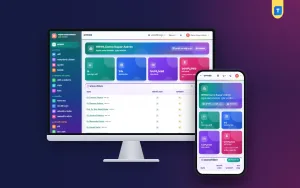
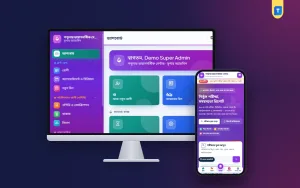
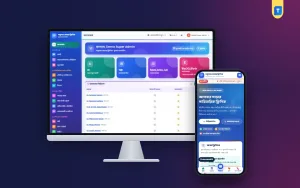
To see it in action, open the live demo on your phone at night, the way your buyers will. Try the Sleep match slider and build a family set. Then open the demo dashboard to see where products, sets and orders are managed under the Shop menu.
Mistakes to Avoid When Starting Out
The most common mistake is listing nightwear only by colour and size, with nothing about fabric or feel. Buyers cannot touch the cloth online, so your words have to do it. Another is launching too many styles at once and running short of sizes in the ones that sell. A third is selling matching sets as separate products, which leads to wrong sizes and split parcels.
Smaller mistakes add up too. Photos taken under warm indoor light make pastel fabrics look yellow, size charts skip the length measurement, and old night sale banners stay up after the offer ends. Some sellers also never reply to reviews. Fix these early and a nightwear online shop becomes a steady business that families return to each season.
Frequently Asked Questions
Which fabrics should a new nightwear brand start with?
Start with breathable cotton for most of the year, since it suits hot and humid nights. Add satin for gifts and special occasions and a little flannel for winter. In Ghum, the Sleep match block points buyers to bamboo, cotton, satin or flannel based on room temperature and whether they sleep hot or cold.
Can a family buy matching pyjamas in different sizes?
Yes. The Matching sets block has couple, family of three, family of four and mom and me tabs. Each person picks a size, the set total updates, and one button adds everything to the bag, so the whole family's order goes out together.
Are there other Themeve themes for clothing shops?
If your shop is built around Eid and wedding outfits, see Mela – Festive Wear WordPress Theme. For sarees and handwoven fabric, Tanti – Saree and Handloom WordPress Theme is the closer match. Ghum suits labels selling pyjamas, nighties, robes and loungewear.
Final Thoughts
A nightwear brand grows on good fabric, honest sizing, thoughtful matching sets and a store that helps people choose by how they sleep. Start small, learn what your buyers love, and build trust one comfortable set at a time. When you are ready to sell online, start your store with Ghum – Sleepwear WordPress Theme and let the Sleep match and Matching sets blocks help every buyer find the right fit.