A dairy business in Bangladesh can mean many things: a small farm with ten cows, a milk collection and delivery route, a sweet and doi maker, a ghee brand or a breakfast service that brings milk, eggs and bread to the door each morning. Demand is steady, because families buy milk and eggs almost every day, and interest in fresh, unmixed milk keeps growing in the cities.
This guide walks through the main models, the costs, quality and hygiene, licences, pricing, delivery and selling online, in plain words. It is written for young farmers, small dairy owners, home producers of doi and ghee, and founders who want to build a morning delivery brand.
Why dairy is a good business to look at
Most city families still buy loose milk from a vendor or packet milk from a shop, and many worry about water mixing, powder or preservatives. A seller who offers clean, fresh milk with honest fat and a reliable morning delivery can win loyal customers who order every single day for years.
Dairy also leads naturally to higher-value products. Surplus milk becomes doi, mishti doi, ghee, butter, paneer or cheese, which keep longer and earn better margins than raw milk. Eggs and bread fit the same morning delivery route.
What makes it hard
- Short shelf life: raw milk spoils within hours without cooling.
- Daily routine: cows are milked and orders delivered every day, including holidays.
- Feed costs that rise with the market.
- Trust: one bad batch can lose a family for good.
Choosing your dairy business in Bangladesh model
Choose one model to start. Each needs different money, land, skills and hours.
- Small dairy farm: your own cows, milked and sold locally or to a collector.
- Milk collection and delivery: buying from several farmers and delivering to homes in a city area.
- Dairy products maker: doi, mishti doi, ghee, butter, paneer or cheese.
- Breakfast delivery service: milk, eggs, bread and bakes delivered before 8am.
- Egg business: deshi, farm and duck eggs sold by the dozen or tray.
- Home bakery that adds milk and eggs to its morning orders.
Many city founders start without a farm at all. They buy from trusted farms near the city, such as around Savar, Manikganj, Gazipur or Sirajganj, and focus on cooling, bottling, delivery and the customer relationship.
Costs and a simple starting budget
The budget depends a lot on the model. A farm needs cows, a shed, feed, water and a vet. A delivery brand needs cooling, bottles and riders. A products maker needs a clean kitchen and packing.
- Cooling: a chiller or freezer and, for larger volumes, a bulk milk cooler.
- Pasteurising and bottling: steel pots or a small pasteuriser, glass or food-grade bottles, caps and labels.
- Delivery: insulated bags or boxes and a bicycle or motorcycle for each rider.
- Testing: a lactometer and basic fat test kit, plus lab tests from time to time.
- Licences and paperwork.
- Working money for at least three months of feed, salaries and supplies.
Glass bottles that buyers return cost more at first but save money over time, and many families prefer them. Keep a record of how many bottles each household holds.
Quality, hygiene and the cold chain
Quality is the whole business. Milk must be clean, cooled quickly and kept cold until it reaches the buyer. Every hour at room temperature lets bacteria grow and shortens its life.
- Clean milking: washed udders, clean hands and clean steel buckets.
- Fast cooling: chill milk within two hours of milking.
- Pasteurise before sale unless your buyers clearly want raw milk and understand the risk.
- Test every batch for water mixing with a lactometer and keep notes.
- Wash and sterilise bottles after every return.
- Keep doi, ghee and butter in clean containers with dates on the label.
For eggs, check for cracks, keep them cool and dry, and sell older stock first. For bakes, use fresh dairy and eggs and mark the baking date clearly.
Working with partner farms
If you buy milk instead of producing it, your partner farms are your most important relationship. Visit them often, check how cows are milked and how quickly milk is cooled, and test every delivery. Pay on a fixed day each week. Farmers who are paid on time and treated fairly will give you their best milk, and they will tell you early when supply drops in the hot months.
Agree on a simple quality rule from the start: milk that fails the lactometer test or smells sour goes back. A clear rule protects both sides, and it is one of the habits that separates a lasting dairy business in Bangladesh from one that fades after a few months.
Animal care if you run a farm
Healthy cows give more and better milk. Work with a local vet, vaccinate on time, give clean water and balanced feed, and keep the shed dry and airy. A sick cow's milk should never reach a customer.
Eggs and bakes on the same route
Once milk deliveries are steady, eggs and bread are the easiest additions. They go to the same homes at the same hour, so each rider earns more per trip. Buy eggs from one or two trusted farms, check them for cracks every morning, and agree with a local bakery for fresh bread if you do not bake yourself.
Start with a few items and add more only when they sell every day.
Licences and the legal basics
You will usually need a trade licence from the city corporation, municipality or union parishad, a TIN and a bank account in the business name. Packed dairy products come under food safety and labelling rules, and some products may need BSTI certification. A farm may need registration with the livestock office. Rules change, so confirm with the local offices before you start selling packed products.
Labels should show the product name, net volume or weight, ingredients, fat or type where relevant, packing date, best-before date, storage advice, your business name and phone number. Avoid health claims you cannot prove.
How to sell milk products online
A morning delivery business runs on regular orders, and orders are easiest to handle in one place. Many sellers start with WhatsApp: customers message each evening, and the owner writes a list for the riders. It works for twenty homes, but at a hundred homes it becomes a daily headache of missed messages and wrong addresses.
If you are asking how to sell milk products online properly, the answer is a website where buyers choose milk, doi, eggs and bread, pick sizes, pay on delivery or by bKash or Nagad, and add a note for the rider. You then see every order for the next morning in one list.
What a dairy and breakfast website needs
- Sizes and packs: 500 ml, 1 L and 2 L milk; 12 or 30 eggs; small and large doi.
- Quick add to cart from the product list, because buyers order the same things.
- A simple checkout: name, mobile number, district and address, with a delivery note.
- Cash on delivery, bKash and Nagad.
- A clear cut-off time, such as "order by 9pm for tomorrow morning".
- Mobile-number accounts so regular buyers can reorder in seconds.
- A WhatsApp button for questions and changes.
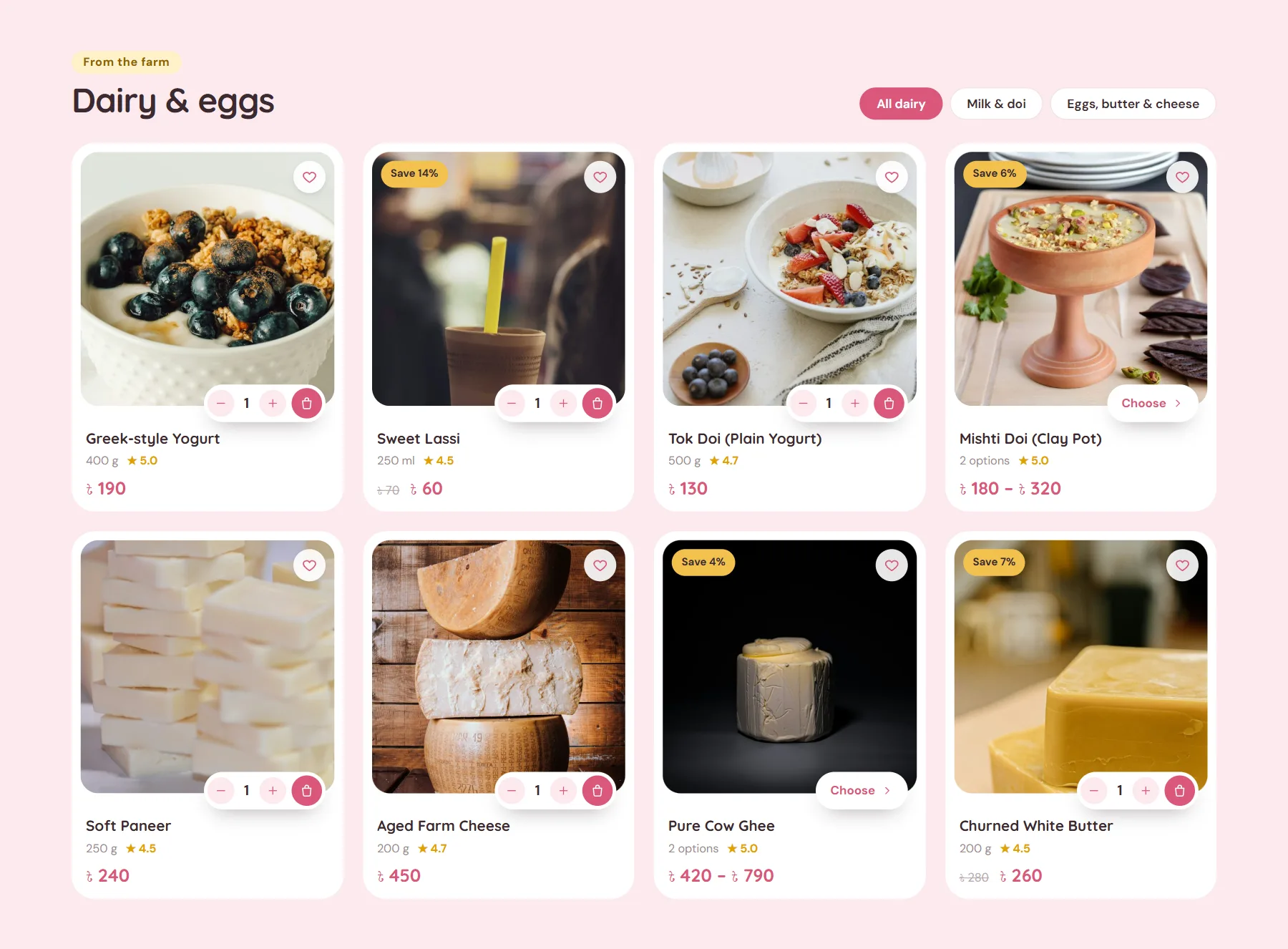
Shishir, our dairy and bakery store theme for WordPress, was designed for this morning routine. It runs on WooCommerce and the free Elementor, with size options, product cards with a quantity pill, a Bangladesh checkout, bKash and Nagad and a WhatsApp-led milk subscription card in the footer. You can see it on the live Shishir demo.
Regular customers and subscriptions
Daily milk customers are the heart of the business. Many sellers keep a simple list of regular homes, their daily amount and their bottle count, and take changes such as "no milk on Friday" by WhatsApp. Billing weekly by cash, bKash or Nagad is common and easy for families. Start simple, and only add a more complex system when the list grows large.
Pricing, delivery and growth
Price your milk from real costs: milk or feed, cooling, bottling, delivery, wastage and your time. Fresh, unmixed milk delivered to the door is worth more than loose market milk, so explain the difference rather than matching the cheapest price.
- Earn more on products: doi, mishti doi, ghee, butter and paneer carry better margins than raw milk.
- Use surplus milk for doi and ghee rather than selling it cheap.
- Bundle the morning: milk, eggs and bread in one delivery raise the order value.
- Weekend specials: sourdough, croissants, cakes or clay-pot mishti doi.
- Free delivery above an amount, so small orders still make sense.
Deliveries usually run between 6am and 8am inside a fixed area. Plan routes so each rider covers nearby homes, and ask riders to call or ring at an agreed time. A late delivery is the most common complaint in this trade, more common than price.
Marketing that works for dairy
Show the farm, the cows, the cooling and the bottling. Short videos at dawn do more than any discount. Offer a one-week trial, ask happy families to share with neighbours, and post recipes such as payesh, doi and pancakes. Google's guide to helpful, people-first content is a good reference when you write product pages and blog posts.
Seasons and festivals
Milk supply and demand both change through the year. In the hot months cows give less milk and it spoils faster, so cooling matters even more. Demand for milk, doi and ghee jumps before Eid, during Ramadan for iftar and sehri, and in winter for payesh and pitha. Plan stock, bottles and extra riders a few weeks ahead, and take festival pre-orders so you know what to prepare.
Any dairy business in Bangladesh also feels the effect of floods and road problems on feed and transport. Keep a small reserve of feed if you run a farm, and have a second supplier if you buy milk.
Common mistakes to avoid
- Weak cooling, which spoils milk and trust together.
- Growing the route too fast so deliveries arrive late.
- No records of bottles, payments and daily amounts.
- Selling only raw milk and wasting the surplus.
- Taking every order by chat, so changes get lost.
Dairy business in Bangladesh: launch checklist
- Choose your model: farm, collection and delivery, products, or breakfast delivery.
- Find two or three trusted farms or set up your own shed with a vet.
- Set up cooling, pasteurising, bottles and labels.
- Get trade licence, TIN and bank account; check food safety and labelling rules.
- Work out your full cost per litre and per product.
- Build a simple website with sizes, mobile checkout, bKash and Nagad and a WhatsApp button.
- Plan delivery routes and train riders.
- Launch with a one-week trial for twenty to fifty homes nearby.
A dairy business in Bangladesh grows by keeping promises every single morning. Start with a small area, make every delivery on time, and let your regular families bring their neighbours.
Watch five numbers each week: litres sold, waste, active daily customers, average order and late deliveries. When all five move the right way, it is time to add a new area or a new product.
Frequently asked questions
Is a dairy business in Bangladesh profitable?
It can be, especially when you sell directly to homes and turn surplus milk into doi, ghee and butter. Profit depends on cooling, low waste and regular customers.
Do I need my own cows to start?
No. Many city brands buy from trusted farms and focus on cooling, bottling and delivery. You can add your own farm later.
Which licences do I need?
Usually a trade licence, TIN and bank account, plus food safety and labelling rules for packed products. Some items may need BSTI certification. Confirm with the local office.
What is the best way to start a dairy business in Bangladesh online?
Start in one area with a short product list, a simple website with mobile checkout and cash on delivery, a clear order cut-off time and reliable morning riders.
How do I keep milk fresh during delivery?
Chill it within two hours of milking, pasteurise it, keep it in insulated bags or boxes with ice packs, and deliver within a short morning window.