Good ethnic wear website design starts with one honest question: what does a buyer need to know before she or he pays for a panjabi, a saree or a sherwani? Most of the answers are about size, colour, fabric and delivery date. A site that gives those answers fast sells. A site that hides them gets a Messenger message and a lost customer.
This guide is written for small clothing sellers in Bangladesh who want their own online shop instead of only a Facebook page. You will see how to plan the catalogue, lay out the pages, handle festival season, take payments and ship parcels. There are checklists you can copy, and a short section on a ready-made option at the end.
What ethnic wear buyers expect from a website
Traditional clothing is not like a plain tee. Buyers care about the cut, the embroidery, the fabric and the occasion. Many are buying for Eid, a wedding or a family event, so the date matters as much as the price.
Before you open any design tool, write down what your buyer wants to check in the first minute:
- Which style is this: cotton panjabi, kabli, koti set, sherwani, saree, salwar kameez?
- Which fit will suit me: slim, regular or long?
- Is my size in stock, and in my colour?
- How much is delivery, and will it arrive before the event?
- Can I exchange it if the size is wrong?
- Can I pay by bKash, Nagad or cash on delivery?
If your pages answer these six questions without a phone call, your design is already better than most shops.
Plan the catalogue before you plan the look
Many owners start with colours and fonts. Start with the product list instead. The structure of your categories decides how easy the shop is to use.
Choose categories buyers actually search for
Strong ethnic wear website design begins with the words your customers use on the phone. A simple category tree for a menswear shop might be:
- Panjabi: cotton, embroidered, printed, Eid collection
- Kabli and pajama sets
- Koti and waistcoat
- Sherwani and groom wear
- Kids and family sets
For a womenswear shop you could use saree, three-piece, kurti, and festival wear. Keep the first level to six or eight items. More than that looks crowded on a phone.
Use tags for colour and occasion
Categories say what a product is. Tags say how it looks or when it is worn. Colour tags such as maroon, navy, cream and black let a buyer filter fast. Occasion tags such as Eid, wedding and daily wear help you build special pages without copying products.
Write the same details for every product
Fix a template and follow it for all items. A good one has fabric, fit, length, embroidery type, wash care, available sizes and what is included in the set. If the pajama comes with the panjabi, say so. Buyers notice it.
Ethnic wear website design: the homepage layout
The homepage is a shop window, and most ethnic wear website design templates give you a ready frame for it. It should show the festival, the main categories and your best items without making the visitor scroll through noise. A layout that works well for a clothing seller looks like this.
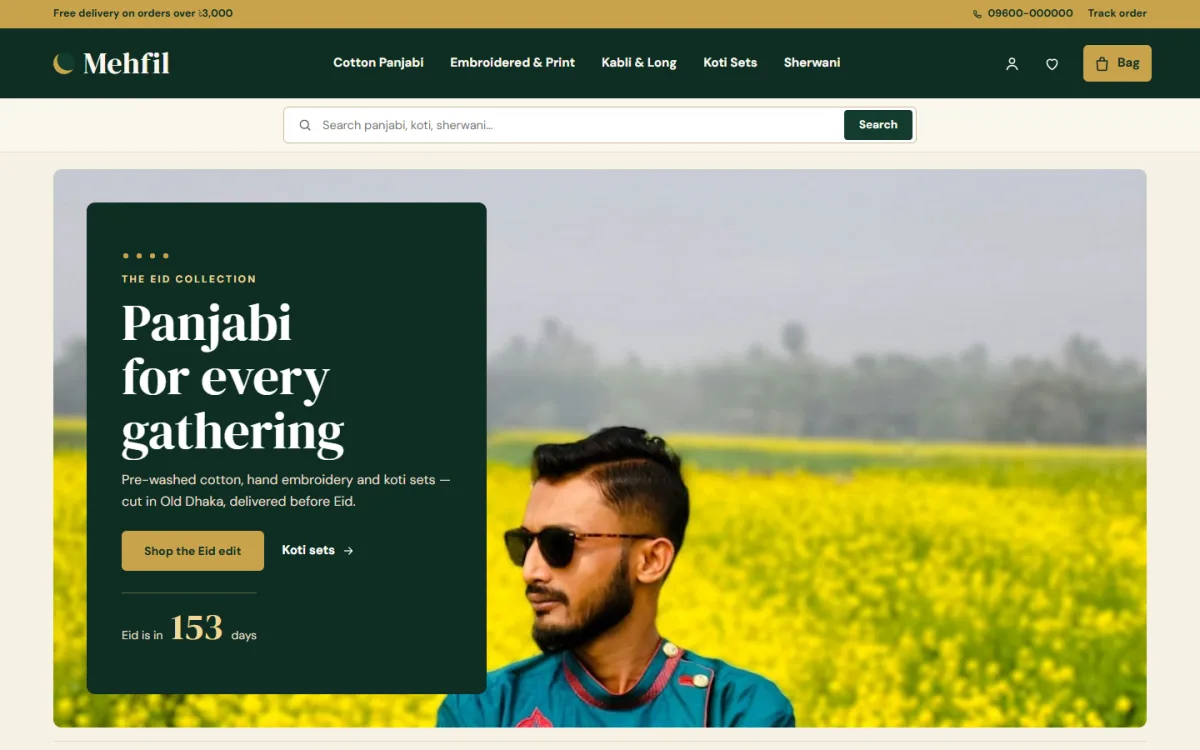
- Top bar: a short offer, delivery message and hotline number.
- Header: logo, search, account, wishlist and cart.
- Hero: one strong photo, a short headline and two buttons, for example Shop panjabi and Shop sherwani.
- Shop by style: one tile per category with a clear photo.
- New arrivals: the newest six to eight pieces.
- Shop by colour: colour dots or chips that open a filtered list.
- Fit guide: a simple explanation of slim, regular and long.
- Best sellers: grouped by category in tabs.
- Reviews: a few real comments from buyers.
- Story: a short note about who you are and where you make the clothes.
- Footer: delivery, exchange, size guide, contact and social links.
Keep each block short. Let people move down the page without a wall of text. If a block does not help the buyer decide, remove it.
Design for festival season, then for the rest of the year
For a panjabi house, a large share of yearly sales falls in the weeks before Eid. Your site should work as a festival machine in those weeks and as a calm shop afterwards.
Put the date in plain view
A days-to-Eid counter in the hero does two things. It creates honest urgency, and it tells the buyer how long delivery can take. Add a line such as "Order by the 20th for delivery before Eid" and update it as the date gets close.
Prepare the site two weeks early
- Upload the Eid collection and check every size and price.
- Test checkout on a phone with bKash, Nagad and cash on delivery.
- Set delivery charges for inside and outside Dhaka.
- Write a clear last-order date for each city.
- Turn on back-in-stock alerts for popular sizes.
Switch the page back after the festival
When Eid is over, remove the counter and move wedding or daily wear to the top. A site that still shouts about a finished festival looks forgotten. Good ethnic wear website design lets you re-order the homepage in minutes, without a developer.
Size, fit and colour guides that cut messages
Most chats with a clothing buyer are about size. A guide on the site saves you hours each week and lowers returns.
A chest-size chart for menswear
For panjabi and sherwani, a chest chart is the clearest tool. List the chest size in inches, the matching label (S, M, L, XL) and the garment length. Put the chart on every product page and also on a separate Size Guide page.
Explain slim, regular and long
Many buyers know the look they want but not the word for it. A small drawing for each cut helps a lot. Add one line under each: "Slim sits close to the body", "Regular has room at the waist", "Long ends below the knee".
Show colour honestly
Colour is the top reason for returns. Photograph the piece in daylight, keep editing light, and name colours the way buyers say them: maroon, bottle green, off-white. If a screen may change the shade, add a short note. Colour dots linked to tags let a buyer who wants maroon see only maroon.
Photos that sell traditional clothing
You do not need a studio to get this part of your ethnic wear website design right, but you do need a plan.
- Shoot every item from the front, the back and a close-up of the embroidery or collar.
- Use a plain, light background so the colour looks right.
- Show one photo on a person so buyers can judge the length and fit.
- Keep the same crop and size for all products so the grid looks tidy.
- Compress images before upload so pages stay quick on mobile data.
Write a short alt text for each photo, such as "maroon cotton panjabi with collar embroidery". It helps accessibility and gives search engines a clear picture of the page.
Product cards and product pages
The product card is the small box in a grid. Make it do real work. Show the photo, name, price, old price if on sale, and the available sizes. When sizes appear on the card, a buyer can add the right size without opening the page.
What a good product page includes
- Large photos with zoom
- Name, price and discount
- Size selector and colour selector
- Add to cart and Buy now buttons
- Delivery charge and expected days
- Return and exchange rules in plain words
- Fabric and care notes
- A row of items often bought together, such as a koti with a panjabi
- Reviews
Do not bury the exchange rule in the footer. Put a short version near the button. It calms buyers who are scared of buying the wrong size online.
Payments and delivery in Bangladesh
Even the best ethnic wear website design templates cannot help if the checkout fails. A pretty site is not enough if the checkout fails. Bangladeshi buyers expect to pay in the way they already trust.
Payment methods to offer
- bKash and Nagad: the most used mobile wallets for online orders.
- Card or gateway: useful for buyers who prefer cards.
- Cash on delivery: still the choice for many first-time buyers.
- Manual payment: for orders where the buyer sends money and shares a transaction ID.
If you offer cash on delivery, think about returns. A small advance payment on large orders, such as a sherwani set, protects you from fake orders.
Couriers and tracking
Pick one or two couriers and connect them to the shop so you do not type addresses by hand. Show delivery charges by zone, one rate inside Dhaka and another outside. A Track Order page lets buyers see where the parcel is, so they stop calling you every hour in Eid week.
Make the shop work well on a phone
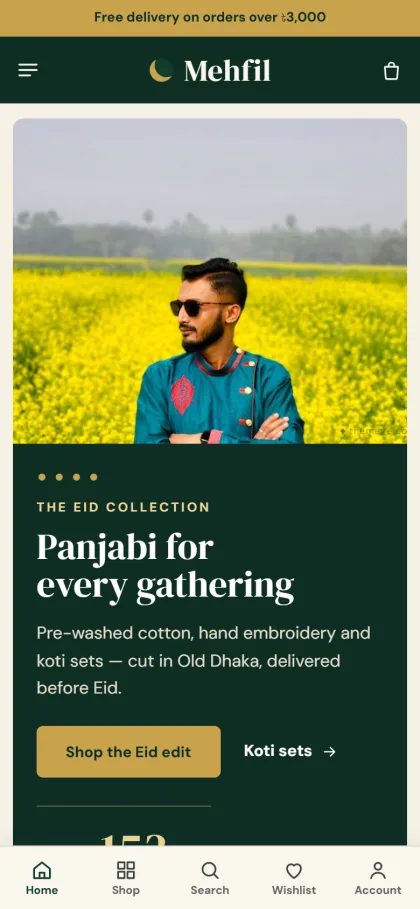
Most of your visitors will come from Facebook or Instagram on a phone. Test every page on a small screen before you launch.
- Buttons should be large enough for a thumb.
- The cart should be one tap away.
- Checkout should fit on a single page with few fields.
- Sign in and register should open in a popup so the buyer does not lose the cart.
- Text should be readable without zooming.
Speed matters as much as layout. Keep the page light, avoid heavy sliders, load images lazily and use fast fonts. Festival days bring bursts of traffic, and a slow site loses those buyers.
A ready-made option: Mehfil
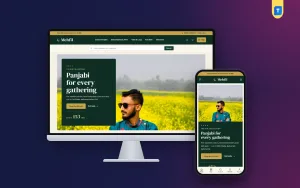
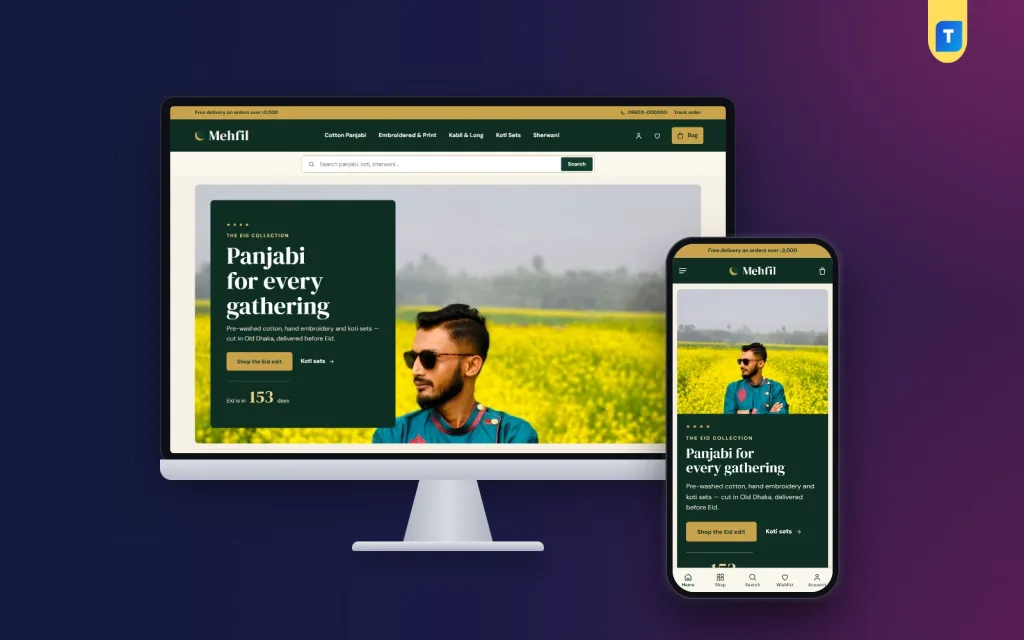
If you would rather not build every block yourself, Mehfil is a WordPress theme made for panjabi houses and menswear shops. The idea behind it matches the plan above, with a green and gold look, a days-to-Eid counter and a fit guide on the homepage.
Here is what it includes, taken from the product page:
- An Eid hero with a days-to-Eid counter that you set in Theme Options
- Arched style tiles for each category
- Shop by colour, with dots linked to your colour tags
- A slim, regular and long fit guide with drawings
- Chest sizes that rise on product cards for one-tap add
- A chest-size guide and a Size Guide page
- 14 homepage blocks that you can switch off or re-order
- Four colour palettes and five font pairs
- bKash, Nagad, SSLCommerz and cash on delivery
- Steadfast and Pathao courier with order tracking
- A one-click demo with 47 panjabi house pieces
The store plugin is part of the package, so you do not need WooCommerce. The demo is a panjabi house, but the same structure suits saree, kurti and wedding wear sellers too. You can see the layout on the Mehfil product page and decide if it fits your range.
Common mistakes in ethnic wear website design
- Hiding the size chart. Put it on every product page.
- Too many homepage sliders. They slow the page and few people click past the first slide.
- Dark or dull photos. Colour is the main reason for returns.
- No delivery date. Festival buyers need to know it will arrive in time.
- Forcing account creation. Let guests check out, and offer sign-up after the order.
- One long page for everything. Use clear categories and filters.
- Old festival banners. Remove them when the event is over.
- No contact details. Show a hotline and WhatsApp or Messenger link in the header and footer.
Launch checklist for your clothing store
- Choose a domain that is short and easy to spell in Bangla and English.
- Set up hosting with an SSL certificate so the site opens with https.
- Install the theme and import the demo to see the structure.
- Replace demo products with your own, using the same detail template.
- Add your logo, colours and fonts.
- Write the delivery, exchange and privacy pages.
- Connect bKash, Nagad and your courier.
- Place three test orders on a phone, one with each payment type.
- Check the site speed and fix any heavy image.
- Share the link on your Facebook page, pin it in the bio and add it to every post.
If you want to read more on the technical side, the official WordPress documentation is a good, reliable reference.
Frequently asked questions
What is the best ethnic wear website design for a small shop?
A simple one. Use a clear hero, category tiles, a size guide, colour filters and a short checkout. Good ethnic wear website design shows size, fit, colour and delivery time on the page, so buyers need no extra questions.
Can I use one theme for panjabi, saree and kurti?
Yes, as long as your categories are clear. The layout depends on how you group products, not on the name of the garment. Use tags for colour and occasion so every type can be filtered.
Do ethnic wear website design templates work on phones?
A good template is built for phones first, because most buyers arrive from social media. Check the demo on your own phone before you buy, and test your own pages after setup.
How many products should I upload before launch?
Start with 20 to 40 well-photographed items across your main categories. A smaller catalogue with full details beats a large one with missing sizes and poor photos. Add more every week.
Which payment methods should a clothing shop offer?
Offer bKash, Nagad and cash on delivery at least. Add a card gateway if your buyers ask for it. Make sure each method is tested on a phone before the festival rush.
How do I reduce returns for traditional clothing?
Give a chest-size chart, explain the cut with simple drawings, show colours in daylight photos and state the exchange rule near the buy button. Most returns come from wrong size and surprise colour.
Do I need WooCommerce for an online clothing store?
Not always. Some themes bring their own store plugin that handles products, cart, checkout and orders. Mehfil, for example, includes one, so you can set up the shop without adding another plugin.