If you are searching for how to start super shop business in Bangladesh, you have probably noticed how fast neighbourhood super shops are spreading. Families in Dhaka, Chattogram, Khulna and district towns now prefer fixed prices, clean shelves and air-conditioned aisles to bargaining in the bazar. A well-run super shop can become the place a whole area buys its monthly groceries.
It is also a business with real risks: big stock costs, thin margins on staples, expiry dates and staff to manage. This guide walks through each step in simple words, from the first budget to taking orders online, so you can plan before you sign a rental agreement.
What a super shop really is
In Bangladesh, people use "super shop" for any self-service store with fixed prices, a cash counter and a wide range of goods: rice, dal, oil, spices, snacks, drinks, frozen food, cleaning products, cosmetics and baby care. Some are large chain stores, but most are single shops of 800 to 3,000 square feet run by one owner.
The difference from a mudi dokan is not only size. A super shop lets buyers pick from the shelf, shows the price on every item, keeps products clean and checked for expiry, and records every sale through a point-of-sale (POS) system. Those habits are what buyers pay for.
Three common formats
- Mini mart: 500 to 1,000 square feet, daily essentials, one or two counters.
- Neighbourhood super shop: 1,000 to 3,000 square feet, fresh section, frozen food and household goods.
- Online-first super shop: a small store room, a website and riders, with no large walk-in space.
Is supermarket business profitable?
Many people ask this first: is supermarket business profitable in Bangladesh? It can be, but the money comes from volume and a smart product mix, not from high margins on every item. Rice, oil, sugar and flour often earn only a few taka per unit because buyers compare those prices everywhere.
Margins are better on snacks, drinks, cosmetics, cleaning products, frozen food, imported items and your own packed goods such as spices or dates. A healthy super shop sells the staples to bring people in and earns its profit on the rest of the basket.
Where profit leaks
- Expired stock that was not checked or moved forward in time.
- Theft and miscounting at the shelves and the counter.
- Slow items that sit for months and tie up cash.
- High rent compared with the sales the area can support.
- Too many discounts that buyers learn to wait for.
How to start super shop business in Bangladesh: location and budget
The right location matters more than anything else. Look for an area with many families within ten minutes, few modern shops nearby, and easy access from the main road. Count the buildings, watch the foot traffic in the evening and check whether there is space for a motorcycle or rickshaw to stop.
Check the electricity supply for fridges, freezers and air conditioning, the cost of a generator or IPS, and whether the space floods in the rainy season. A ground-floor shop with a wide glass front is worth more rent than a hidden first-floor space.
Main costs to plan
- Rent and advance for the space.
- Interior: racks, freezers, chillers, lights, air conditioning and the counter.
- POS system: computer, barcode scanner, receipt printer and software.
- Opening stock, usually the largest single cost.
- Licences, signboard and shopping bags.
- Working money for at least three to six months of rent, salaries and restocking.
Many owners underestimate the opening stock and the working money. A super shop with half-empty shelves looks like it is closing, so plan to fill the shelves properly from day one.
Licences and paperwork
You will usually need a trade licence from the city corporation or municipality, a TIN, VAT registration where it applies to your turnover, and a bank account in the business name. Selling packaged food also brings food safety duties, and some items such as medicines or tobacco need their own permissions. Rules change, so check with the local office or an accountant before you open.
If you plan to import goods directly, sell medicines or run a bakery counter inside the shop, ask early, because those parts often need separate approval and inspections. It is cheaper to plan the layout around them than to rebuild a counter later.
Keep copies of every licence at the shop and a calendar of renewal dates. A missed renewal can bring fines at a busy time like Ramadan.
Suppliers, stock and the POS
Big brands supply super shops through local distributors, who visit on fixed days, give credit on terms and sometimes pay for shelf space or promotions. For rice, dal, spices and fresh items you will also buy from wholesale markets or direct from mills and farms.
Building your first product list
Start with what your area buys every week. A family-heavy area needs rice, oil, baby care and detergents in large packs. An area full of students and bachelors needs noodles, eggs, bread, drinks and small packs. Walk the competitors' shelves, talk to building guards and house helpers, and list the top 500 items before you order.
Group the stock into clear departments: rice, dal and oil; spices and sauces; snacks and sweets; tea, coffee and drinks; cleaning and household; personal care; baby care; frozen and fresh. The same departments will later become the menu of your website.
Fresh and frozen sections
Fresh vegetables, fish, meat and dairy bring people in every day, but they also bring waste. Start with a small fresh corner and a few freezers, buy in small lots and sell the oldest stock first. Keep the freezers full but not packed, check temperatures twice a day and never refreeze products that have thawed during a power cut.
Why the POS matters
A POS records every sale, shows what is running low and tells you which items earn money. Without it, you are guessing. Train every cashier, keep barcodes on every product and count stock by section every week.
Pricing, offers and staff
Keep staple prices at or just below the printed price. Earn your margin on the wider basket and on your own packs. Use offers with a purpose: a weekly deal on a few items, a bulk pack that saves money, or a combo for Ramadan. Avoid constant discounts that train buyers to wait.
A small super shop usually needs a manager, two or three cashiers and shelf staff across two shifts, plus delivery riders if you deliver. Write down who opens, who counts cash, who checks expiry dates and who places orders. Clear roles stop arguments and missing money.
- Morning: receive deliveries, check expiry dates, fill the front shelves.
- Afternoon: pack online and phone orders, count one section.
- Evening: busiest hours at the counter, then cash count and reorder notes.
Home delivery and an online store
Most city buyers now expect delivery, especially for heavy items like rice, oil and water. You can begin with phone and WhatsApp orders and two riders. When orders grow, messages become hard to follow: prices change, addresses get lost and nobody remembers who paid by bKash.
An online store solves this. Buyers search your products, pick quantities, pay on delivery or by bKash or Nagad, and you get a clean list of orders to pack. Anyone opening a new shop today should plan the website alongside the shop, even if it goes live a few months later.
What a super shop website needs
- Fast search with live results, because buyers search more than they browse.
- Clear departments that match your shelves.
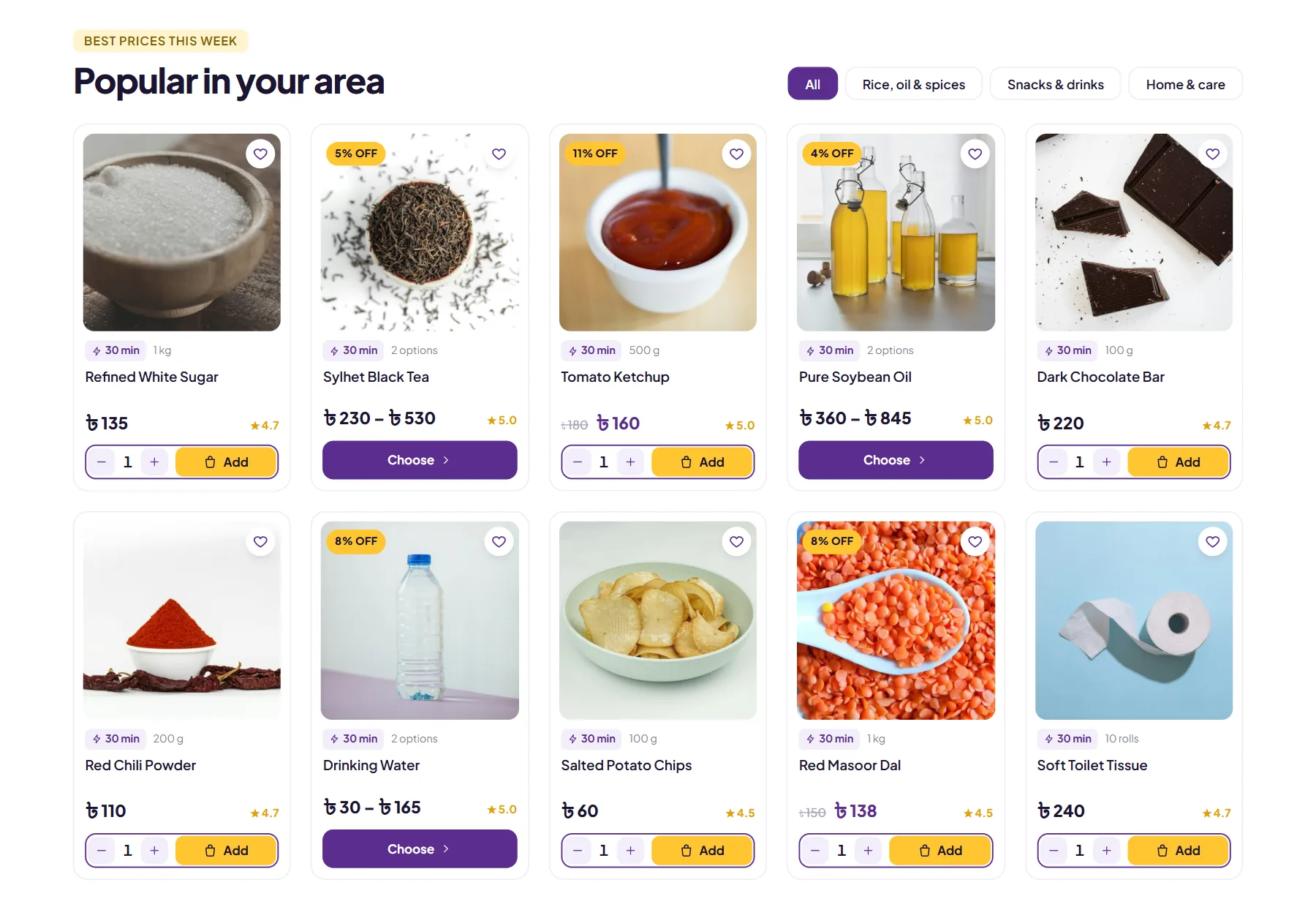
- Quantity on the product card, so a buyer can add twenty items without opening each page.
- A simple checkout: name, mobile number, district and address, with email optional.
- Cash on delivery, bKash and Nagad, with a Transaction ID field for Send Money.
- Delivery charge and a free delivery amount, so small orders stay worth it.
- A good phone layout, because most orders come from phones.
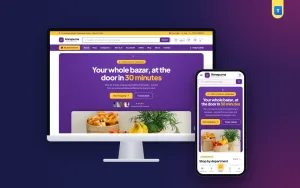
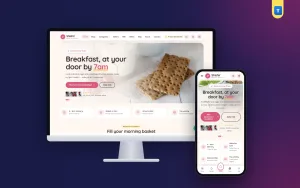
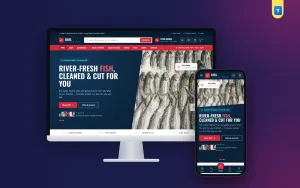
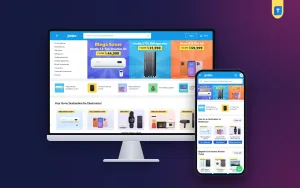
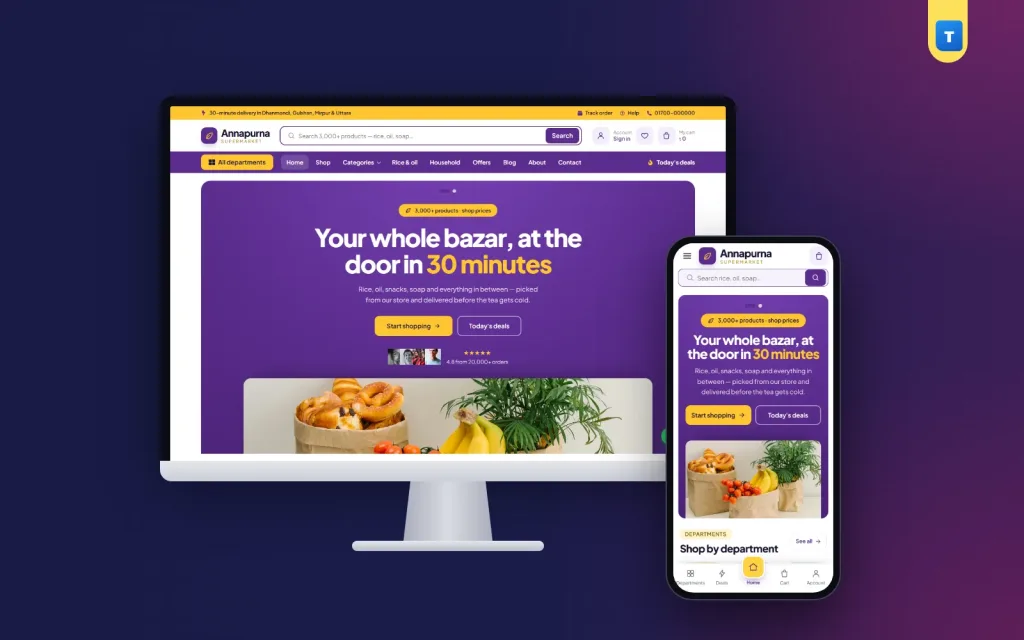
Annapurna, our online supermarket theme for WordPress, was built around this list. It runs on WooCommerce and the free Elementor, with a big live search, a department bar, product cards with a quantity pill, a Bangladesh checkout, bKash and Nagad, Steadfast courier, a fraud checker and a list of half-finished checkouts. You can try the live Annapurna demo to see a full basket go from search to checkout.
Fake orders and refused parcels
Cash-on-delivery shops sometimes get prank orders. Call new buyers before sending large baskets, limit how many orders one number can place in a day, and keep a short list of numbers that refused parcels before. Buyers who leave at checkout often had one small question, so a quick call can save the sale.
Marketing a new super shop
- Opening week offer: a small discount or free delivery for the first orders.
- Leaflets and building notices in the streets you deliver to.
- A Facebook page and WhatsApp group for daily deals and new arrivals.
- A monthly bazar pack for families, delivered on the first weekend of the month.
- Loyalty: a simple points card or a small gift after a number of orders.
- Clean, bright shelves and polite staff, which bring more repeat buyers than any ad.
When you run Facebook ads, track real purchases with the Pixel and Conversion API, not only likes. Write helpful posts and product notes too; Google's guide to helpful, people-first content is a good reference for any shop page or blog.
Common mistakes to avoid
- Opening too big, with rent and stock the area cannot support.
- No POS or stock counts, so losses stay hidden.
- Ignoring expiry dates, which damages trust in one bad purchase.
- Copying the shop next door instead of offering delivery, better hours or fresher stock.
- Running the online side only in Messenger, where orders get lost.
How to start super shop business in Bangladesh: launch checklist
- Area studied, rent agreed and power supply checked.
- Trade licence, TIN, VAT and bank account ready.
- Racks, freezers, lights and POS installed and tested.
- Distributors for major brands and two suppliers for each staple group.
- Top 500 items stocked, priced and barcoded.
- Staff trained on the counter, expiry checks and order packing.
- Phone and WhatsApp numbers on the signboard and Facebook page.
- Online store ready or planned, with your delivery areas and charges.
- Three to six months of working money kept aside.
Once the shop is stable, watch five numbers every month: daily sales, average basket size, gross margin, expired stock and repeat buyers. Grow what works, such as a stronger frozen section, your own spice packs or a second branch, and drop what does not.
Think about the second year early, too. Many owners add a members list with special prices, a small own-brand range of rice, spices or tissue, or a corporate supply service for nearby offices. Each of these raises the average order without needing a bigger shop.
The best super shops in any area are not always the biggest. They are the ones where prices are fair, shelves are full, dates are fresh and the delivery arrives when promised. Get those basics right and the rest follows.
Frequently asked questions
How to start super shop business in Bangladesh with a small budget?
Start as a mini mart in a busy residential area, stock the top items well, use a simple POS, and add home delivery and an online store as sales grow.
Is supermarket business profitable for a single shop?
Yes, if the location is right and costs are controlled. Profit comes from volume, repeat buyers and higher-margin items, not from staples.
Which licences do I need?
Usually a trade licence, TIN, VAT registration where it applies and a bank account. Some items need extra permission. Confirm with the local office.
What is the first step in how to start super shop business in Bangladesh?
Study the area. Count nearby families and competing shops, check rent and power, and only then plan the size, budget and stock.
Do I need a website from day one?
Not on day one, but plan it early. Phone and WhatsApp orders work at first; a website keeps orders, payments and delivery details clean once they grow.