Many people ask how to start rice business in Bangladesh because rice is the one food every family buys every month, in every season. The trade looks simple: buy paddy or milled rice, store it, sell it. In practice the money is made or lost in sourcing, moisture, storage, cash flow and the choice of which rice to sell and to whom.
This guide walks through the main models, from a retail rice shop to a premium online brand, with simple steps for sourcing, quality, licences, pricing, packing, selling online and delivery. It is written for first-time traders, young founders from rice-growing districts and shop owners who want to add a rice brand of their own.
Understanding the rice trade in Bangladesh
Bangladesh grows three rice crops a year. Aman is harvested around November and December and includes many aromatic varieties such as kalijira, chinigura and katari. Boro, harvested in April and May, is the largest crop and gives everyday rice like miniket-style and najirshail. Aus, the smaller summer crop, includes some red and heritage rice.
Rice moves from farmer to paddy trader (faria or bepari), to the mill (chatal or auto rice mill), to the wholesaler (arotdar), to the retailer and finally to the family. Every step adds cost and margin. A new business has to decide where in this chain it will sit.
Common types of rice to sell
- Everyday coarse and medium rice: high volume, low margin, price-sensitive buyers.
- Fine rice such as najirshail: the main rice for many city families.
- Aromatic rice such as kalijira and chinigura: for polao, festivals and gifts.
- Heritage and red rice: a growing niche among health-aware buyers.
- Parboiled versus atop: different buyers prefer different processing.
How to start rice business: choose your model
Pick one model first. Each needs a different budget, space and set of skills.
- Retail rice shop in a market or residential area, selling loose rice and branded packs.
- Wholesale trading: buying from mills in bulk and selling to shops and institutions.
- Small mill or husking unit in a growing district, buying paddy direct from farmers.
- Premium rice brand: sourcing aromatic or heritage rice, packing it well and selling online and through shops.
- Institutional supply to restaurants, hostels, madrasas and offices.
Small founders without much capital often do best with a premium brand, and it is the model most people mean when they ask how to start rice business from home or online. Wholesale and milling need large sums of money and long credit cycles. A brand can start with a few hundred kilos, a good source and an online shop.
Is rice business profitable?
It is a fair question to ask before you invest: is rice business profitable for a small trader? The honest answer is that ordinary rice has thin margins, often only a few taka per kilo, and prices swing with the harvest, floods and government purchase drives. Profit in everyday rice comes from volume, good storage and buying at the right time.
Premium rice behaves differently. Buyers who want kalijira for a wedding polao or unpolished red rice for health reasons pay for quality and trust, not only for weight. A clean, well-packed aromatic rice with a clear origin can earn a much better margin per kilo than common rice, especially when sold directly to families online.
Where money is lost
- Moisture and pests in poorly stored stock.
- Stones, husk and broken grains that bring complaints and returns.
- Buying at the wrong time, just before prices fall after a harvest.
- Credit to shops that pay late or not at all.
- Weak packing that tears in transit.
How to start rice business: sourcing, milling and quality
For a premium brand, sourcing is everything. Visit growing areas such as Naogaon, Dinajpur, Sherpur, Netrokona or Bogura during the harvest. Meet farmers and small mills, buy sample lots, and cook them at home before you commit. Aroma, grain length, how the rice cooks and how it tastes the next day all matter to your buyers.
Ask the mill how the rice is processed. Many premium buyers want rice that is not over-polished and has no added perfume. Small-batch milling and hand cleaning remove stones and husk, which is the single most common complaint in this trade.
Simple quality checks
- Moisture: rice that is too damp spoils and smells; dry it properly before packing.
- Cleanliness: no stones, husk or insects in a sample bowl.
- Broken grains: keep the share low for premium packs.
- Cook test: cook every new lot and check aroma and texture.
- Batch records: note the farm area, mill and date for each lot.
Licences, storage and packing
You will usually need a trade licence from the city corporation, municipality or union parishad, a TIN and a bank account in the business name. Packed food sold to the public also comes under food safety and labelling rules, and food grain trading can have its own licence rules. These change, so check with the local food office and an adviser before you start trading in volume.
Storage is where many first-year traders lose money without noticing. Store rice in a dry, cool, raised place, away from walls, in clean sacks or food-grade containers. Check stock for moisture and insects every week. Sell older lots first. In the monsoon, check twice a week, because damp air finds its way into sacks quickly and one wet corner can spoil a whole stack.
Planning your cash flow
Rice ties up a lot of money. You pay for the harvest in one season and sell it slowly over many months. If you are learning how to start rice business with limited savings, buy in smaller lots several times a year instead of one big purchase, and keep enough cash for packing, delivery and three months of costs.
Avoid giving long credit to shops in the first year. A few late payers can stop your next purchase. When you do give credit, write it down, set a clear limit and collect on fixed days.
Packing that sells
Good packing protects the rice and tells the story. Many premium brands use cloth or jute bags for 1 kg, 2 kg and 5 kg packs and strong sealed sacks for 25 kg family packs. The label should show the rice name, variety, origin district, harvest season, net weight, packing date, best-before date, your business name and phone number.
Selling rice online
Rice is heavy, and city families are happy to have it delivered. Many new brands start on Facebook and WhatsApp. That works for the first orders, but soon the price questions repeat, addresses get lost and payments are hard to match. A website with a cart, pack sizes and an order list makes the business easier to run and easier to trust.
What a rice website needs
- Pack sizes such as 1 kg, 5 kg and 25 kg, each with its own price.
- Clear origin notes: district, season, variety and how it is milled.
- A simple checkout: name, mobile number, district and address.
- Cash on delivery, bKash and Nagad, with a Transaction ID field for Send Money.
- Nationwide delivery charges and a free delivery amount for larger orders.
- Seasonal pages for new harvest rice, winter gur or festival bundles.
- A good phone layout, because most buyers order from phones.
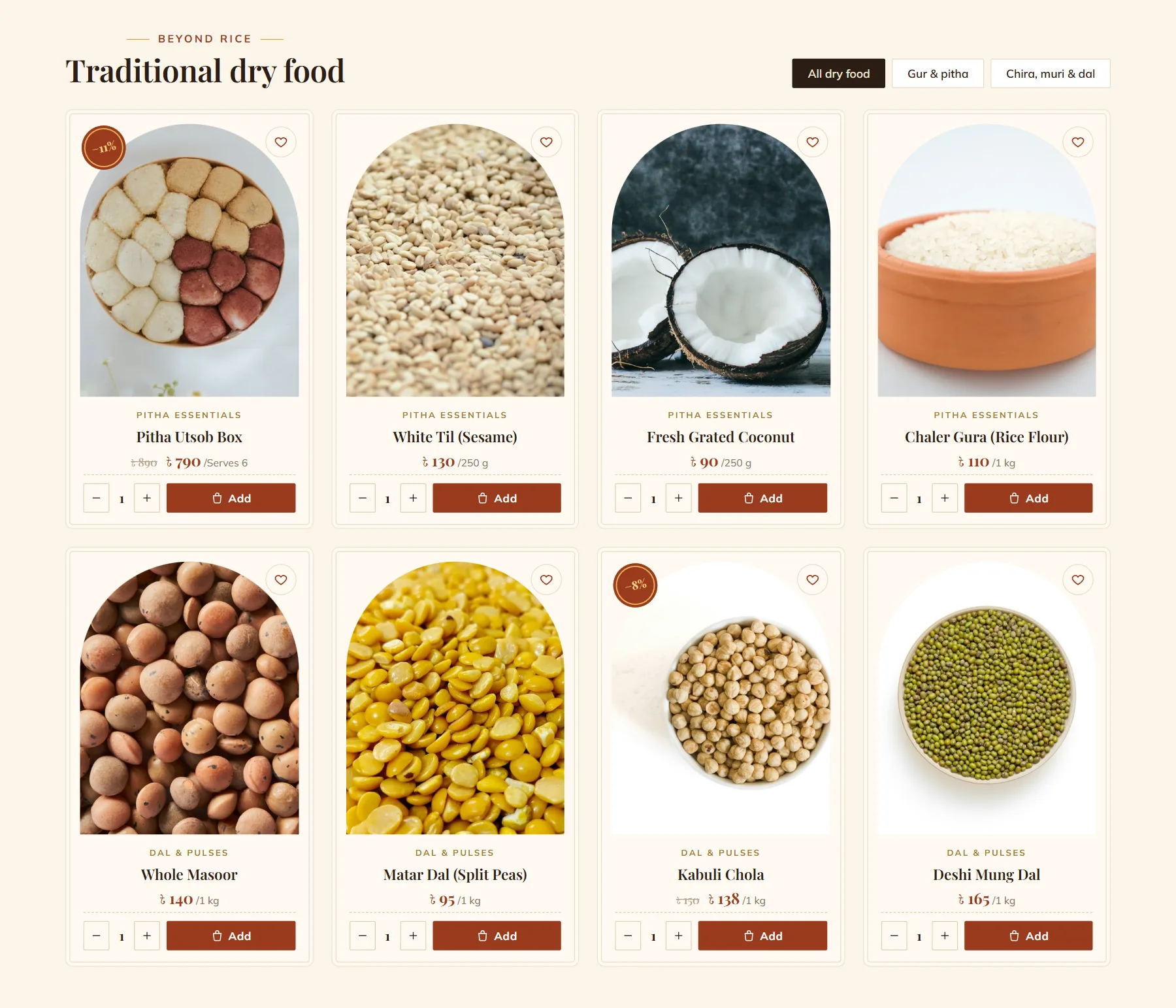
Nobanno, our heritage rice and pantry theme for WordPress, was built for this kind of brand. It runs on WooCommerce and the free Elementor, with arch-framed product cards that show the origin, pack-size options, a harvest calendar, a Bangladesh checkout, bKash and Nagad, Steadfast courier and a fraud checker. You can browse the live Nobanno demo to see a rice, gur and chira shop in action.
Working with farmers fairly
Your best long-term asset is a group of farmers who trust you. Pay on time, agree the price before the harvest where you can, and buy their full lot rather than only the best sacks. Many farmers will then save their best paddy for you every season, and your brand story becomes real rather than a slogan.
Photos and stories
Photograph the rice grains up close, the bags, the paddy field and, with permission, the farmers. Write short stories about the harvest and the mill. Buyers of premium rice care about where it comes from, and these stories turn a commodity into a brand.
Delivery, payments and pricing
Rice is heavy, so delivery costs matter. Inside Dhaka, many brands use their own riders or a courier for next-day delivery. Outside Dhaka, couriers reach most districts in two to three days. Price your delivery so that a 5 kg order still makes sense, and offer free delivery above an amount that encourages bigger packs.
- Price by cost, not by guess: rice, milling, cleaning, packing, labels, delivery share and ad cost.
- Offer family packs with a lower price per kilo for 25 kg sacks.
- Bundle seasonal items, such as new rice with gur and pitha flour for the Nobanno festival.
- Call new buyers before shipping heavy cash-on-delivery orders to far districts.
- Ask for the delivery charge in advance by bKash or Nagad when the risk is high.
Refused parcels are expensive with heavy goods. Keep a list of numbers that refused before, limit how many orders one number can place in a day, and follow up buyers who left the checkout half finished.
Marketing and growing the brand
A rice brand grows through trust and repeat orders. A family that likes your najirshail will buy it every month for years, so treat the first order as the start of a long relationship.
- Seasonal launches: new Aman aromatic rice in winter, Boro rice in summer.
- Festival bundles for Eid, Nobanno and weddings.
- Recipe posts: perfect polao, payesh and khichuri with your rice.
- Customer reviews with photos of cooked dishes.
- Trial packs of 1 kg so new buyers can test before a 25 kg sack.
- Corporate gifts of aromatic rice and gur at festival time.
Write helpful content rather than only offers. Google's guide to helpful, people-first content is a good reference for product pages and blog posts.
Common mistakes to avoid
- Starting in wholesale without enough capital for credit cycles.
- Selling rice with stones or husk, even once.
- Claiming aroma or variety you have not checked yourself.
- Weak bags that tear in the courier van.
- No records of lots, costs and complaints.
A launch checklist
- Choose your model and one or two rice varieties.
- Visit the growing area, cook sample lots and agree on supply.
- Get trade licence, TIN and bank account; check food and grain rules.
- Set up dry storage and test packing and labels.
- Work out cost per kilo and set prices for each pack size.
- Build your website with pack sizes, mobile checkout, bKash and Nagad.
- Open a courier account and send a test parcel outside Dhaka.
- Launch with a small offer to family, friends and early followers.
Anyone working out how to start rice business on a small budget should remember that the biggest brands began with one good source and a few loyal families. Get the rice clean, the weight honest and the delivery on time, and buyers will come back every month.
Frequently asked questions
How to start rice business with a small budget?
Start as a small premium brand: one or two varieties from a trusted source, good packing, a simple website and cash on delivery plus bKash and Nagad. Grow stock as orders grow.
Is rice business profitable in Bangladesh?
Ordinary rice has thin margins, so profit comes from volume and timing. Premium aromatic and heritage rice sold directly to families usually earns more per kilo.
Which licences do I need to sell rice?
Usually a trade licence, TIN and a bank account, plus food safety and labelling rules for packed rice. Grain trading in volume can need more. Confirm with the local food office.
What is the first step in how to start rice business?
Choose your model and your rice. Visit the growing area, cook sample lots and find a reliable source before you spend money on packing or ads.
Can I sell rice online across Bangladesh?
Yes. Couriers reach most districts in two to three days. Price delivery for heavy packs and offer free delivery above an amount.