Good fashion website examples teach you more than any design theory, because they show what real shops put on the screen and why. If you plan to sell clothes online in Bangladesh, studying a few good sites before you build your own will save you weeks of guessing.
This guide breaks down the common types of fashion shop sites, the pieces they all share, and the mistakes that cost sales. You will find lists, a planning checklist and a step-by-step build order. Use it as a working document while you plan your own store.
What good fashion website examples have in common
Open ten successful clothing sites side by side and the same pattern shows up. The brand may differ, but the basics do not.
- The first screen shows the product and the offer, not a long welcome message.
- Photos are large, bright and consistent in style.
- Categories are easy to find from any page.
- Sizes and colours are chosen before the item goes into the bag.
- Prices, delivery charge and return rules are visible early.
- Checkout is short and works well on a phone.
- The site loads quickly on a normal mobile connection.
Nothing on that list is fancy. Strong shops win by doing simple things carefully, and you can copy the same habits.
Six types of fashion website examples to study
Not every clothing site has the same job. Pick the type that is closest to your business, then borrow ideas from it.
1. The single-brand store
One label, one story, a small range. The homepage leans on big campaign photos and a few clear categories. This type suits local brands that make their own T-shirts, panjabi or kurtis.
2. The multi-brand megastore
Hundreds of products from many labels. Search, deals and a long category menu take the top of the page. Speed and filtering matter more than mood here.
3. The editorial lookbook shop
The site reads like a magazine. Outfits are shown as full looks, and shoppers can click an item inside a photo. It works well for sarees, three-piece sets and festival collections.
4. The budget and deals shop
Prices are the hook. Shoppers can browse by budget, see flash deals with a countdown and add items quickly. Young buyers on phones like this style.
5. The boutique with a handful of pieces
Ten to forty products, each photographed well, each with a short story. The page is quiet and clean, and one strong photo does most of the selling.
6. The bulk and uniform supplier
Here the buyer is a school, a company or a retailer. The site needs a quote or bulk order form, size charts and clear minimum quantities.
The homepage layout most fashion shops use
Look at the top fashion website examples from any country and the homepage usually follows this order. You can change the blocks, but keep the logic.

- Header: logo, search, account, wishlist and bag.
- Hero banner: one strong photo, one headline, one button.
- Category tiles: three to six round or square pictures.
- New arrivals: eight to twelve products in a row or grid.
- Offer strip: free delivery, combo deals or a sale date.
- Bestsellers: products people already buy, which builds trust.
- Customer photos and reviews: real people wearing your clothes.
- Footer: contact, return policy, payment icons and social links.
On a phone, the order stays the same but each block gets shorter. Test every block with your thumb, not a mouse.
Product pages: where sales are won or lost
Many shops spend weeks on the homepage and a few minutes on the product page. That is backwards, because the product page is where the shopper decides.
What a strong product page shows
- Four to six photos: front, back, detail, fabric and a model shot.
- The price, with the old price crossed out if there is a discount.
- Size buttons and colour swatches, not a dropdown list.
- A size guide that opens in a popup beside the size buttons.
- A short line on fabric, fit and washing.
- Stock status, so nobody orders an item that is gone.
- Delivery time and charge for Dhaka and outside Dhaka.
- Reviews with photos when you have them.
The size and colour problem
One shirt in four sizes and three colours is really twelve items. If the site treats it as one product, you will sell stock you do not have. Good shops give each size and colour pair its own stock count, and often its own photo. Check this before you choose any tool for your store.
Clothing store website ideas that raise the order value
Once the basics work, small ideas can lift the average order. These clothing store website ideas are cheap to add and easy to test.
- Combo offers: three T-shirts for a fixed price.
- Free-delivery progress bar: a line that says how much more to spend for free delivery.
- Related products: a pair of trousers under a shirt.
- Occasion tabs: Eid, wedding, office, casual.
- Shop by budget: tiles for under 500, under 1,000 and under 2,000 taka.
- Wishlist: lets a shopper save pieces and return after payday.
Add one idea at a time and watch the numbers for two weeks. That way you know which one helped.
Navigation and search that real shoppers can use
A clothing shop lives or dies by how fast a buyer finds a product. Clear navigation is the second thing to copy from the best fashion website examples.
- Use plain category names: Men, Women, Kids, Accessories.
- Split big categories into groups, such as Topwear and Bottomwear.
- Show a few new arrivals inside the menu, so it works like a small shop window.
- Put a search box on every page, and make it full-screen on phones.
- Add filters for size, colour and price on category pages.
- Keep the bag icon visible while the visitor scrolls.
Mobile first: what fashion website examples teach about phones
Most of your visitors will arrive from a Facebook post or a Messenger link, on a phone. Many are on mobile data, so every extra megabyte costs them money and patience.
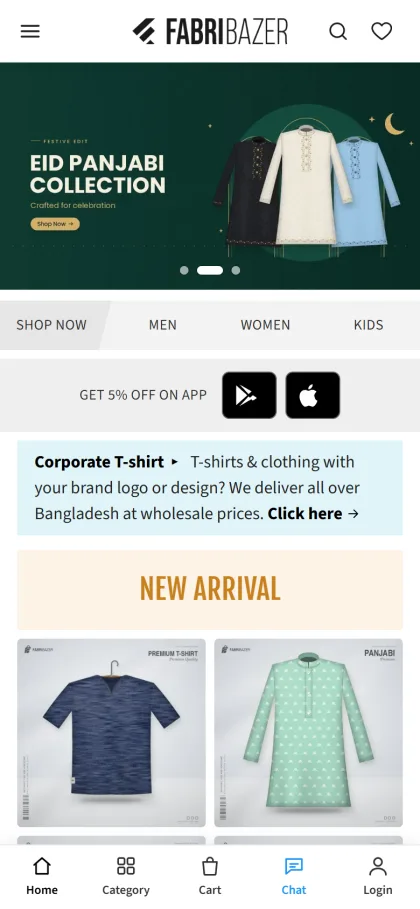
- Compress photos before upload. A 300 KB photo looks the same as a 3 MB one on a phone.
- Avoid heavy sliders with five large slides.
- Keep buttons big enough for a thumb.
- Make the phone menu a simple category sheet.
- Avoid popups that cover the whole screen on arrival.
- Test on a cheap Android phone, not only your own.
Checkout, payment and delivery for a local shop
A shopper who reaches checkout wants to finish. Do not give them reasons to leave. The checkout on good fashion website examples is short, and ours should be too.
- One page, with name, phone, district, thana and address.
- Cash on delivery as the default choice, since many first-time buyers still prefer it.
- bKash and Nagad as quick online options, with a transaction ID field for manual payment.
- A clear delivery charge shown before the final button.
- An order confirmation by SMS or email.
After the order, you need to book a courier. Steadfast and Pathao are common choices, and booking from the order screen saves a lot of copying. Fake orders are a real problem for cash on delivery, so use phone verification by OTP or a block list for repeat offenders.
Photography and colour: lessons from the best sites
Photos are the product when you sell clothes online. Strong fashion website examples all treat photography as a system, not a one-off task.
- Pick one background colour and one light source, and keep them for every shot.
- Shoot the same angles for every product, so the grid looks tidy.
- Show the garment on a person and flat, because buyers want to see fit and fabric.
- Include a close-up of the stitching or print.
- Name the model's height and the size worn, for example 5 ft 6 in, size M.
- Keep your brand colours to two or three. Let the clothes carry the colour.
A phone camera, a window and a white sheet are enough for a first batch. Consistency matters more than expensive gear. Many small clothing store website ideas start here, because better photos lift every other part of the site.
How to read a competitor site without copying it
Studying other shops is useful only if you ask the right questions. Spend twenty minutes on each site and write down short answers.
- What is the main offer on the first screen?
- How many clicks does it take to reach a product?
- What does the product page tell me that I did not expect?
- Where do they ask for my phone number or email?
- What do the reviews say about delivery and fit?
Then list three things to adopt and three things to do better. Your own brand voice, prices and photos should still be yours.
Trust signals to look for
New shops have one big problem: strangers do not know you. Fix that with small, honest signals.
- A real phone number and address in the footer.
- A return and exchange policy written in plain language.
- Photos of your actual products, not only supplier images.
- Customer reviews with photos.
- Your Facebook page linked, with real posts and comments.
- Payment icons for the methods you really accept.
A ready-made option for a Bangladeshi clothing brand
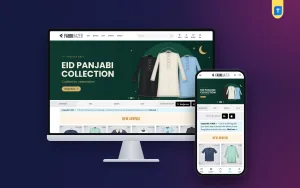
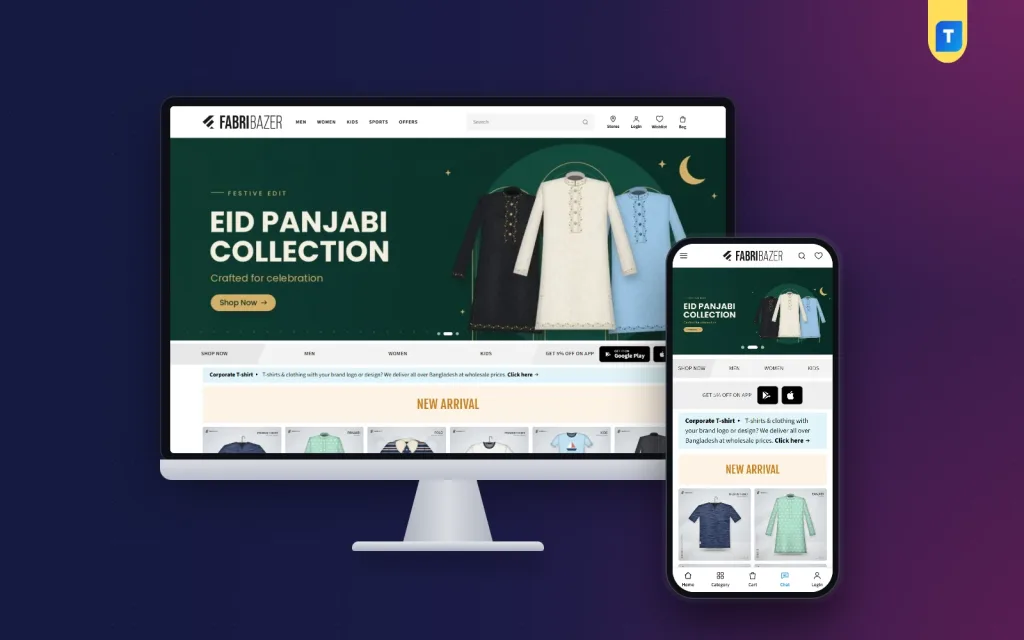
If you do not want to design every page from nothing, a ready-made theme can give you the layout of a proper clothing shop on day one. Fabri Bazer is a clothing store theme for Bangladeshi brands that sell T-shirts, polos, panjabi, kurtis, jerseys and kidswear.
It follows many of the habits described above. Here is what it includes, taken from its feature list.
- Size and colour options, each with its own price, stock, SKU and photo.
- A size guide popup and a size chooser popup when someone adds from a product card.
- A mega menu with newest-arrival product cards.
- A drag-and-drop homepage builder.
- Combo offers and a free-delivery progress bar.
- One-page checkout with district and thana.
- bKash, Nagad, SSLCommerz and cash on delivery.
- One-click Steadfast and Pathao booking.
- Fake order protection and SMS OTP.
- A one-click Fashion Store demo, so you see a working shop before you add your own products.
The shop system comes inside the theme, so you do not need WooCommerce. You can see how it looks on the Fabri Bazer product page and decide whether it fits your range.
A step-by-step build order
Follow this order and you will avoid the usual rework.
- Choose your type. Decide which of the six shop types above fits you.
- List your categories. Write them on paper first. Keep the list short.
- Take photos. Use the same background and light for every product.
- Write product details. Name, price, sizes, colours, fabric, stock.
- Set up the site. Install your theme, import a demo if you want a starting layout, then replace the sample content.
- Add payments and couriers. Test each one with a small real order.
- Write your policies. Delivery, return, exchange and privacy.
- Test on three phones. Place an order yourself from start to finish.
- Launch and share. Post the link on your Facebook page and in Messenger replies.
Common mistakes seen on weak fashion shop sites
- Dark, small or inconsistent photos.
- No size guide, which leads to returns and exchange calls.
- Sizes tracked per product, not per size and colour.
- Delivery charge shown only at the last step.
- Too many popups on the first visit.
- Slow pages caused by large images and many plugins.
- A checkout that asks for an email address and a password before the order.
- No mobile test before launch.
A checklist for judging fashion website examples
Score every site you study with this list. Do it for three sites and you will see what your own shop needs.
- Can I see the product and the price within five seconds?
- Can I find a category in two taps?
- Does the site tell me which size fits?
- Do I know the delivery charge before checkout?
- Can I pay in a way I trust?
- Does it open fast on my phone?
- Would I trust this shop with my money?
If you want to read more on the technical side, the official WordPress documentation is a good, reliable reference.
Frequently asked questions
Where can I find good fashion website examples?
Search for clothing brands you already buy from, browse the demo sites of fashion themes, and look at local Facebook-first brands that have moved to their own site. Save screenshots and note what you like about each one.
What makes fashion website examples worth copying?
Look for clear photos, easy navigation, a visible size guide, honest delivery information and a short checkout. Skip anything that looks nice but hides the price or loads slowly.
How many products do I need to launch?
Twenty to forty well-photographed products are enough to start. A smaller, tidy range looks better than a large range with weak photos.
Do I need a developer to build a clothing shop?
Not always. A ready-made theme with a demo import lets you set up a shop yourself. A developer helps if you want custom features or a unique design.
Which payment methods should a Bangladeshi fashion shop offer?
Offer cash on delivery, bKash and Nagad at the least. A card gateway such as SSLCommerz helps buyers who prefer cards.
How do I stop fake cash on delivery orders?
Verify the phone number with an OTP, block numbers that refuse parcels and confirm large orders by phone before dispatch.
Can I use the same ideas for shoes and bags?
Yes. Any product with sizes or colours follows the same page structure, so the ideas carry over with small changes.