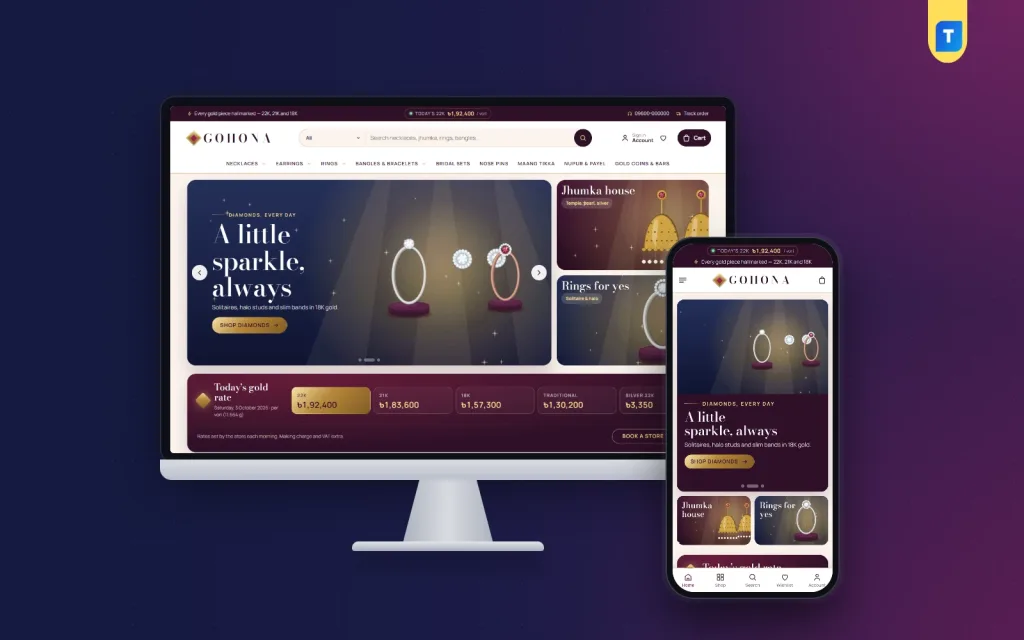
Looking at good jewelry website examples is the fastest way to learn what a buyer expects before they pay for a ring, a necklace or a bridal set. Jewellery is a high-trust purchase, so every part of the site has to say "this is real, and this is fair".
This guide breaks down what the best sites do, section by section. You will see what to show on the homepage, how to build a product page, which details buyers look for and which mistakes cost sales. It is written for jewellers and small brands in Bangladesh, but the ideas work anywhere.
What strong jewelry website examples have in common
Look at ten good jewellery sites and you will notice the same habits. They are not about fancy animation. They are about trust and clarity.
- A clean, quiet layout with lots of space around each piece.
- Large, sharp photos that show the real shine and detail.
- Honest facts: metal, purity, weight and size.
- A clear price, or a clear way to learn the price.
- Visible contact details, showroom address and return rules.
- Simple navigation by category, metal or occasion.
If a site misses two or three of these, buyers tend to leave and call a shop they know instead.
Jewelry website examples by type of seller
The right design depends on who you are. A family jeweller with a counter and a bridal specialist need different things. Here are the main types and what each one should focus on.
The traditional gold house
- Show today's gold rate where it is easy to see.
- Group pieces by metal and by piece type: necklace, bangle, ring, earrings.
- Show purity, such as 22K or 21K, and weight on every product.
- Use a deep, rich colour scheme like ruby, velvet and gold.
The bridal specialist
- Lead with full sets rather than single pieces.
- Add a large banner for the wedding season.
- Offer a way to book a showroom visit or a call.
- Show what is in each set: necklace, earrings, tikka, bangles.
The everyday silver or fashion brand
- Use light colours and young, friendly fonts.
- Lead with gift ideas and price steps.
- Show stacking and layering ideas.
- Make checkout quick, since buyers decide fast.
The karigar workshop
- Tell the maker's story with photos of the bench and tools.
- Show custom order steps clearly.
- List what you can make and the time it takes.
Plan the homepage
Many jewelry website examples follow the same order on the homepage. It works because it moves a visitor from curiosity to trust to the product.
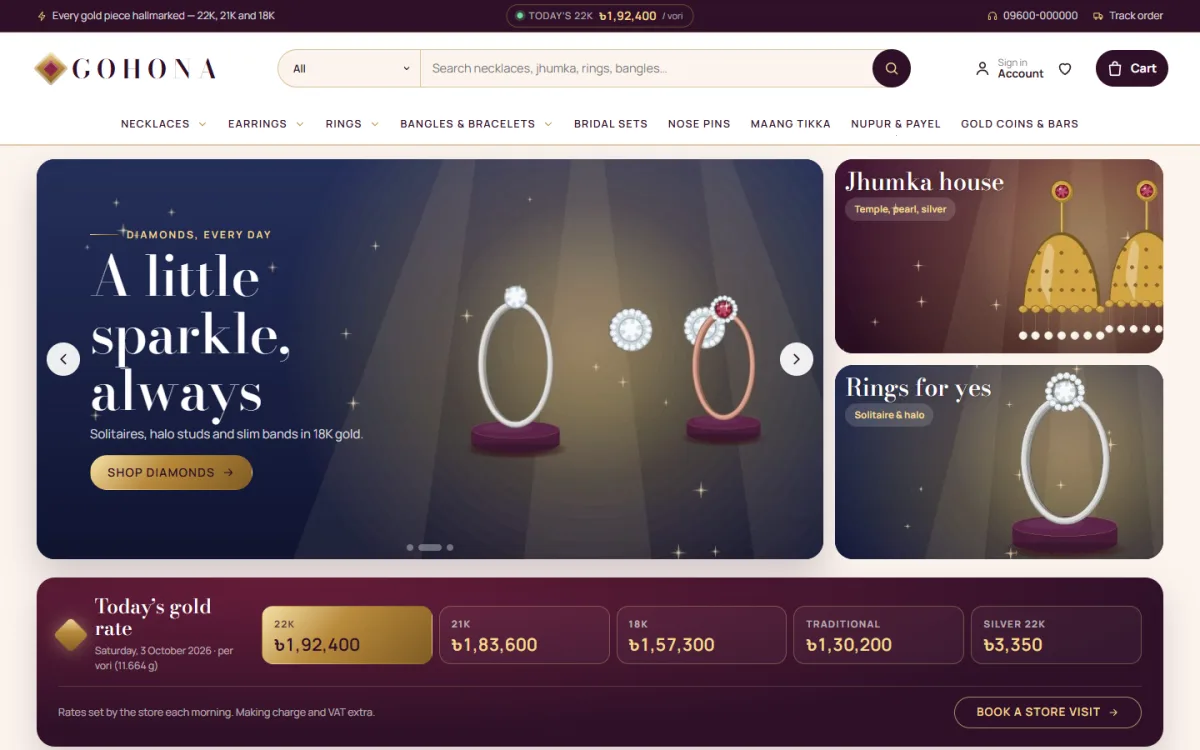
- Top bar: today's gold rate, phone number and delivery note.
- Header: logo, search, account, wishlist and cart.
- Hero: one image of your best piece or season, with one button.
- Shop by metal or category: gold, diamond, pearl, silver, plus piece types.
- New arrivals or best sellers.
- Occasion block: bridal, anniversary, Eid, gifts.
- Gifts by budget: price steps such as under ৳10,000 or under ৳25,000.
- Craft or trust block: workshop story, hallmark note, certificates.
- Reviews and photos from real buyers.
- Footer: showroom address, hours, policies and social links.
A small shop can keep half of these. Do not fill the page just because a block exists.
Photos: the part buyers judge first
Jewellery is small, so photos do most of the selling. Poor photos make gold look dull and stones look cloudy.
- Use a plain background, white, ivory or a soft dark tone.
- Shoot with soft light and avoid harsh flash.
- Take at least four views: front, side, close-up and worn.
- Add a coin or a ruler in one photo to show real size.
- Keep the same background and angle across all products.
- Compress images so each loads fast, without losing the sparkle.
A short video of a piece turning in the light can help, but only if it does not slow the page.
Name your files clearly too, for example "22k-gold-leaf-necklace.jpg". Add a short description for each photo. This helps people who use screen readers, and it helps search engines understand the picture. Many jewelry website ideas ignore this small step, yet it costs nothing.
Finally, keep a simple photo routine. Shoot new pieces on the same day each week, edit them in one batch and upload them the same evening. A steady habit keeps the catalogue fresh and saves hours of work later.
Jewelry website examples for the product page
The product page is where the decision happens. The best examples answer every question before the buyer asks it.
Facts to show
- Metal and purity, such as 22K gold or 925 silver.
- Weight in grams and, if you use it, in vori.
- Stone type, count and size, if any.
- Size options for rings, bangles and chains, with a size guide.
- Making charge, wastage rule or a clear final price.
- Delivery time and packaging.
Trust notes to add
- Hallmark or certificate details where you have them.
- Buy-back or exchange policy in plain words.
- Insured delivery for higher-value pieces.
- Phone and message options for questions.
When prices change with the gold rate, say how and when. A buyer who sees a different price at checkout feels cheated.
Handle the gold rate honestly
In Bangladesh, the gold rate per vori moves often. Many shops post it on the shop door and on Facebook. Your website should do the same.
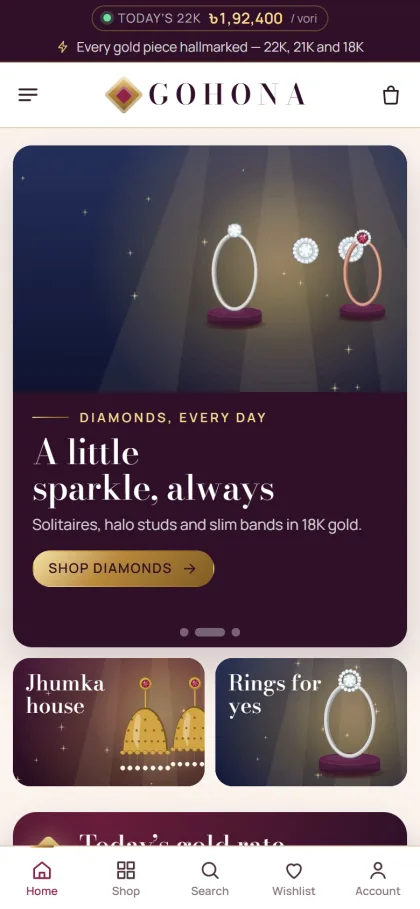
- Show the rate at the top of the page with the date.
- Type the rate yourself or update it through an admin panel, so it matches your counter.
- Show the 22K rate at least, and the 21K and 18K rates if you sell them.
- Make sure product prices match the rate shown.
If you cannot update daily, add a line like "Rate as of this morning". Old dates damage trust.
Help buyers choose size
Wrong sizes are the main reason for returns in jewellery. The best examples take this seriously.
- A ring size chart with inner diameter in millimetres.
- A bangle size guide with inches and a simple way to measure at home.
- Chain lengths shown on a neck illustration or a model photo.
- A note about resizing: what is possible and what it costs.
Put the guide on the product page as a link or a pop-up. Do not hide it in the footer.
Payments, delivery and returns in Bangladesh
This is the area where Bangladesh differs from many markets, and where local jewelry website examples are most helpful.
- bKash and Nagad: the most common ways to pay online. Show the logos near the cart.
- Cash on delivery: many buyers want it, but for high-value pieces ask for an advance.
- Courier: use a trusted service with tracking, such as Steadfast or Pathao, and insure valuable parcels.
- Showroom pickup: offer it where possible. It builds trust.
- Returns: say what you accept, for how many days and in what condition.
A Track Order page also helps. Buyers of gold like to know exactly where the parcel is.
Move from Facebook to your own website
Many jewellers in Bangladesh sell mostly through Facebook and Messenger. That works for a while, but it has limits. Posts disappear, prices go out of date and you answer the same questions again and again.
- Keep Facebook for photos and reach.
- Put the full catalogue, prices and details on your website.
- Share product links in your posts, so buyers land on a page with all the facts.
- Add your page link and phone number to the site.
Over time, the site becomes a permanent shop window that you own. Looking at jewelry website ideas from other shops can help you decide what to move first, and studying more jewelry website examples will show you how others group their pieces.
A ready-made option
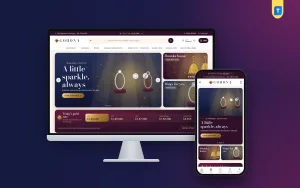
You can build a custom site, or you can start from a theme designed for jewellers. Gohona is a jewellery WordPress theme in velvet, ruby and gold. It has a gold rate board per vori that you type yourself, a 22K rate in the top bar, shop-by-metal coins and a bridal sets block with a banner.
It also includes gifts by budget with your own price steps, karigar houses with a karigar of the month, size guides for ring, bangle and chain, and metal, purity and weight in product details. There are 22 homepage blocks you can re-order, 5 palettes and 4 font pairs. bKash, Nagad, cash on delivery and Steadfast or Pathao courier booking work through the bundled Themeve Commerce plugin, and one click imports the demo. See the full list on the Gohona product page.
Pages beyond the homepage
Most jewelry website ideas stop at the homepage and the product page. But buyers of gold and diamonds read more before they commit. A few extra pages can make the difference between a visit and an order.
- About page: tell who you are, how long you have been in the trade and where your showroom is. Add a real photo of the owner or the workshop.
- Size Guide page: one place for ring, bangle and chain sizes, with simple pictures.
- Gold and purity explained: a short note on 22K, 21K and 18K, hallmarks and how you price a piece.
- Care page: how to clean, store and wear gold, silver and pearls.
- Policy pages: returns, exchange, buy-back, privacy and terms, in plain language.
- Contact page: phone, message link, map and opening hours.
- Track Order page: a place to check a parcel without calling you.
These pages also answer the questions that fill your inbox. Write each one once, and link to it from the product pages, the footer and your Facebook replies.
Write product text that sounds like a person
Skip long poetic lines. A buyer wants to know what the piece is, who it suits and how it is made. Two or three short sentences are enough. For example: "A 22K gold necklace with a fine leaf design. Weight 18 grams. Suits a wedding or Eid outfit." Then list the facts underneath.
Mistakes to avoid
Study any set of jewelry website examples and the same slips appear again and again.
- Dark, blurry photos: they make the metal look cheap.
- No purity or weight: serious buyers will leave.
- Old gold rate: it breaks trust in a minute.
- Hidden making charge: a surprise at checkout kills the order.
- Too many fonts and colours: keep it calm.
- Slow pages: big photos need compression.
- No contact details: a jeweller without an address looks risky.
- Copying photos from other sites: use your own pieces only.
A short launch checklist
- Every product has four photos, metal, purity, weight and a price.
- Size guides for ring, bangle and chain are live.
- The gold rate is current and dated.
- bKash, Nagad and cash on delivery are tested with a small order.
- Courier and delivery charges are set.
- Return and exchange pages are written.
- Your address, phone and opening hours are visible.
- The site loads fast on a mobile connection.
- Policies for privacy and terms are in the footer.
If you want to read more on the technical side, the official WordPress documentation is a good, reliable reference.
Frequently asked questions
Where can I find good jewelry website examples?
Search for jewellers in your price range and city, then study their homepages and product pages. Note what they show, what they hide and what makes you trust them. Save the ideas you like and skip what slows you down.
What should a jewellery website show on the homepage?
A hero image, shop-by-category tiles, new arrivals, an occasion block, a gifts-by-budget block, a trust block and your contact details. If you sell gold, add the daily rate near the top.
How many photos does each piece need?
Four is a good minimum: front, side, close-up and worn. A scale photo with a coin or ruler helps buyers understand the size.
Can I use jewelry website examples from other countries?
Yes for layout and photo style. But add local needs: bKash and Nagad, cash on delivery, courier tracking and the gold rate per vori.
Do I need a developer to build a jewellery website?
No. A ready WordPress theme with a demo import lets you set up the shop yourself. You then replace the sample products with your own.
Is cash on delivery safe for expensive jewellery?
It carries risk. Many shops ask for an advance payment or offer showroom pickup for high-value pieces. State your rule clearly on the checkout page.
Which jewelry website examples work best for small brands?
Simple ones. A small brand does well with a clean homepage, a few categories, honest details and an easy checkout. Add more blocks only when you have the products and photos to fill them.