Mens traditional wear ecommerce website design has a special challenge: the most valuable part of the product, the hand of the weaver, is the hardest to show on a screen. A handloom panjabi, a khadi kurta or a Dhakai jamdani piece looks a little like a machine-made shirt in a small photo.
This guide explains how to design an online shop for traditional menswear that makes craft visible, earns trust and justifies a fair price.
The ideas fit handloom boutiques, jamdani makers, khadi labels and heritage sherwani houses. They assume a WooCommerce shop, but the principles work anywhere.
Why craft needs a different kind of shop
Mass-market fashion sells on trend and price. Traditional handwoven menswear sells on story, texture and authenticity. A buyer paying ৳6,500 for a jamdani panjabi wants to know who wove it, how long it took and why it costs more than a printed one.
Many buyers are also gift shoppers or people living abroad who want something from home. They cannot touch the cloth, so the shop must do the touching for them with photos and words.
Mens traditional wear ecommerce website design starts with identity
Before choosing colours, decide what the shop should feel like. For handloom, a weaver's showroom is a good model: calm, warm, slightly formal and full of texture. Deep navy with a dusty rose accent, cream backgrounds and a serif heading font such as Lora give that feel.
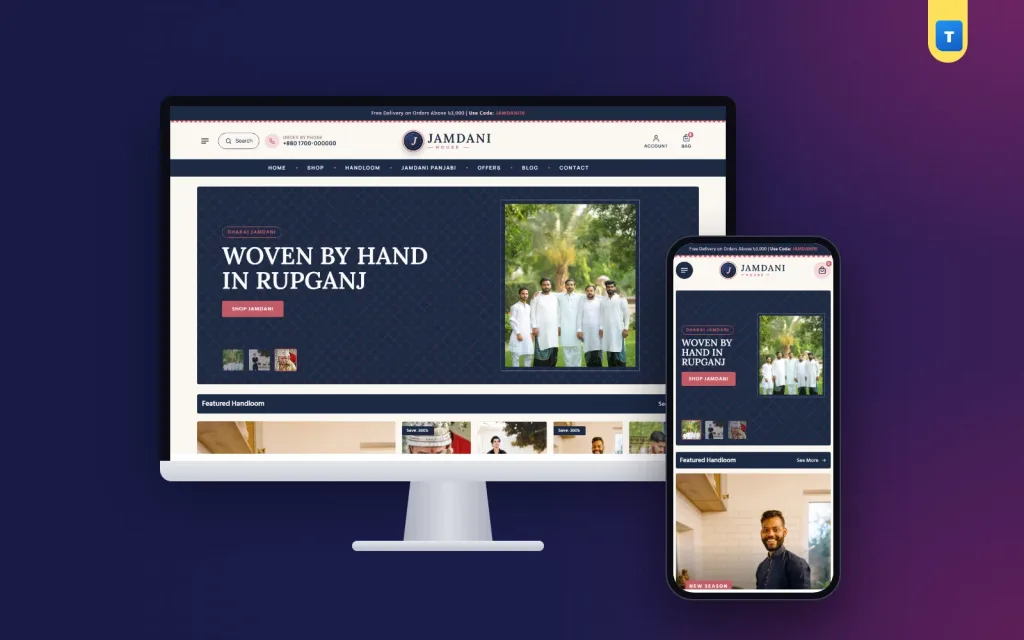
Small details reinforce it. A thin woven strip across the top of the header, a monogram logo in a medallion, and a footer with a faint diamond lattice that recalls jamdani motifs all say "craft" before any text is read. Draw these patterns in CSS rather than images, so they cost almost nothing to load.
A header that invites contact
Craft buyers often want to talk before they buy. A three-layer header works well: a woven strip, a cream bar with search and a visible phone number on the left, the logo in the middle and account and bag on the right, then a navy menu row.
Putting the phone number in the header, not only in the footer, tells buyers a real person is behind the shop. That single choice can lift trust more than a page of badges.
Homepage structure for a craft boutique
A homepage for traditional menswear might run:
- A heritage banner with three stories, such as Dhakai jamdani from Rupganj, Tangail and Kushtia handloom, and sherwani with nakshi kantha.
- Featured handloom pieces.
- Shop by weave: Handloom, Khadi, Jamdani and Fatua.
- Categories with the current weaver's offers.
- Best sellers and new pieces "from the loom".
- Blog posts about the craft, then a FAQ list.
"Shop by weave" is the key block. Buyers who care about craft think in fabrics, not in product types.
Photographing texture
Texture is everything for handloom. Shoot in soft side light, from a window to one side, so the threads cast tiny shadows and the weave becomes visible. Flat front light makes handloom look like plain cotton.
For each piece, plan five photos: the full garment worn, the back, the collar and placket, a close-up of the weave or motif filling the frame, and a detail of the edge or selvedge. Hand-made irregularities, such as a slightly uneven thread, are proof of the loom; show them rather than hide them.
A gallery that gives the photos room
On the product page, let the gallery take the largest space. Thumbnails in a column on the right of the main photo on desktop, and a strip below on phones, keep every close-up one click away. Hover zoom lets buyers inspect the motif like they would in a shop.
This is one area where mens traditional wear ecommerce website design differs most from fashion shops: the zoom and close-up photos are not extras, they are the main sales tool.
Tell the story on the product page
Each handwoven piece deserves a few lines of story:
- Where it was woven: Rupganj, Tangail, Kushtia.
- The fabric and technique: jamdani, handloom cotton, khadi, silk.
- How long it took, if you know.
- Who made it, with the weaver's permission.
- How to care for it.
Keep it short and factual. A paragraph of honest detail is more convincing than adjectives. Brand pills, such as the name of the weaving group or label, help buyers recognise the source at a glance.
Categories, weaves and filters
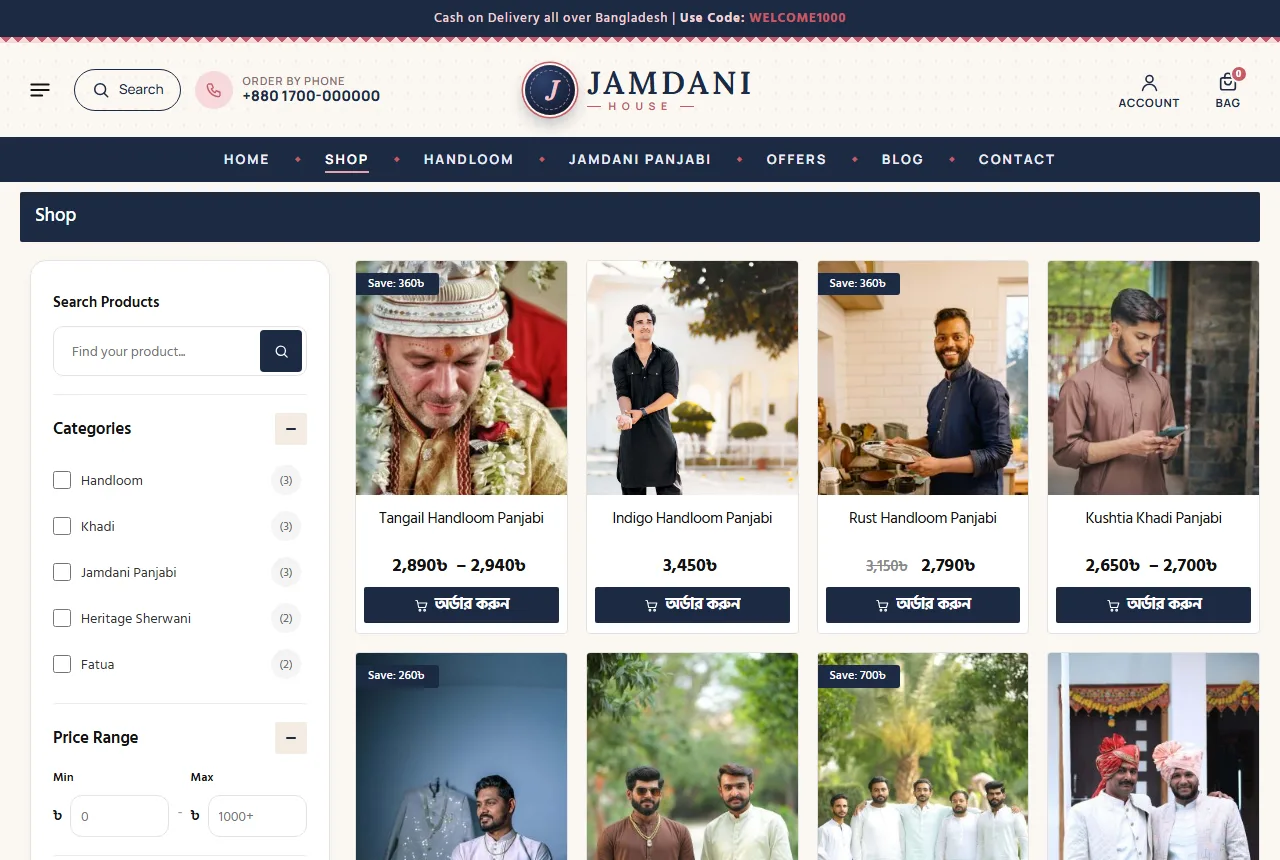
A small craft catalogue still needs clear paths. Keep categories few and meaningful: Handloom, Khadi, Jamdani Panjabi, Heritage Sherwani and Fatua cover most traditional menswear boutiques. Give each category one strong photo that shows the weave, not just the cut.
On category pages, a short filter card with price, rating, stock and an "On sale" switch is enough. Buyers looking for a ৳3,000 handloom panjabi in L should find it in two taps.
On phones, open filters in a drawer and keep the page title and a Filters button on one line. Clear, simple paths are an underrated part of mens traditional wear ecommerce website design, because craft buyers often browse slowly and return several times before ordering.
Seasons and occasions
Traditional menswear sells all year, but demand peaks before Eid, Pohela Boishakh and the winter wedding season. Move the right weave to the first banner slide a few weeks before each peak: light handloom and khadi for Boishakh, jamdani and silk for weddings and Eid evenings.
Planning the calendar early lets weavers finish enough pieces in each size. Seasonal timing belongs in mens traditional wear ecommerce website design just as much as colours and fonts do.
Explaining the price
When a handloom panjabi costs three times a powerloom one, explain why without being defensive. A short blog post or FAQ answer on "handloom vs powerloom" helps, and a line on each product such as "Woven by hand over four days" makes the value concrete.
Show the regular price and any sale price clearly. Avoid constant deep discounts on craft; they make buyers doubt the real value. A seasonal weaver's offer on a few pieces works better.
Sizes for small batches
Handloom pieces are often made in small batches, sometimes one per size. Set each size as a WooCommerce variation with its own stock, so when the only XL is sold the button greys out and nobody orders a piece you cannot deliver.
Provide a size chart in inches for chest, length and sleeve in a pop-up beside the size buttons. Handwoven fabric does not stretch, so a note about fit, such as "Regular fit; if between sizes, take the larger", prevents disappointment.
Mens traditional wear ecommerce website design for trust
Trust is the main barrier for expensive craft online. Build it in several small ways:
- A visible phone number and a WhatsApp button on every product.
- Clear delivery charges, such as Inside Dhaka ৳80 and Outside Dhaka ৳120, shown before checkout.
- A simple return rule, linked near the buy button.
- Real reviews with names and cities.
- An About page with photos of the looms and the people.
None of these needs a plugin, and together they make a stranger comfortable paying for a piece they have never touched.
A checkout that does not get in the way
Let guests order, with an optional box to create an account. Allow sign-in with a mobile number or an email. Keep the form to name, phone, address and delivery area, and offer cash on delivery alongside mobile wallets or cards.
Gift buyers often send to a different address. A clear shipping address section and a short order note field help them add a message or a delivery time.
Designing for phones
Even craft buyers shop mostly on phones. Make the banner square on small screens, keep the menu and bag easy to tap, and put category filters in a drawer opened by a Filters button beside the page title. Test zoom and the gallery strip with one thumb.
Good mens traditional wear ecommerce website design keeps the texture visible on a six-inch screen. If the weave disappears on your phone, use a tighter close-up as the second photo.
Keep the code light
Large texture photos need room in the page weight. Use a theme with one small script and no jQuery on the front end, avoid page builders and slider plugins, and compress photos to WebP at the size they display. Let caching handle the rest.
Content that tells the craft story
A blog is natural for a craft brand. Posts such as "Meet the weavers of Rupganj", "Handloom vs powerloom: how to tell" and "Caring for khadi and jamdani" serve readers, bring search visitors and support the product pages. Link each post to related pieces.
Write as an expert speaking to a curious buyer. Google's advice on people-first content rewards first-hand knowledge, which craft sellers have in abundance.
Using a mens traditional wear website design template
A mens traditional wear website design template saves weeks of work. It should give you the weave cards, a large gallery with close-ups, size variations with a chart, guest checkout, local delivery and a design that looks like craft rather than a discount store.
When comparing a mens traditional wear website design template, look at the product page first. If the photos are small and the description is squeezed, the template was built for T-shirts, not handloom.
Care guides and after-sales
Handwoven fabric lasts for years when treated well, and a short care guide is part of the product. Explain gentle hand washing, drying in shade, ironing on the reverse and storing folded with a cotton cloth. Link the guide from every product page and include a printed copy in the parcel.
After the sale, a short message asking how the piece fits, and inviting a photo, often brings the most valuable reviews. Buyers of craft like to share what they bought.
Buyers abroad and gift orders
Many buyers of jamdani and handloom live outside Bangladesh or buy for relatives who do. Even if you deliver only inside the country, make it easy for someone abroad to order for a family member at home: clear shipping address fields, a phone number for the receiver and a gift note.
Show prices in taka clearly and explain payment options in plain words. If you do ship abroad, give a separate page with rates and times instead of hiding them in the checkout. Thinking about these buyers is a part of mens traditional wear ecommerce website design that small boutiques often overlook.
Measure and improve
Check monthly which weaves sell, which pages people leave, and which questions arrive on WhatsApp. If many people ask about one fabric, add the answer to its product page. If a category gets visitors but no orders, review its photos first.
Small, steady improvements are the real work of mens traditional wear ecommerce website design after launch.
Mistakes to avoid
- Flat front lighting that hides the weave.
- Small gallery images squeezed beside a long description.
- Constant heavy discounts on handmade pieces.
- No phone number or WhatsApp in sight.
- A slow theme that makes large texture photos load for ages.
Bringing it together with Jamdani
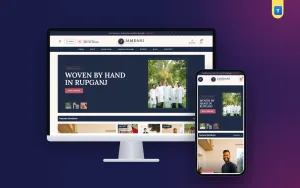
Our Jamdani menswear boutique ecommerce website template follows this approach on WooCommerce.
It has a woven-strip header with the phone number in view, a heritage banner, Shop by Weave cards, a gallery with thumbnails on the right, size buttons with a chart, a WhatsApp button, guest checkout with phone or email sign-in, Inside and Outside Dhaka delivery and a navy footer with a diamond lattice.
Frequently asked questions
What is special about mens traditional wear ecommerce website design?
It must make craft visible: large close-up photos, the story of the weave, clear prices and strong trust signals.
How should I photograph handloom fabric?
Use soft side light so the threads cast small shadows, and include a close-up that fills the frame with the weave.
Does mens traditional wear ecommerce website design need a blog?
It helps a lot. Craft stories bring visitors from search and explain why handwoven pieces cost more.
Should handloom shops allow guest checkout?
Yes. Many buyers are first-time or gift shoppers. Offer an optional account for repeat customers.
How do I handle one-of-a-kind sizes?
Set each size as a variation with its own stock so sold-out sizes grey out automatically.