The best online electronics stores make an expensive, confusing purchase feel simple. Buyers compare specs, worry about fake products and warranty, and think twice before paying a large amount to a shop they cannot visit. This guide explains how to plan a gadget and electronics website that earns that trust: categories, product pages, specs, pricing, payments, delivery, after-sale care and content, with notes for sellers in Bangladesh.
Whether you sell phones, laptops, accessories or gaming gear, the same basics apply.
What buyers want from online electronics stores
Gadget buyers are research-heavy. Before they order, they want clear answers:
- Is it original? Official, imported or refurbished, and from whom.
- Which exact model and variant? RAM, storage, colour and region.
- What warranty do I get? Who honours it, for how long and where.
- Is the price fair? Compared with other shops they have already checked.
- How fast and how safely will it arrive?
Shops that put these answers on every product page sell more and handle fewer angry calls. Shops that write "inbox for price" push careful buyers away.
Organise the catalogue
Use categories buyers already know: Phones, Laptops, Computers, Tablets, Smart Watches, Audio, Gaming, Networking and Accessories. Under each, filters do most of the work: brand, price range, RAM, storage, screen size, battery and rating.
Variants, not duplicates
A phone in three colours and two storage sizes is one product with six variants, each with its own price, stock and photo. Duplicate listings confuse buyers and split your reviews.
Brands
Many buyers start with a brand. Give every brand a page and a logo row on the homepage, and keep brand names spelled the same way everywhere.
Product pages that answer questions
A strong electronics product page includes:
- Real photos from several angles, plus the box and accessories.
- Model name, variant picker, price and stock status near the top.
- A full spec table: processor, RAM, storage, display, camera, battery, ports, weight.
- What is in the box.
- Warranty type and length, written plainly.
- Delivery time and charge beside the buy button.
- Reviews with photos and a public questions section.
- Related accessories and frequently bought together items.
Spec tables matter more here than in any other category. Copy them from official sources and check them twice; one wrong number creates returns and bad reviews.
Honest warranty and condition
Be exact about what you sell. Say whether a product has an official warranty, a shop warranty or none, and for how long. If an item is refurbished or open-box, say so in the title and the first line, and show its real condition in photos.
Explain the warranty process: where to bring or send the item, how long checks take and what is not covered, such as water damage or a broken screen. Clear rules protect you in disputes and give buyers confidence to pay more.
Pricing in a fast market
Electronics prices move with exchange rates, new launches and supplier stock. Update prices often, and use a bulk tool such as CSV import so you are not editing hundreds of products one by one.
- Show old prices honestly, only when the product was really sold at them.
- Bulk prices for resellers and offices buying in quantity.
- Bundles such as a phone with a case and charger.
- Flash sales on accessories to bring traffic.
- Pre-orders for new phones before stock arrives.
Many online electronics stores compete only on price and lose margin. Compete also on trust, speed and after-sale care.
Payments for high-value orders
Most buyers in Bangladesh still prefer Cash on Delivery, even for expensive items. Offer it, but protect yourself:
- Ask for an advance on high-value COD orders, such as the delivery charge or a percentage.
- Verify the phone number with a code before confirming.
- Call the buyer before shipping a laptop or phone.
Offer bKash, Nagad or Rocket Send Money with a transaction ID for buyers who prefer it, and a gateway such as SSLCommerz for cards and wallets once you have a merchant account. Store pickup also helps buyers who want to see the item before paying.
Delivery and packaging
Electronics must arrive safe and sealed. Use sturdy boxes, padding and tamper-proof tape, and record the serial number before dispatch. Inside your city, your own rider or a same-day courier works well; outside it, Steadfast, Pathao and REDX are the common choices.
Set delivery zones and charges, show them before checkout and offer delivery time slots where you can. Reconcile courier COD payments with orders every week; returned high-value parcels are expensive, and you need to see them quickly.
After-sale care
The sale is not the end with electronics. Buyers will ask how to set up a router, why a charger is slow or how to claim warranty. Good after-sale care turns them into regular buyers:
- A support ticket system so each case has one thread.
- A WhatsApp button for quick questions.
- A returns flow with photos and a clear decision.
- Saved replies and help pages for the most common setup questions.
The best electronic gadget stores are known as much for their help after the sale as for their prices.
Accessories and add-on sales
Phones and laptops bring the traffic, but accessories bring much of the profit. Cases, screen protectors, chargers, cables, earbuds, power banks, mice and bags carry better margins and sell again and again. Show matching accessories on every main product page, and offer a small bundle discount when they are bought together.
Keep accessory listings precise. "Fits model X, 2024 version" avoids most returns. A clear compatibility line in the title and a short table in the description save buyers from guessing and save you from swapping parcels.
Accessories also suit flash sales, because their lower prices tempt buyers who are not ready for a big purchase yet. Those first small orders are how many buyers decide whether to trust you with their next phone.
Serving business buyers
Offices, schools and resellers buy in bulk and often need a quote before they can pay. A quote request from the customer account, bulk prices and invoices that show your business details make you easy to buy from. These orders are larger and more regular than retail, so they are worth the effort.
Give business buyers payment terms only after a few successful orders, and keep every quote, invoice and delivery note in their account. When an office manager changes jobs, the next person can see the full history and keep ordering from you instead of starting over with another shop.
Design and phone layout
Tech shops suit clean, sharp designs: one strong brand colour, a contrasting colour for offers, a modern sans-serif font and plenty of white space around product photos. Keep cards the same size so grids look tidy and are easy to compare.
Most buyers arrive on a phone. Design for it first: a slim header, a cart drawer, two products per row, filters in a side panel and a spec table that scrolls inside its box, not across the whole page. Test on a mid-range Android phone over mobile data.
Stock, serial numbers and the daily routine
Electronics stock is valuable and easy to mix up. Record the serial or IMEI number of every phone and laptop when it arrives and again when it ships, so a warranty claim or a return can be matched to the exact unit. Count high-value stock every week, not every quarter.
A simple routine helps. In the morning, update prices that changed overnight and mark sold-out variants. Before noon, confirm orders, call buyers for large COD orders and verify Send Money payments. In the afternoon, pack, record serials and hand parcels to couriers. In the evening, answer tickets and questions.
Well-run online electronics stores give each staff member a role with only the screens they need, so a packer never sees money and settings.
Choosing the software
There are three common routes. A hosted builder starts fast but charges every month and may not support local payments, couriers and COD rules well. A blog platform with shop plugins is flexible but can slow down and break as plugins pile up. A self-hosted shop on a modern framework gives you the source code, local payments and couriers, and no per-order fee, but needs a proper setup.
Whichever you choose, check it handles what electronics need: variants with their own stock, spec tables, bulk prices, quotes, pre-orders, COD with advance rules, courier booking, COD reconcile, returns and tickets. Place a test order on the demo from your own phone. Online electronics stores live or die on these details, not on the homepage banner.
Common mistakes to avoid
- Vague specs such as "big battery" instead of the real number.
- Hidden warranty terms that surprise buyers after the sale.
- Old prices left online after the market moved.
- Shipping expensive items without a call on COD orders.
- Weak packaging that lets a screen crack in transit.
- Slow replies to questions before and after the sale.
Many new online electronics stores make several of these at once. Fixing them costs little and saves a lot of returns.
Trust signals that matter
- Your shop address, trade licence and phone number in the footer.
- Real reviews with photos, including critical ones.
- Clear warranty and return pages.
- Payment logos only for methods you actually accept.
- Fast replies on WhatsApp and phone.
Buyers spending a month's salary on a laptop look for every one of these before they order.
Content that brings buyers
Write buying guides that answer real questions: which laptop for a university student, how much RAM a phone needs, what to check before buying a used phone, how to choose a router for a flat. Link each guide to the products it mentions.
Google's guide to helpful, people-first content explains why honest, useful pages earn more trust than copied spec sheets. Online electronics stores that teach build a name that ads alone cannot buy.
Measure and improve
Check a few numbers every week: orders, average order value, repeat buyers, returns and their reasons, COD refusals, and search terms that found nothing. If many buyers return one model, its description or photos may be wrong. If many search for a product you do not stock, add it.
A launch checklist for online electronics stores
- At least 50 to 100 products with real photos, full specs and variants.
- Warranty and return pages written and linked from every product.
- COD with advance rules and one mobile payment tested.
- A courier account connected and one test parcel sent.
- Packaging tested with a fragile item.
- WhatsApp and phone numbers on every page.
- Every page checked on a phone.
- A launch offer on accessories ready.
Opening your tech shop with NovaTech
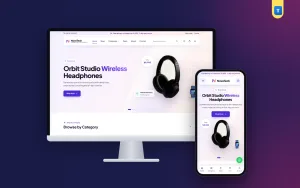
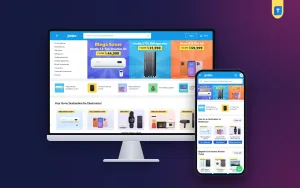
These parts come ready in NovaTech, the Laravel electronics store software. It has a violet storefront with a hero slider, category tiles, offer countdown, flash sale, new arrival tabs, brands and reviews, and product pages with zoom gallery, variants, spec tables, reviews with photos, questions, bulk prices, WhatsApp orders and frequently bought together items.
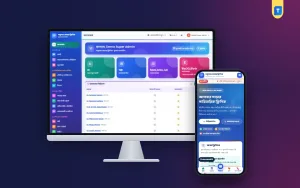
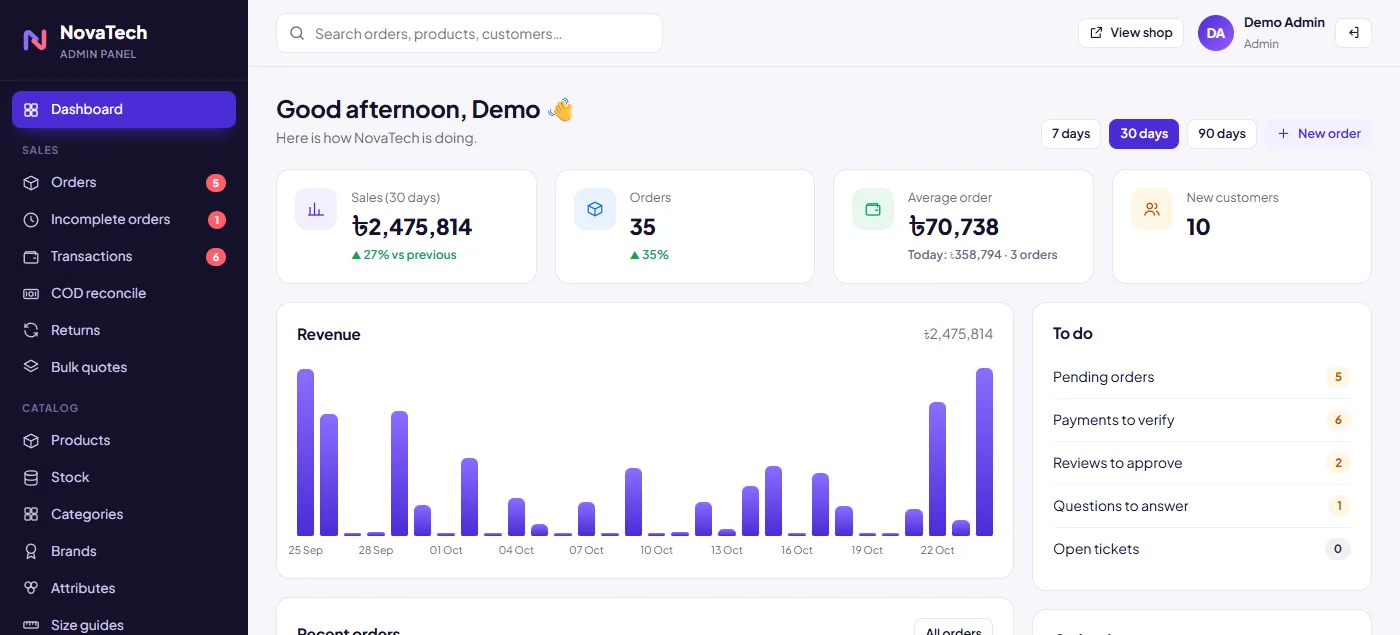
Checkout supports district and thana addresses, store pickup, delivery slots, OTP, COD with optional advance, manual Send Money and bKash, Nagad and SSLCommerz gateways. Steadfast, Pathao and REDX booking, COD reconcile, returns, tickets, quotes and 18 switchable modules help it run like the best electronic gadget stores.
Frequently asked questions
How do online electronics stores build trust?
With real photos, accurate specs, clear warranty and return rules, honest prices, real reviews and fast replies.
Should I offer cash on delivery for expensive items?
Yes, but ask for an advance on high-value orders, verify the phone number and call the buyer before shipping.
What should a product page show?
Variants, a full spec table, what is in the box, warranty details, delivery time and charge, reviews and questions.
Which couriers work for gadgets in Bangladesh?
Steadfast, Pathao and REDX are common, with your own rider or same-day service inside the city.
How much does it cost to run online electronics stores?
Hosting, setup, payment and courier fees, packaging and support time. Self-hosted software avoids monthly platform fees.