Online portal news sites are now where most people in Bangladesh read the news. A few years ago the morning paper came first; today it is a link on Facebook, a headline on a phone, a video clip on YouTube.
This guide explains how these sites work: what they are, the main types, how a newsroom publishes online, where readers come from, how portals earn and what it takes to start one that people trust.
It is written for new journalists, media students, publishers planning a portal and anyone curious about how the news on their phone gets there.
What online portal news sites are
An online news portal is a website that publishes news through the day, every day, for a general or a focused audience. Unlike a printed paper, it has no deadline at night and no limit on pages. A story can go live minutes after an event and be updated as facts change.
Most online portal news sites share a few features: a homepage with the lead story and many sections, a ticker for breaking news, story pages with photos and video, an archive, and ads that pay for the work. Behind the site sits a newsroom of reporters and editors, and a news publishing platform that holds their work.
Portal, paper or page?
A print paper's website often copies the day's edition. A social media news page posts links and clips but owns no archive. A portal is built for the web from the start: always on, searchable, shareable and organised by section and place.
Main types of online portal news sites
National portals
They cover the whole country and every subject, publish many stories an hour and have large teams. Their homepages are long, with a block for every section.
Regional and district portals
They cover one division, district or city in depth. Local government, schools, markets, roads and people are their strength, and their readers include people from the area living elsewhere.
Subject portals
Sports, business, technology, education and jobs, entertainment or health. They go deeper on one field than a general portal can.
Video-first portals
Often linked to a TV station or a YouTube channel, they lead with video reports and add text to each clip.
Light mobile portals
Newer, smaller teams that build for phones first: card layouts, quick pages, live updates and a strong social media presence.
Many online portal news sites mix two of these types, for example a national portal with a strong video section.
Which type should a new team choose?
For a small team, a regional, subject or light mobile portal is the realistic start. A national portal needs dozens of stories a day to look complete; a district or subject portal can look complete with ten. Choose the type where your team can be the first and the most reliable source, then widen your coverage as you grow.
How a story gets published
The path of a story is much the same in every serious newsroom.
- The tip: a source calls, an event happens or a reporter notices something.
- Reporting: the reporter checks facts, talks to people and takes photos or video.
- Writing: a headline, a summary and short paragraphs, starting with the main fact.
- Filing: the reporter sends the story into the news publishing platform for an editor.
- Editing: the editor checks facts, fixes the headline, adds a district, tags and a photo caption.
- Publishing: the story goes live, perhaps as the lead or with a breaking mark.
- Updating: new facts are added, and corrections are noted openly.
The one rule that protects a portal's name is simple: the person who writes a story is not the only person who checks it. Good software makes that rule easy, with reporter accounts that cannot publish alone.
Photos and video
A story with a real, captioned photo is opened and shared far more than one without. Many portals send a photographer or ask reporters to shoot on their phones, and add video clips through YouTube so the site stays light. Photo stories, a series of pictures with short captions, are popular for festivals, floods and big events.
Live coverage
For elections, matches, budgets and disasters, portals run live coverage: short updates every few minutes, each with a time. Readers keep the page open and come back through the day, which builds the habit that makes a portal successful.
A day in an online newsroom
From the outside, a portal looks like a page that changes by itself. Inside, it runs on a schedule that starts before sunrise.
Early morning
The night editor hands over to the morning desk. Overnight stories are checked and updated, and the first round-up goes live before 7 a.m., when readers open their phones on the way to work. The lead story for the morning is chosen.
Daytime
Reporters are out at courts, ministries, markets and hospitals. They file stories from their phones, often in two steps: a short first version within minutes, then a full story with quotes and photos an hour later. The desk edits, publishes and moves stories between homepage blocks as the day changes.
Evening
The video team uploads the day's reports. Features and opinion pieces scheduled earlier go live. The editor reviews what readers opened most and plans tomorrow's coverage, while the night desk watches for breaking news.
Online portal news sites never close. That is why clear roles, a simple publishing tool and a waiting list for the editor matter so much: at 2 a.m. there may be only one person on duty.
Where readers come from
Few readers type a portal's address. Most arrive another way.
- Facebook is the biggest source for most Bangla portals. A headline with a clear photo and a short summary brings readers to the story page.
- Google search and Google News bring readers looking for a specific event or topic.
- YouTube brings viewers who then read the full story.
- WhatsApp and Messenger spread stories between friends and family groups.
- Direct visits come from loyal readers, the most valuable of all.
Since most of this traffic comes on phones, online portal news sites live or die by their mobile pages. A story that takes ten seconds to open on mobile data loses most of its readers before the headline appears.
Search basics
Each story needs a clear headline, a summary, a correct date and a byline. A sitemap, an RSS feed and news article structured data help search engines find new stories quickly. Google's guide to helpful, people-first content explains why original reporting matters more than any technical setting.
How online portal news sites earn money
A portal's costs are mostly people: reporters, editors, photographers and video staff. Income usually comes from several sources at once.
- Display ads in fixed places: header, homepage banners and sidebar boxes.
- In-story ads placed every few paragraphs of long stories.
- Ad networks such as Google AdSense to fill unsold places.
- Direct local advertisers who pay by the month: schools, clinics, developers, shops and service firms.
- Sponsored content, always clearly marked.
- Video income from a linked YouTube channel.
Advertisers want numbers, so a portal needs ad places with start and end dates and click counts it can show. And ads must never look like news; a reader who feels tricked once stops trusting the stories too.
Costs to plan for
The biggest cost is salaries or fees for reporters and editors. After that come hosting, the software, phones or cameras for the team, internet bills and some money for promoting stories on social media in the first months. Most small portals need six months to a year before ad income covers these costs, so plan the budget for that time.
Trust: the real asset
Readers have endless choices. They return to the portals they trust, and trust is built in small, daily habits.
- Every story has a byline, a date and a place.
- Sources are named, or the reason they are not named is given.
- Photos are real, captioned and credited.
- Mistakes are corrected openly, with a short note.
- Headlines match the story; no clickbait.
- The About page names the editor and publisher, with an address and phone number.
Online portal news sites that follow these habits grow slowly at first, then steadily. Those that chase clicks with rumours often grow fast and fade faster.
Comments and reader contact
Readers want to reach the newsroom: to send a tip, correct a fact or complain. A clear contact page with a phone number and an e-mail address, and quick replies, show that real people stand behind the site. Polls on the homepage give readers a simple way to take part in a big story.
Registration and law
Bangladesh has a government registration process for online news portals, and the country's press and digital laws apply to what they publish. Rules change over time, so check the current requirements before launch and keep legal advice close for sensitive stories.
Starting your own portal
If you plan to start one, the steps are clear even if the work is hard.
- Pick a focus you can cover better than others.
- Choose a short Bangla name, and register the domain and social pages together.
- List eight to twelve sections and sketch the homepage.
- Set newsroom roles and a one-page style guide.
- Choose a news publishing platform with reporter and editor roles, Bangla dates, ad places and a fast phone layout.
- Write About, Contact, Privacy and Terms pages.
- Prepare fifty or more stories before launch, so the site looks alive on day one.
- Publish every day, and look each week at what readers opened.
Mistakes new portals make
- Launching with only a handful of stories, so the site looks empty.
- Letting every reporter publish without an editor.
- Copying stories from other sites instead of reporting.
- Filling the page with ads before readers arrive.
- Ignoring the phone layout and testing only on a laptop.
- Posting every day for a month, then stopping for a week.
Each of these is easy to avoid with a plan, a small routine and the right tools.
Choosing software
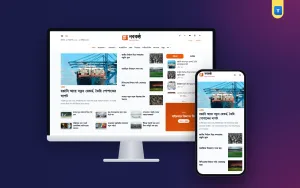
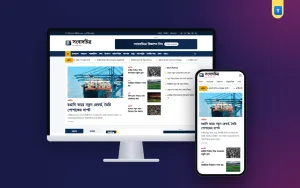
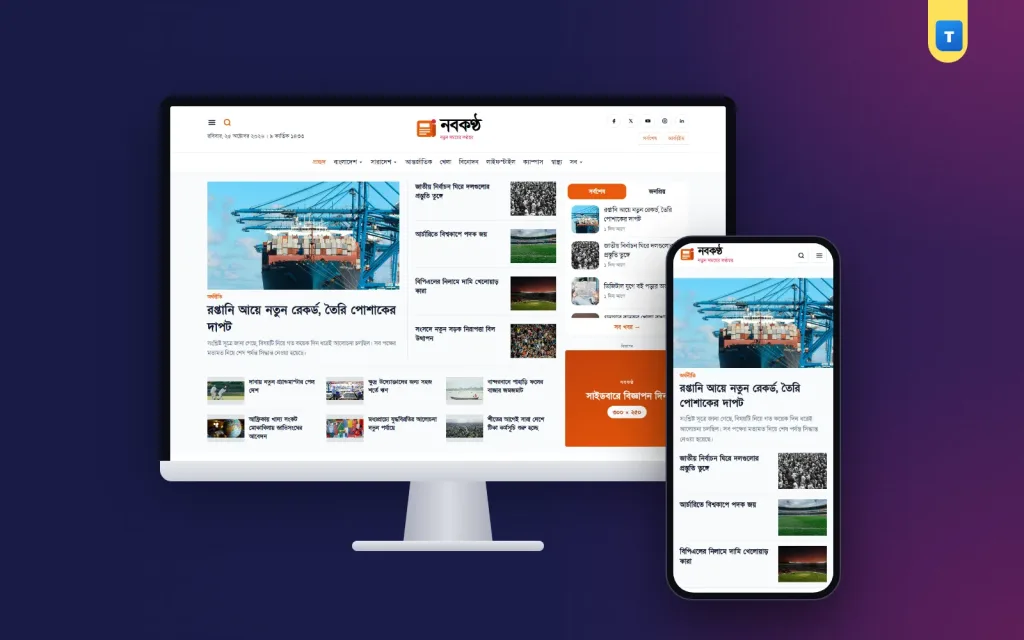
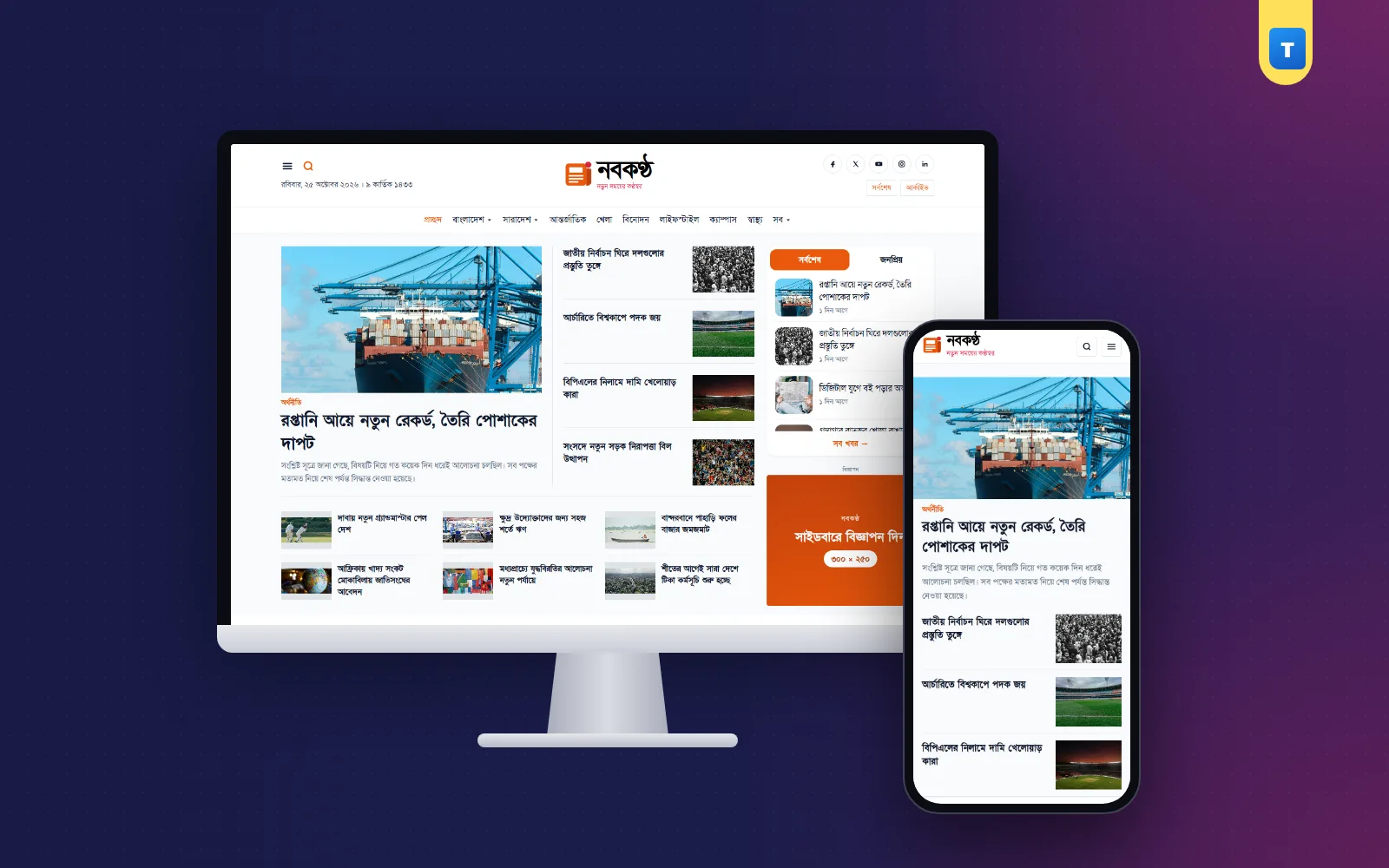
You can use a general blog system with plugins, pay for a custom build or start with dedicated news software. For a phone-first team, Nobokontho, a Laravel news website PHP script, is one ready option. It has a clean orange newspaper design with ruled sections, a numbered spotlight, opinion cards with writer photos, a dark video band and a simple white top bar on phones.
It also brings Reporter, Editor and Admin roles, polls, district news and twelve ad places including an inline ad every four paragraphs, and it installs on cPanel from the browser. The Nobokontho live demo shows how it looks on a phone.
Frequently asked questions
How are online portal news sites different from newspapers?
They publish all day without a print deadline, update stories as facts change, carry video and photo stories and can be searched and shared instantly.
Do online portal news sites need a large team?
No. A focused portal can start with three to five people and grow as readers and advertisers arrive. A common start is one editor, two or three reporters and one person for photos, video and social media.
Where do most portal readers come from?
From Facebook on phones, followed by Google, YouTube and shared links in messaging apps. Loyal readers who type the address or use a bookmark are fewer, but they read the most stories.
How do portals make money?
Mostly from display and in-story ads, ad networks, local advertisers by the month and video income. Sponsored features add a little more, as long as they are clearly marked.
Is it too late to start a new portal?
No. Big portals cannot cover every district, subject or community well. A focused portal that serves one area or audience better than anyone else can still find loyal readers.
What software do news portals use?
Some use general blog systems, some custom builds and many use dedicated news software with newsroom roles and ad places built in.