Starting an organic food business in Bangladesh is easier to begin than ever, but harder to do well than most people think. Buyers in Dhaka, Chattogram and Sylhet now pay more for honey, mustard oil, ghee, spices and red rice they can trust. The problem is that every second Facebook page says "100% pure", so trust has to be earned with proof, packing and service.
This guide explains the steps in plain words: choosing products, finding farmers, testing and packing, the paperwork, pricing, selling online, delivery and the mistakes that sink new brands. It is written for first-time founders, home sellers who want to grow, and farmers who want to sell under their own name.
What "organic" means for buyers in Bangladesh
In a strict sense, organic food is grown without synthetic fertiliser, pesticides or growth chemicals, and certified by a body that checks the farm. Very few small sellers here hold that kind of certificate. Most buyers use the word more loosely: food that is pure, not mixed, not polished, not dyed and not treated with formalin or carbide.
For anyone planning an organic food business in Bangladesh, this gap between the legal meaning and the everyday meaning is the first thing to understand.
Be honest about which one you sell. If your mustard oil is cold-pressed from local seed but the field was not certified, say "cold-pressed, no mixing" rather than "certified organic". Clear words protect you when a buyer asks questions, and they build the kind of trust that brings repeat orders.
Why demand is growing
- Food safety worries about adulterated oil, coloured spices and sugar-fed honey.
- More health awareness among young families, diabetics and fitness buyers.
- Online habits: people already buy clothes and gadgets online, and food is next.
- Gifting: honey, dates, nuts and ghee boxes are popular for Eid and weddings.
Choosing products for an organic food business in Bangladesh
Start narrow. One or two products you understand deeply will beat thirty products you buy from the wholesale market and relabel. Good first products share three things: a clear quality difference, a long shelf life and a price that leaves room for delivery costs.
- Honey: mustard flower, litchi, black seed or Sundarbans honey. Long shelf life and high value.
- Cold-pressed mustard oil: a daily product with loyal repeat buyers.
- Ghee: high margin, but needs careful sourcing and cool storage.
- Spices: turmeric, chilli and cumin powder ground without colour or rice flour.
- Nuts, dates and seeds: strong sales before Ramadan and Eid.
- Heritage rice and dal: red rice, brown atta and unpolished lentils.
Fresh vegetables and fruit sound attractive, but they spoil quickly and need daily delivery. Many founders start with dry goods and add fresh items only once they have a delivery team.
Finding farmers and testing what you sell
Your brand is only as good as your source, and in an organic food business in Bangladesh the source is often a small farm or a single beekeeper.
Visit the beekeeper during the mustard season, sit with the oil mill owner, and buy small lots before you commit. Write down the area, the date and the batch, because buyers will ask and your records will protect you if anything goes wrong.
Simple quality checks
- Lab tests for honey moisture and sugar, and for colour in spices, from a recognised food testing lab.
- Batch numbers on every jar so you can trace a complaint back to its source.
- Clean packing in food-grade jars and bags, sealed and dated.
- Taste and smell checks on every new lot before it goes on sale.
Pay farmers fairly and on time. Agree on the price before the harvest, not after. In this trade your best suppliers are also your story. A photo of the beekeeper with his boxes, with his permission, is worth more than any stock image.
Licences, labels and the legal basics
For most small sellers the usual first steps are a trade licence from the city corporation or union parishad, a TIN and a bank account in the business name. Packed food sold to the public also falls under food safety rules, and some products may need BSTI certification or registration. Rules and thresholds change, so confirm the details with the local office or a trusted adviser before you print labels.
Your label should show the product name, net weight, ingredients, batch, packing date, best-before date, your business name and a phone number. Avoid health claims you cannot prove, such as "cures diabetes". They are risky and they make careful buyers doubt you.
A simple starting budget
- First stock of one or two products, bought in small lots.
- Jars, bags, labels and boxes, often more expensive than people expect.
- Lab tests for your main products.
- Photos and a website, plus a small budget for Facebook ads.
- Working money for three months of delivery, packing and calls.
Pricing, margins and profit
Pure food costs more to make, so do not try to match the cheapest price in the bazar. Work out your real cost per jar: product, jar, label, box, packing time, lab test share, delivery subsidy and a share of advertising. Then add a margin that still works after returns and the odd broken jar.
Show the reason for your price. A short line such as "cold-pressed in small batches, no mixing" next to the price explains the gap. Bundles help too: a honey and black seed box, or a monthly pantry pack of oil, rice and dal, lifts the order value and makes delivery cheaper per item.
An organic food business in Bangladesh usually makes its money from repeat buyers, not from one-time ad clicks. A family that buys mustard oil every month is worth far more than a buyer who tries one jar and disappears.
How to sell organic products online
Most new brands begin on Facebook and WhatsApp, and that is fine for the first fifty orders. Then the messages pile up: buyers ask the price again, addresses get lost and nobody remembers who paid by bKash. If you are asking how to sell organic products online in a way that grows, the answer is a proper website with a cart, a checkout and an order list.
What your website needs
- A simple checkout: name, mobile number, district and address. Many buyers do not use email.
- Cash on delivery plus bKash and Nagad, with a Transaction ID field for Send Money payments.
- Weights and sizes, such as 250 g, 500 g and 1 kg honey, each with its own price.
- A fast phone layout, because most orders come from phones on mobile data.
- Clear delivery charges inside and outside Dhaka, with free delivery above an amount.
- A WhatsApp button for buyers who want to ask before ordering.
- Origin notes and reviews on every product page.
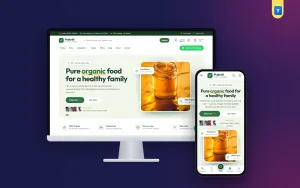
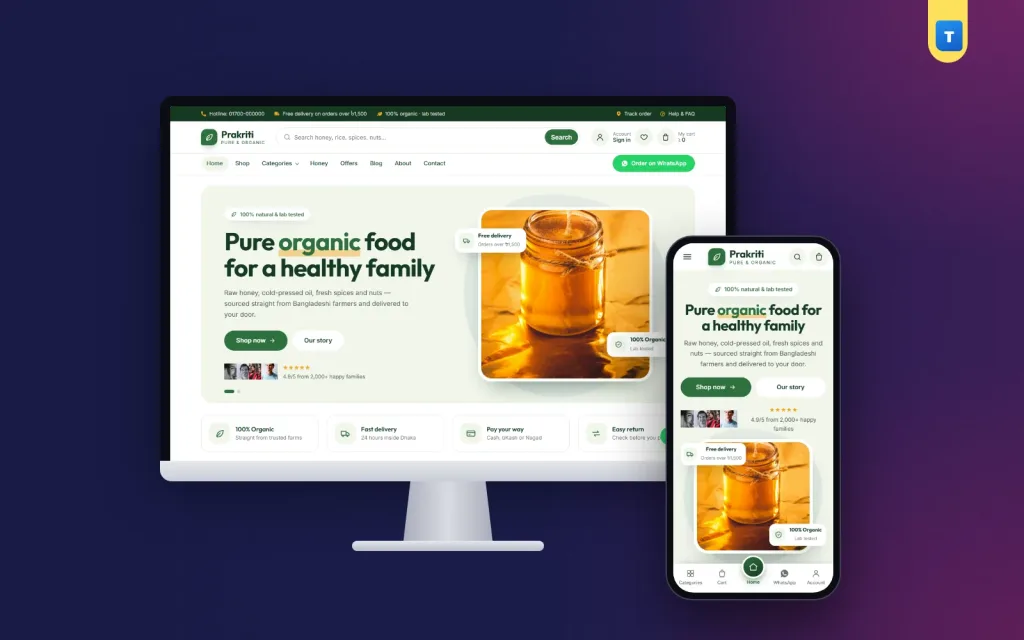
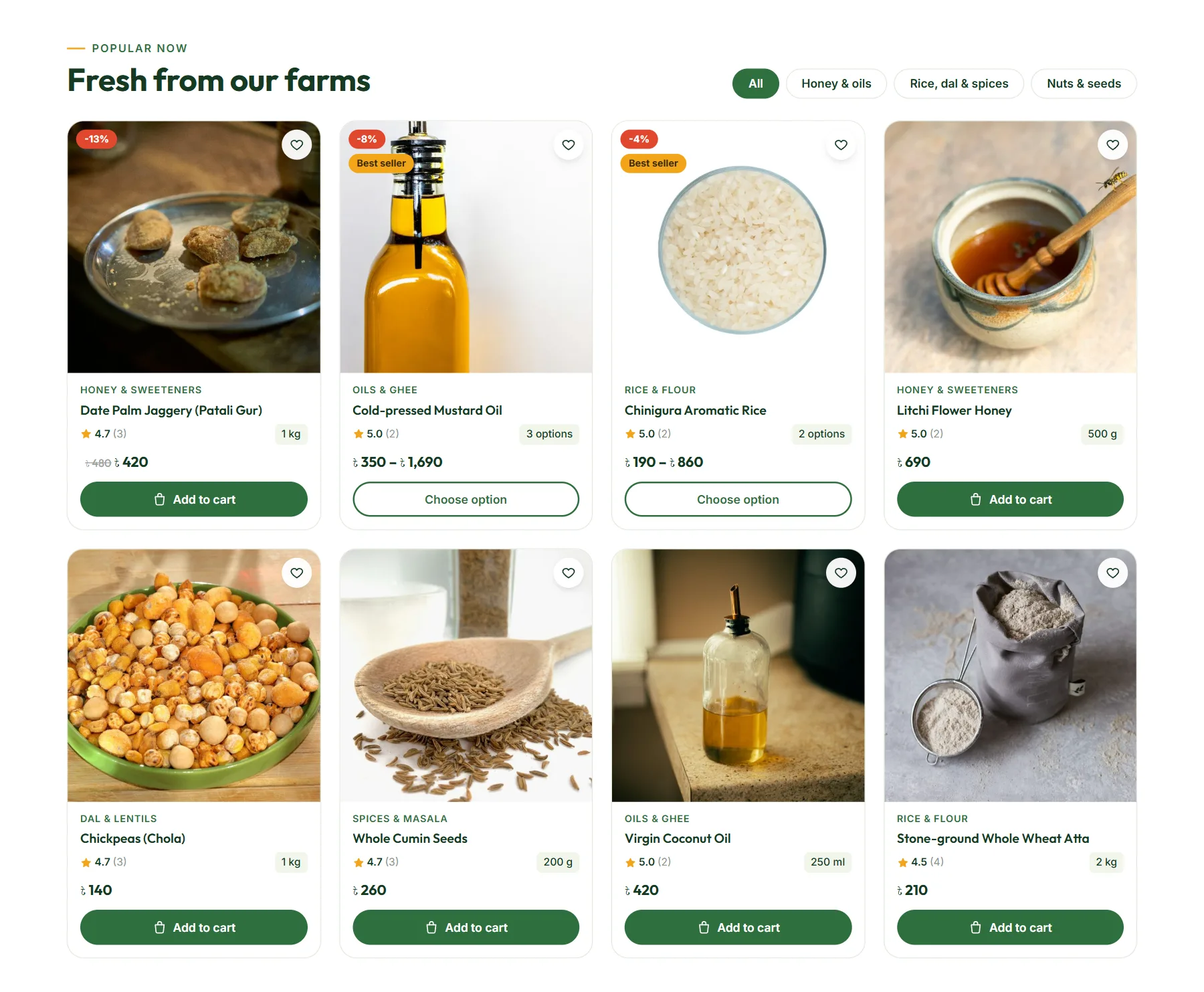
Prakriti, our organic food store theme for WordPress, was built around this list. It runs on WooCommerce and the free Elementor, with a Bangladesh checkout, bKash and Nagad, Steadfast courier, a fraud checker and an incomplete-orders list. You can open the live Prakriti demo to see a honey, spice and nut shop working from search to checkout.
Photos and product pages
Take photos in daylight on a plain background. Show the jar, the colour of the honey against the light, the texture of the ghee and the packed box. Under each product, write where it comes from, how it is made, how to store it and who it suits. Answer the questions buyers ask you in Messenger every day.
Delivery, payments and fake orders
Inside Dhaka, many shops use their own rider or a courier with same-day or next-day delivery. Outside Dhaka, courier companies cover most districts in two to three days. Pack oil and honey jars with care: a sealed lid, a plastic wrap and a strong box. One broken jar ruins a parcel and a review.
Cash on delivery is still what most buyers prefer, but it brings refused parcels and prank orders. Some simple habits reduce the loss:
- Call new buyers before you send a large order.
- Ask for the delivery charge in advance by bKash or Nagad for far districts.
- Limit orders from one number in a day.
- Keep a list of numbers that refused parcels before.
- Follow up half-finished checkouts: many of those buyers only had a question.
Seasons also change the work. Monsoon humidity can spoil spices and soften dates, and winter fog slows long-distance parcels. Store dry goods in airtight tubs off the floor, and tell buyers in far districts about delays before they ask.
Use one courier account at first and learn its pickup times, cash collection days and return rules. Switching couriers every month makes it hard to see which problems are yours and which are theirs.
Marketing an organic food business in Bangladesh
Trust is the product. Every post, photo and reply should answer the buyer's quiet question: "Is this really pure?" Show the farm, the harvest, the lab report and the packing table. Real people and real places do this better than discounts.
- Short videos of honey being harvested or oil being pressed.
- Customer reviews with photos, shared with permission.
- Seasonal launches: new mustard honey in winter, dates before Ramadan, litchi honey in summer.
- Recipes and health tips on a blog, linked from Facebook posts.
- Small trial packs so new buyers can test before buying a big jar.
- A WhatsApp list for repeat buyers, with a monthly reminder.
When you run ads, track what happens after the click. The Facebook Pixel and Conversion API tell you which posts bring real purchases, not just likes. Google's own guide to helpful, people-first content is also worth reading before you write product pages and blog posts.
Common mistakes to avoid
- Too many products too early, which spreads money and attention thin.
- Claims you cannot prove, such as medical benefits or "certified" without a certificate.
- Weak packing that leaks or breaks in the courier van.
- No records of batches, costs and returns.
- Selling only through Messenger, so orders and payments get lost.
A launch checklist
- Pick one or two products and visit their source.
- Get trade licence, TIN and bank account; check food safety and labelling rules.
- Test your main products and keep the reports.
- Design labels with batch and dates; order jars and boxes.
- Work out your full cost per item and set prices.
- Build your website with a simple checkout, bKash and Nagad and a WhatsApp button.
- Open a courier account and test one parcel to a friend outside Dhaka.
- Launch with a small offer to family, friends and your first Facebook followers.
Most of these steps cost little money but take time. Founders who rush the first three often spend the next year fixing complaints about quality or labels.
Growth comes slowly at first, then faster once repeat buyers tell their friends. Watch five numbers every month: orders, average order value, repeat buyers, refused parcels and cost per sale from ads. They tell you more than any opinion.
If you want the website side ready quickly, Prakriti installs from one zip and imports a complete demo store in one click, with honey, spice, oil and nut pages you can rename and refill. Then you can spend your time where it counts: on the farmers and the food.
Frequently asked questions
Is an organic food business in Bangladesh profitable?
It can be. Margins are better than on ordinary groceries, but costs for testing, packing and delivery are higher. Profit comes from repeat buyers and from products with a clear quality difference.
How much money do I need to start?
Many sellers start small with one product, packing material, a basic website and three months of working money. Start small, learn, then grow.
Do I need a certificate to sell honey or oil?
You usually need a trade licence and must follow food safety and labelling rules. Some products may need BSTI certification. Confirm with the local office before launch.
What is the best way to start an organic food business in Bangladesh online?
Start with one or two trusted products, a website with a simple mobile-number checkout, cash on delivery plus bKash and Nagad, and honest product notes with real photos.
Should I sell only on Facebook?
Facebook is good for finding buyers, but a website keeps orders, payments and delivery details in one place once orders grow.