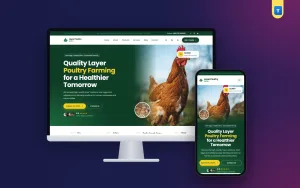
Practical poultry farm website design helps a farm sell eggs, birds, chicks and feed directly to families, shops and restaurants, without depending only on middlemen. Buyers of farm products care about freshness, hygiene and reliable delivery. When your website shows the farm clearly, lists products with honest prices and makes ordering easy, it becomes a steady source of orders.
This guide covers what a poultry or egg farm website needs: the homepage, product pages, bulk orders, delivery, trust signals, ordering tools and mobile layout. It is written for layer farms, hatcheries, feed sellers and small agro businesses.
Who buys from a farm website
A farm website usually serves several kinds of buyers:
- Families who want fresh eggs every week and trust a known farm more than an unknown shop.
- Shops and supermarkets that need a reliable supply of trays at a fixed price.
- Bakeries, hotels and restaurants that buy large quantities on a schedule.
- Other farmers buying chicks, point-of-lay birds, feed and equipment.
Each group wants something different, so good poultry farm website design gives each one a clear path: small packs for families, bulk pricing for businesses and technical details for farmers.
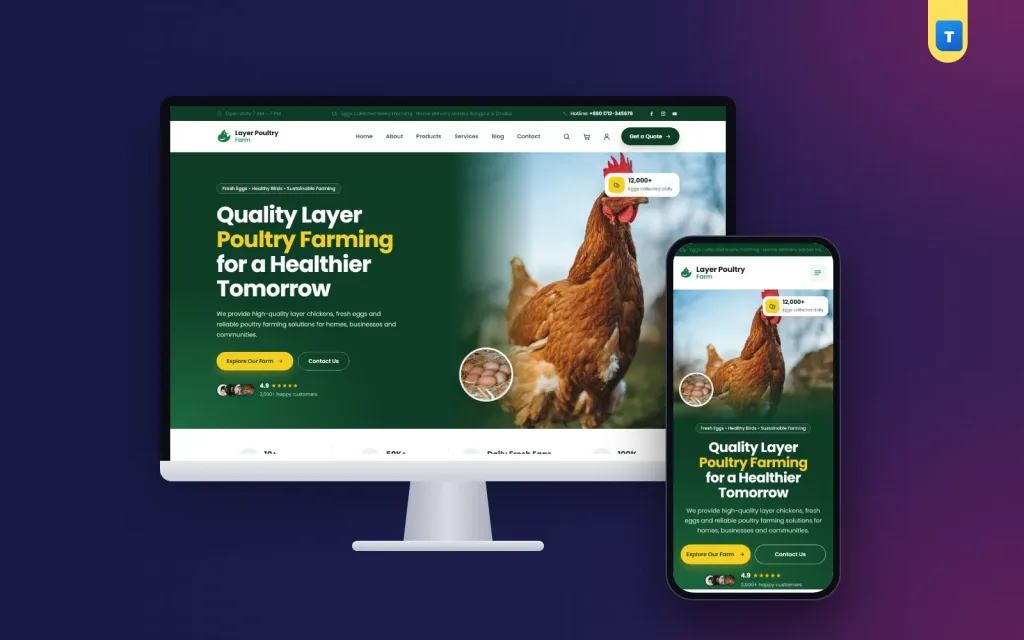
Poultry farm website design for the homepage
The homepage should prove that your farm is real, clean and well run. A layout that works:
- Hero: a wide photo of your sheds or birds with a short line such as "Fresh eggs from our farm to your door".
- Products: eggs, birds, chicks, feed and supplies as clear tiles.
- Our farm: a few lines about the farm, its location and how long you have been running.
- Feed and care: what the birds eat and how you keep them healthy.
- Services: farm visits, bulk supply, advice for new farmers.
- Numbers: birds raised, eggs per day, customers served.
- Community impact: jobs created, local farmers supported.
- Reviews and partners: quotes from regular buyers and logos of shops you supply.
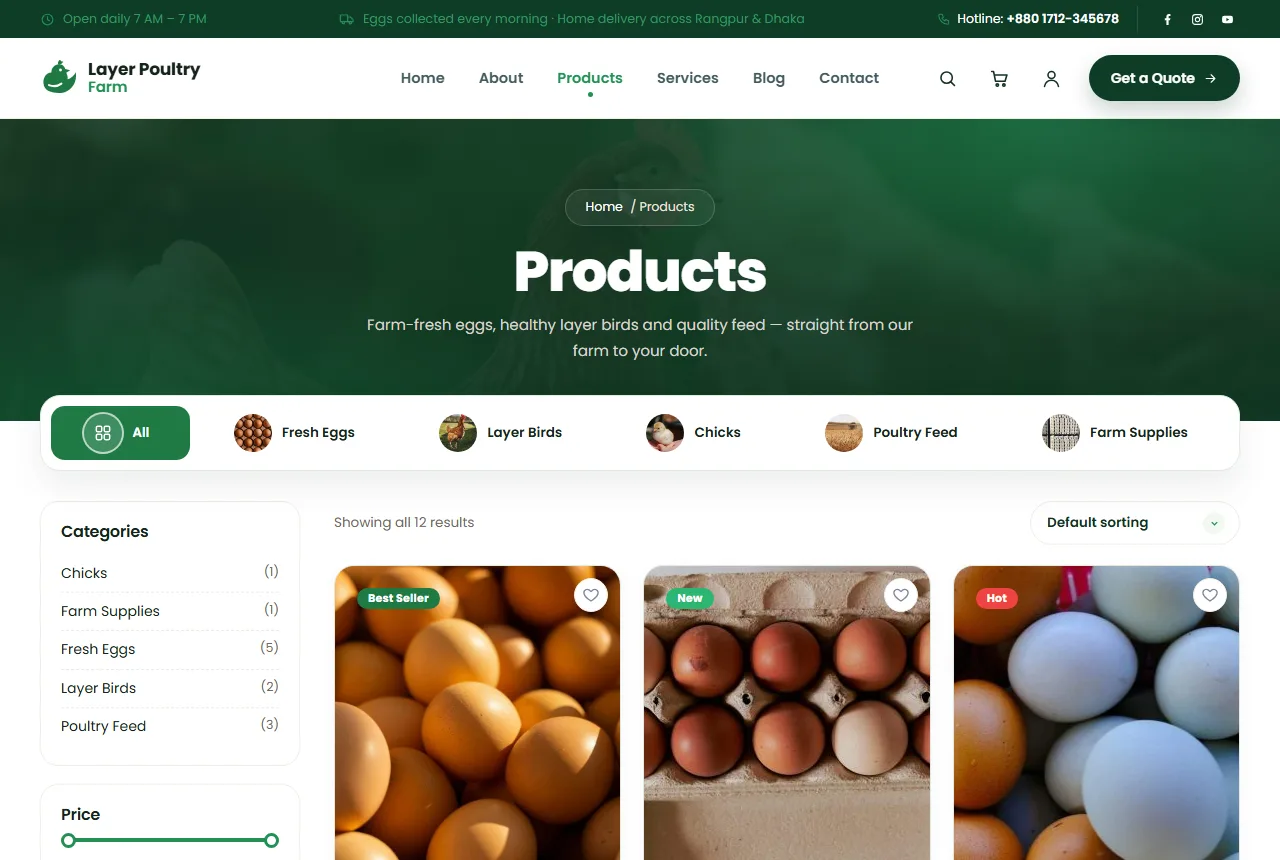
Product pages for farm goods
Farm products need clear, simple pages:
- Units and packs. Eggs by the dozen, by the tray of 30 and by the case. Birds by the head. Feed by the bag.
- Clear prices for each unit. Use separate options with their own prices.
- Freshness and source. When eggs are collected and how they are cleaned and packed.
- Storage advice. How long eggs keep and how to store them.
- Stock level. A simple stock bar tells buyers how much is left today.
- Quick quantity buttons. Let buyers pick 1, 2 or 5 trays in one tap.
For chicks and birds, add the breed, age, vaccination status and a note on transport.
Bulk orders and business buyers
Business buyers bring steady volume, so make it easy for them:
- Show bulk prices clearly, such as a lower price per tray above ten trays.
- Offer a simple quote or enquiry form for very large or regular orders.
- Explain delivery days for business routes.
- Offer payment terms for trusted regular buyers, if you can manage it.
Delivery and cut-off times
Freshness depends on delivery, so make delivery details impossible to miss. Show delivery areas, delivery days and charges in the top bar, the cart and checkout. An order-by countdown, such as "Order in the next 3 hours for delivery tomorrow morning", helps buyers plan and creates a gentle sense of urgency.
Ordering made easy
Many farm customers are not used to online shopping, so ordering must be simple:
- WhatsApp order button. Some buyers prefer to ask a question or order by chat. A button on each product page opens WhatsApp with the product name already filled in.
- Mobile number sign-in. Let customers create an account with a mobile number and a password instead of an email.
- Cash on delivery. Still the most trusted option for many buyers, especially the first time.
- Mobile payments. bKash and Nagad for buyers who prefer to pay in advance.
- Sticky buy bar on phones. Keeps the add to cart button visible while scrolling.
Trust signals for farms
- Real photos of sheds, birds, egg collection and packing.
- Farm address and map. Buyers like to know where their food comes from.
- Certifications or vet partners, if you have them.
- Partner logos of shops and restaurants you supply.
- Return and refund policy for broken eggs or late delivery.
- Phone and WhatsApp contact on every page.
Poultry farm website template options
Building all of this from scratch takes time most farmers do not have. A poultry farm website template gives you a finished design with homepage sections, product pages and help pages ready. You add your photos, products and prices, and you can start taking orders quickly. When comparing, check that the template supports units and bulk prices, shows delivery details clearly and works well on phones. A good poultry farm website template should also include ordering aids such as quick quantities and WhatsApp ordering.
Designing for phones and slow connections
Many buyers live in areas with slow mobile data. Keep pages light: compress photos, avoid heavy page builders and limit scripts. On small screens, keep products in two columns, make buttons large and keep the WhatsApp and cart buttons always in reach. Test every page on a basic Android phone with mobile data before launch.
Photos that build trust
For a farm, photos are proof. Take photos in daylight of clean sheds, healthy birds, egg collection, washing and packing, and your team at work. Show the actual trays and packs customers receive. Update photos every few months so the site always reflects the farm as it is today. Avoid stock photos of perfect farms abroad; local buyers notice and trust drops immediately.
Planning the site structure
A farm website does not need many pages, but each one should have a clear job:
- Home: the farm, products, services, numbers, impact, reviews and delivery details.
- Shop: all products with categories for eggs, birds, chicks, feed and supplies.
- Product pages: units, prices, freshness, storage, stock and ordering aids.
- About: the farm's story, the team and how the birds are raised.
- Services: bulk supply, farm visits, advice and setup help for new farmers.
- Delivery: areas, days, charges and cut-off times.
- Help pages: FAQ, returns and refunds, order tracking, privacy and terms.
Keep the menu short so buyers who are new to online shopping never feel lost.
Writing product descriptions
Farm buyers want facts, not slogans. For eggs, say when they were collected, how they were cleaned and packed, the size grade and how long they keep. For birds and chicks, give breed, age, weight range, vaccination status and transport arrangements. For feed, list the type, protein level, bag size and which stage of bird it suits. Short, factual descriptions answer questions before buyers ask, and they show that you know your business.
Use the same structure for every product so buyers can compare quickly. Consistency is a small detail of poultry farm website design, but it makes the whole shop feel organised and trustworthy.
Serving new farmers
If you sell chicks, birds or feed to other farmers, your website can become a trusted resource. Add a simple guide for beginners: shed preparation, feeding by age, vaccination schedules and common health problems. Offer a call or visit for new customers setting up their first flock. Farmers who succeed with your chicks and advice come back for every new batch, and they tell their neighbours. This kind of support is hard for competitors to copy and builds a loyal customer base over time.
Farm website ideas that bring buyers back
Getting the first order is only the start. A few farm website ideas that encourage repeat orders:
- Weekly egg plan. Let families choose a regular delivery day and quantity.
- Farm news. A short monthly post about new chicks, a new shed or a farm visit day.
- Recipes. Simple egg and chicken recipes give buyers a reason to order more.
- Loyalty coupons. A small discount on the fifth order rewards regular buyers.
- Farm visit days. Inviting families to see the farm builds deep trust and word of mouth.
Your first month online
Launch with your core products: eggs by tray and dozen, layer birds, chicks and feed, each with real photos, clear units and prices. Set delivery areas and a daily cut-off time, and show them on every page. Visit nearby shops, bakeries and hotels with a small card that carries your website link and a first-order offer. Post one short farm update each week and share it on social media, with photos from the sheds and the packing room. Ask regular buyers for a short review, and add the best ones to the homepage. After a month, check which products and areas order most, and adjust your delivery days and homepage to match.
Keep a simple daily routine as well: update stock every morning, confirm the day's orders by phone if needed, and reply to every WhatsApp message before evening. Buyers quickly learn which farms are reliable, and reliability is what turns a first order into a weekly habit.
Handling broken eggs and complaints
Eggs are fragile, and some breakage is unavoidable. Decide in advance how you will handle it: for example, replace broken eggs on the next delivery or refund their value, as long as the customer sends a photo on the day of delivery. Write this in your return policy in plain words. A quick, fair response to a small problem often earns more loyalty than a perfect delivery, because it shows the farm stands behind its products.
Content and search
Helpful content brings buyers from search engines. Posts such as "How to store eggs at home", "Brown vs white eggs: is there a difference?" or "Starting a small layer farm: a beginner's checklist" answer real questions and lead readers to your shop. Give every page a clear title that includes what you sell and your area. Google's SEO starter guide explains how clear titles and useful pages help people find you.
Common mistakes
- No prices. Buyers will not call to ask; they will buy elsewhere.
- Unclear delivery areas. Show exactly where you deliver.
- Old stock shown as available. Update stock daily.
- Only an email contact. Many farm buyers prefer phone or WhatsApp.
- Slow pages. Large photos on slow connections lose buyers.
Measuring results
Each week, check how many orders come from the website, how many are repeat orders and which products sell most. If many people view a product but few buy, check its price, photos and delivery details. If business buyers are not ordering, make bulk pricing clearer. Good poultry farm website design improves step by step, guided by what your buyers actually do.
Frequently asked questions
Can I sell farm produce other than eggs and birds?
Yes. Many farms also sell compost, fresh vegetables or homemade products. Add them as a separate category so the main egg and bird products stay easy to find.
Should I sell to families and businesses on the same site?
Yes. Show small packs for families and clear bulk prices for businesses, with a quote form for very large orders.
Is WhatsApp ordering a good idea?
Yes, for buyers who prefer to chat. Keep the online cart as well, so others can order without waiting for a reply.
How often should I update stock?
Daily, especially for eggs. Showing accurate stock prevents disappointed buyers.
Do I need online payment?
Cash on delivery is enough to start. Add mobile payments when regular buyers ask for them.
Starting with Khamar
If you want a ready design built on these ideas, Khamar is our poultry farm WordPress theme. It sells eggs, birds, chicks and feed on WooCommerce, with a farm story, services and impact sections, units sold, an order-by countdown, a stock bar, quick quantities, WhatsApp ordering and a sticky buy bar on phones. The demo includes 12 products in 5 categories and every page a farm shop needs.
Whatever you choose, remember the heart of good poultry farm website design: show the real farm, keep prices and delivery clear, and make ordering easy for every kind of buyer. Start with the products you know best, keep your promises on freshness and delivery, and let satisfied families, shops and restaurants spread the word, because in farming a good reputation built order by order is worth more than any advertisement.