A vegetable business in Bangladesh can start with very little: a van, a rented corner or a Facebook page and a good link to farmers. Every family buys vegetables several times a week, so demand is never the problem. The real work is buying right, losing as little as possible to spoilage and getting fresh produce to buyers before it wilts.
This guide covers the main models, sourcing, pricing, storage, licences, delivery and selling online, with simple numbers to watch. It is written for first-time sellers, small shop owners and young founders who want to build a farm-to-home brand.
Why the vegetable trade is worth a look
Bangladesh grows a huge range of vegetables through the year: winter brings cauliflower, cabbage, tomato and carrot; summer brings gourds, okra, pointed gourd and leafy greens. City buyers want this produce fresh and clean, but most still buy from crowded bazars where they worry about formalin, weight and price.
That gap is the opening. A seller who offers fresh, clean produce at a fair price, with honest weight and reliable delivery, can win loyal families quickly. Fruits follow the same logic, with big seasonal peaks for mango, litchi and jackfruit.
What makes it hard
- Short shelf life: leafy greens can spoil in a day without care.
- Price swings after floods, strikes or the end of a season.
- Thin margins on staples like potato and onion.
- Daily work: buying starts before sunrise, every day.
Choosing your vegetable business in Bangladesh model
Pick one model first and learn it well. Each needs different money, space and hours.
- Retail shop or stall in a market or residential lane, selling to walk-in buyers.
- Van or rickshaw seller moving through the same streets at the same time each day.
- Wholesale supplier for restaurants, hostels, offices and caterers.
- Online farm-to-home delivery with a website, a store room and riders.
- Weekly box service that sends a mixed box to subscribers on fixed days.
- Seasonal fruit seller, such as mangoes from Rajshahi shipped by courier across the country.
Many successful sellers combine two, and a vegetable business in Bangladesh that mixes shop sales with home delivery is often the most stable: a small shop for daily sales and online orders for families who cannot visit.
Restaurants and hostels give steady volume, while home buyers give better margins.
Sourcing from farmers and wholesale markets
You can buy from wholesale markets such as Karwan Bazar, Jatrabari or your district's main arot, or directly from farmers in growing areas like Bogura, Jessore, Narsingdi, Manikganj and Rajshahi. Buying from farmers gives better prices and a story to tell, but needs transport, trust and regular volume.
A strong vegetable business in Bangladesh often uses both: wholesale markets for everyday items and direct farm links for a few signature products, such as chemical-free tomatoes, leafy greens from a known village, or Himsagar mangoes from one orchard.
Questions to ask a supplier
- What time is the harvest, and how long until it reaches me?
- Is any chemical wash, carbide or formalin used?
- Can you supply the same quality every week?
- What happens to damaged or short-weight lots?
- Do you take payment on delivery, by bKash or on credit?
Write the answers down. Over time you will know which suppliers you can trust in the rainy season, when roads are bad and prices jump.
Pricing, waste and storage
Your real cost is not only the buying price. Add transport, labour, bags, rent, delivery and, most important, waste. If you buy 100 kg of tomatoes and 10 kg spoil, your cost per kilo of what you actually sell goes up by more than ten percent.
How to keep waste low
- Buy small and often for leafy greens and soft fruits.
- Sort on arrival: sell the best first, cook or discount the rest.
- Keep produce cool and dry, out of direct sun, in crates rather than sacks.
- Use breathable bags for delivery, not sealed plastic.
- Sell the evening leftovers at a lower price rather than throwing them out next day.
Setting prices
Keep onion, potato and other staples close to the market price, because buyers compare. Earn better margins on clean, sorted, ready-to-cook items, salad greens, exotic vegetables, imported fruit and combo boxes. A clear daily price list builds trust: when prices go up after a flood, explain why.
Track your margin weekly, not monthly. In this trade, one bad week of buying can wipe out a month of profit if you do not notice it quickly.
Licences and the basics
For a shop or an online business you will usually need a trade licence from the city corporation or union parishad, a TIN, and a bank account in the business name. Selling food also brings basic food safety duties: clean storage, no harmful chemicals, honest weights and measures. Rules change, so check with the local office before you open, and keep copies of your papers at the shop.
A calibrated digital scale is one of the best investments you can make. Correct weight is the first thing buyers notice, and the first thing they complain about.
A simple starting budget
- Space: shop rent and advance, or a store room for an online model.
- Equipment: crates, scale, shelves, fans, and a fridge for greens and cut items.
- Transport: a van, a hired pickup or a deal with a transport line.
- First stock for a few days only; produce should not sit.
- Packing: breathable bags, labels and boxes.
- Working money for at least two to three months.
How to sell fruits and vegetables online
Online orders let you sell to families who never come to your stall. Most sellers start with Facebook posts and WhatsApp messages, and that works for the first few dozen orders a day. Then it becomes messy: buyers ask for the price list again, orders get lost in chats and nobody knows who paid.
If you are asking how to sell fruits and vegetables online at a bigger scale, a website with a cart and an order list is the next step. It keeps prices, stock and orders in one place and lets buyers order at night for the next morning.
What a fresh produce website needs
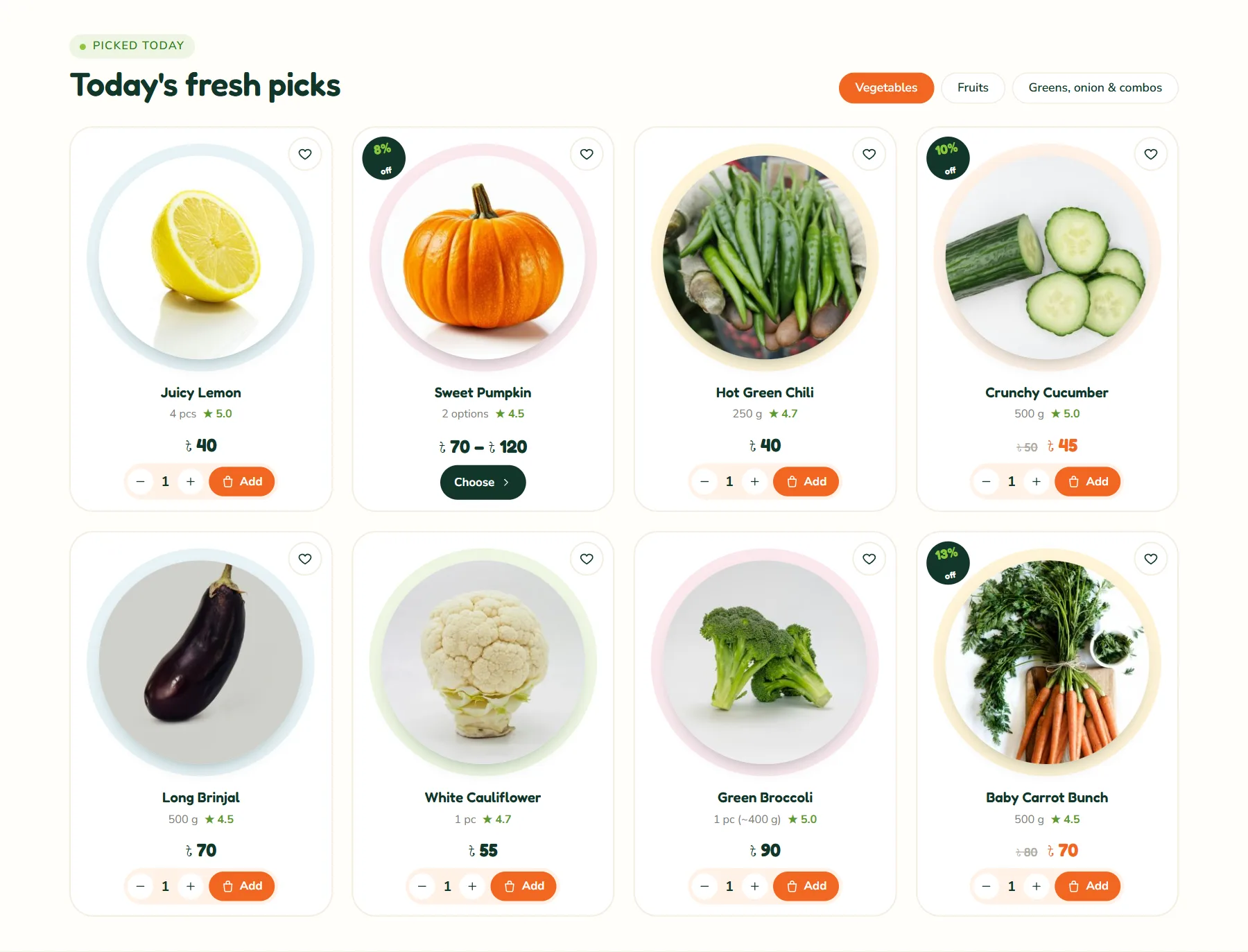
- Weights and units: 500 g, 1 kg, a bundle, a dozen, half or whole.
- A fast phone layout with quick add-to-cart from the product list.
- A simple checkout: name, mobile number, district and address.
- Cash on delivery, bKash and Nagad.
- Clear delivery charges and a free delivery amount, so small orders stay worth it.
- A cut-off time for same-day delivery, shown at the top of every page.
- A WhatsApp button for buyers who prefer to send a list.
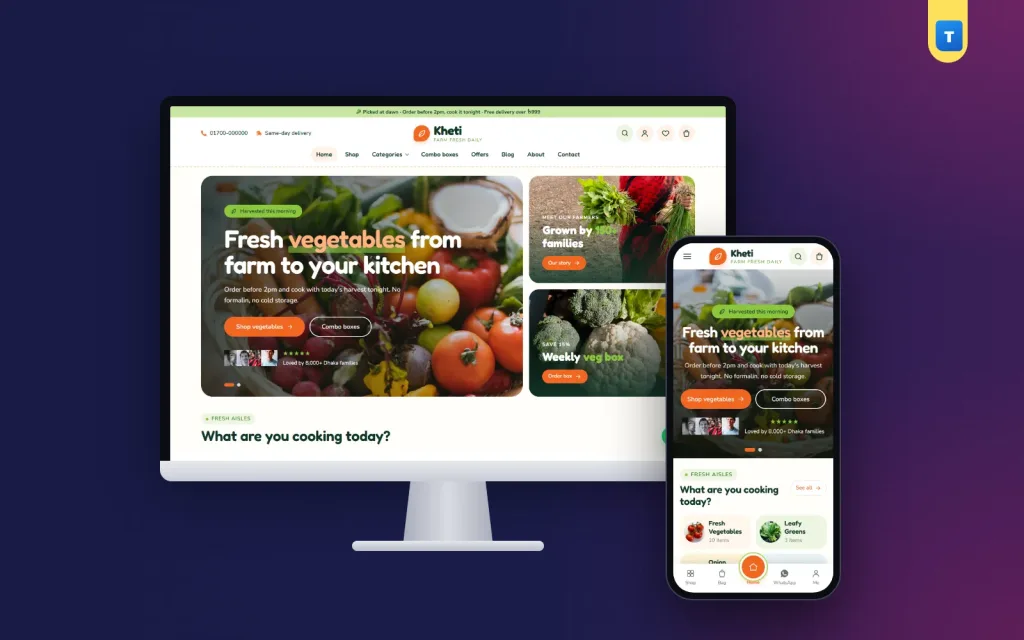
Kheti, our fresh produce store theme for WordPress, was built for this kind of shop. It runs on WooCommerce and the free Elementor, with weight options, round-plate product cards with a quantity stepper, a Bangladesh checkout, bKash and Nagad, Steadfast courier and a footer band that invites buyers to send their bazar list on WhatsApp. You can see it working on the live Kheti demo.
Photos and product notes
Take photos of your actual produce in daylight on a plain surface. Under each item, note where it comes from, how to store it and how long it stays fresh. Small notes like "keep greens wrapped in a damp cloth in the fridge" make buyers feel looked after.
Delivery, payments and refused orders
Fresh produce has a short delivery window, so most sellers deliver inside their own city with their own riders: early morning for breakfast items, or before evening for dinner. Pack heavy items like potatoes at the bottom and soft items like tomatoes and greens on top, in separate breathable bags.
For seasonal fruit shipped to other districts, use a courier with a good record for perishables and pack in ventilated cartons with dry straw or paper. Tell buyers the expected delivery day, and do not ship ripe fruit that will not survive two days on the road.
- Call new buyers before sending a large order.
- Limit orders from one number in a day to stop prank orders.
- Ask for the delivery charge in advance by bKash or Nagad for far districts.
- Follow up half-finished checkouts; many buyers only had a question.
- Let buyers check the bag at the door and return anything not fresh.
A "fresh or free" promise sounds risky, but it builds trust fast. If you buy and pack carefully, returns stay low and the promise becomes your best advert.
Growing a vegetable business in Bangladesh
Once the daily routine is steady, look for ways to raise the average order and bring buyers back. Weekly combo boxes work well: a family box of seasonal vegetables and greens, delivered on fixed days, with the mix changing every week. Boxes are easy to plan, reduce waste and lock in repeat orders.
- Seasonal launches: mango season, winter vegetables, Ramadan fruit packs.
- Ready-to-cook items: cut vegetables, salad packs, peeled garlic.
- Office and restaurant supply for steady weekday volume.
- Short videos from the farm or the morning sorting table.
- A WhatsApp list with the daily price list and offers.
Write useful posts too: how to store greens, how to pick a ripe mango, what is in season this month. Google's guide to helpful, people-first content is a good reminder that honest, practical pages earn trust.
Common mistakes to avoid
- Buying too much on a cheap day and losing it to spoilage.
- No records of buying price, waste and sales.
- Wrong weights, even by a little.
- Promising delivery times you cannot keep in traffic or rain.
- Taking every order only by chat, so mistakes repeat.
Hiring and training your first team
The first two hires are usually a sorter-packer and a rider. Look for people who are careful rather than fast: a packer who checks every tomato and a rider who calls before arriving will keep more buyers than any discount. Train them on weights, hygiene, polite calls and what to do when a buyer refuses an item.
Pay riders on time and give them a fixed route each day. A rider who knows the lanes, the building guards and the regular buyers delivers faster and makes fewer mistakes. For a growing vegetable business in Bangladesh, a loyal rider is worth as much as a good supplier.
Working with the seasons
Plan the year around the crops. Winter is the busiest and cheapest season for many vegetables, so it is the best time to win new buyers with low prices. The monsoon brings floods, higher prices and more spoilage, so buy smaller lots and tell buyers early when an item is short.
Mango and litchi season in summer can double sales for a few weeks if you prepare cartons, couriers and stock in advance.
Five numbers to watch every week
Sales per day, average order value, waste in kilos, repeat buyers and refused deliveries. A vegetable business in Bangladesh lives or dies on these five figures, much more than on how many likes a Facebook post gets.
Frequently asked questions
Is a vegetable business in Bangladesh profitable?
Yes, when waste is controlled and buying is careful. Margins on staples are thin, so profit comes from volume, clean and sorted produce, combo boxes and repeat buyers.
How much money do I need to start?
A small online or van-based start needs crates, a scale, packing material, a few days of stock and two to three months of working money. A shop needs more for rent and fittings.
What is the best way to start a vegetable business in Bangladesh online?
Start with a small area you can deliver to the same day, a short list of fast-selling items, a simple website with mobile checkout and cash on delivery, and a clear daily price list.
How do I stop vegetables spoiling?
Buy small and often, sort on arrival, keep produce cool, dry and in crates, and sell leftovers at a lower price in the evening.
Can I sell fruit to other districts?
Yes, with a courier and careful packing in ventilated cartons. Ship firm fruit, not fully ripe, and tell buyers the delivery day in advance.