Good abaya website design has to answer three worries before a buyer pays: will it fit, is the fabric opaque, and does the colour match the photo? A borka bought online cannot be tried on, so your pages must do the work of a fitting room.
This guide covers photos, sizes, categories, product pages, Eid collections and a quick phone checkout for borka, abaya and hijab sellers in Bangladesh. Every idea is simple and cheap. Pick the ones that fit your shop, try them for a few weeks, and keep what works.
Why abaya website design needs extra care
Modest wear is personal. A buyer wants a piece that covers well, feels comfortable in the heat and looks graceful at a wedding or at work. She also wants to know the shop understands her needs.
- Fit is the biggest fear. A borka that is too short or too long goes back.
- Fabric must be opaque. Buyers want proof that it is not see-through.
- Details sell. Embroidery, stone work and pleats need close-up photos.
- Seasons are strong. Eid can bring as many orders as the rest of the year.
The answer is clear, calm pages. When every product shows length, fabric and close-ups in the same place, buyers order with confidence.
A calm look that lets the fabric speak
Most abayas are black or dark. Loud backgrounds and bright buttons make them look flat. A quiet palette works better: black, white and one soft accent such as gold, beige or dusty rose.
Use plenty of white space around product photos. Keep fonts simple and readable, with one elegant font for headings if you like. A small logo mark, such as a crescent or a flower, gives the shop a modest identity without shouting.
Calm abaya website design also means fewer moving parts. One hero slider with two slides is enough. Spinning banners, pop-ups and flashing timers feel out of place in a modest wear shop.
Categories buyers understand
Group your pieces the way buyers think about them. A simple set covers most shops:
- Royal Abaya for festive and party pieces.
- Classic Borka for everyday wear.
- Hijab in jersey, chiffon and satin.
- Modest Grace for sets and skirts with hijab.
- Niqab and khimar.
- Elegant Veil for light scarves and veils.
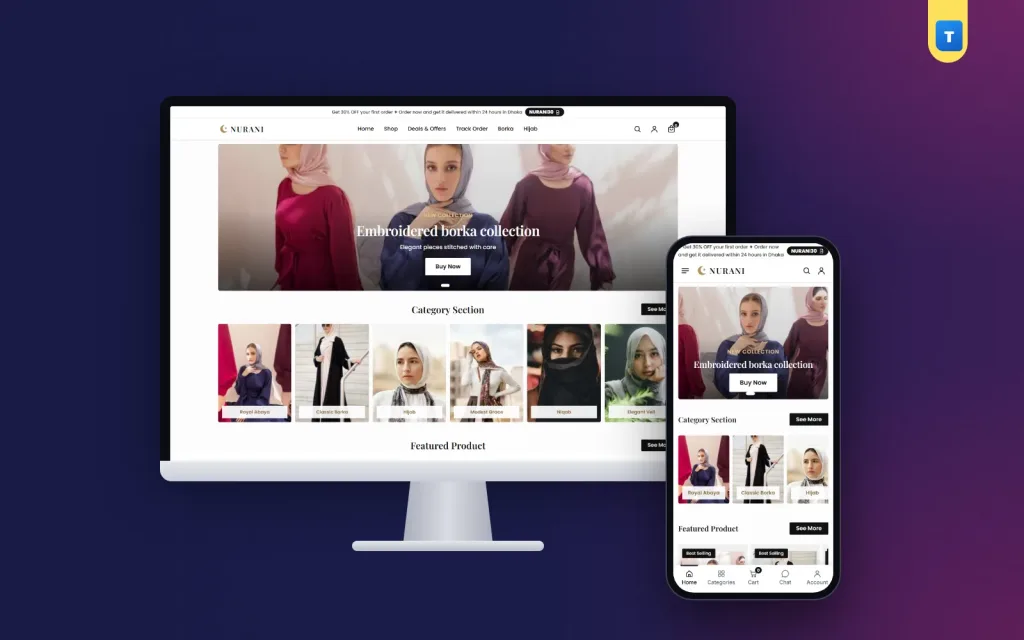
Show these as framed photo tiles near the top of the homepage. On a phone, let them scroll sideways in one row so the page stays short.
Rows that guide the buyer
Below the categories, add rows of four products: Featured Product, Best Borka, Hijab Collection and Latest Products. Each row needs a "See More" link to the full list. Regular buyers check the latest row first, so keep it fresh.
A homepage order that works
Buyers scroll a modest wear homepage slowly, looking at fabric and work. Each block should answer one question. Here is an order many borka shops use:
- Hero slider with a new collection or an Eid edit.
- Category tiles for abayas, borkas, hijabs, niqabs and veils.
- Featured pieces you chose yourself.
- Best borka and hijab rows.
- Latest products, so regular buyers see what is new.
- Promises such as fabric quality, fast delivery, cash on delivery and size exchange.
- Reviews, an FAQ block and the latest blog posts.
Keep each block simple and switch off the ones you do not use. Good abaya website design is about the order of the blocks as much as their look: categories near the top, fresh pieces in the middle and answers near the bottom.
An FAQ block on the homepage saves many chats. Put the questions you hear every day there: how to choose the size, how long delivery takes, how much it costs, whether you can exchange, and whether the fabric is see-through. Add your phone number and a WhatsApp button below it.
Photos that show fit and fabric
Photos decide most modest wear orders. Plan them before you plan the layout.
- One full-length photo on a plain background, front view.
- One back or side view, so buyers see the cut and the fall.
- A close-up of the embroidery, stone work or print.
- A fabric photo held against a light, to show it is opaque.
- For hijabs, one photo worn and one folded, so the size is clear.
Shoot in daylight and keep the colour true. A navy abaya that looks black in the photo will come back. Keep product card photos square and the same size, so the grid looks neat. In abaya website design, the photos carry more weight than any banner.
Modest models are welcome, but faces are not needed. Many shops show the piece on a mannequin or from the shoulders down, and buyers are happy with that.
Size charts and length
Size is the question you will hear most. Answer it on every product page and in the FAQ.
Most abayas and borkas in Bangladesh are sold by length in inches, such as 52, 54 and 56. Tell buyers how to measure: from the shoulder to the ankle, standing straight. Add a short line for height, for example that 54 suits most buyers around five feet three.
Size buttons, not dropdowns
Show sizes as buttons on the product page. Buttons are easier to tap on a phone and show all choices at once. If a longer size costs more fabric, it can cost a little more; show the new price as soon as the buyer taps it.
Offer an easy size exchange, such as within 7 days if the piece is unused with tags. Say it in the promises strip, on the product page and on the Return Policy page. A clear exchange rule lowers the fear of ordering the wrong size.
Product pages that answer every question
A buyer on a product page wants answers in this order: what it looks like, which sizes, the price, the fabric, delivery and returns. Put all of them near the top.
- A gallery with full-length, back and close-up photos.
- The price, the old price if on sale and the taka saved.
- An "In Stock" pill and the size buttons.
- Add to Cart and a Buy Now button that goes straight to checkout.
- Small promise boxes for delivery, cash on delivery and returns.
In the description, write the fabric, the work (embroidery, stone or print), the care steps and what is included, such as an abaya with a matching hijab. Good abaya website design keeps this text short and plain.
Hijab website design tips
Hijabs sell in many colours and fabrics, so they need their own care. Show each colour as a separate product or a clear option, with a photo for each. Write the size in centimetres and the fabric in the title, such as "Black Chiffon Hijab" or "Grey Satin Hijab".
A hijab row on the homepage and a short blog post such as "five easy hijab styles" help buyers picture how to wear it. Good hijab website design also groups matching pieces, so a buyer who likes a borka sees the hijab that goes with it.
Filters and search
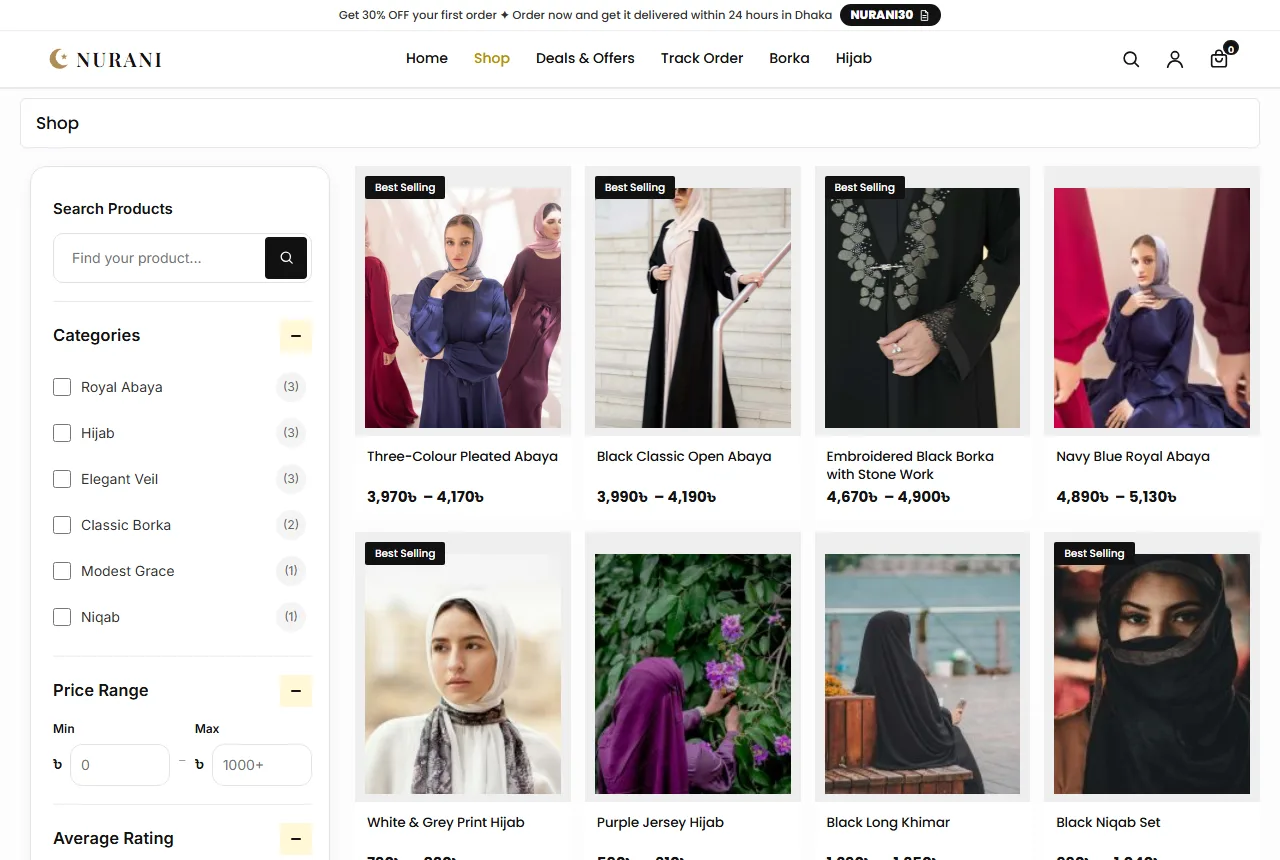
When a category has more than twenty pieces, buyers need filters. Add a filter card on the shop and category pages with a search box, categories, a price range in taka, average rating, stock status and on sale items. On phones, open the filters in a panel.
Search matters too. Buyers type "black abaya", "stone borka" or "niqab set". Put colour, fabric and work in titles and tags so these words find the right pieces. Test your top ten search words every week. Simple fixes like this help abaya website design more than a new slider.
Eid collections and seasons
Eid is the peak of the modest wear year. Plan it a month early.
- Shoot the Eid pieces early and add them as a new collection.
- Put one Eid slide in the hero slider, such as "Stone work abayas for Eid".
- Move Eid pieces to the first product row.
- Write the last order date for Eid delivery in the top bar.
- Add a short offer code if you run a sale.
After Eid, move everyday borkas and hijabs back to the top. Seasonal abaya website design does not need a new layout; change the slider and the order of the rows, and regular buyers see a shop that is alive.
Winter brings a smaller peak for warm hijabs and thicker fabrics. Summer brings demand for light, breathable pieces. Move them up when the weather turns.
Checkout, delivery and payment in Bangladesh
A long checkout loses orders. Ask only what the delivery needs: name, mobile number, district, area and a short address line.
Show delivery charges early. Many shops charge about ৳80 inside Dhaka and ৳120 outside Dhaka. Many modest wear shops promise 24-hour delivery inside Dhaka and two to four days outside. Say this in the FAQ, on the product page and in the cart.
Packing abayas well
Fold each piece with tissue paper so stone work does not snag, and put it in a clean bag. A neat parcel with the order number on top makes a good first impression, and many buyers share photos of a nice package.
Cash on delivery is still the main payment method. Add bKash, Nagad and card payments with a payment plugin as the shop grows, and show their logos near the Buy Now button.
Accounts, reviews and trust
Repeat buyers are where a modest wear shop earns its profit. A buyer who liked her first borka will come back for Eid. Let buyers sign up with a Bangladeshi mobile number (01XXXXXXXXX) or an email with a password, in a small popup.
A wishlist heart on every card lets buyers save pieces for later. A Track Order page that checks an order by number and email saves many messages. If fake cash on delivery orders become a problem, ask buyers to sign in before checkout.
Ask every buyer for a short review after delivery. Show three review cards on the homepage and a score card on each product page. A review that says "I took 54 and it fits well" is worth more than any banner.
Common mistakes in abaya website design
- Only one photo, from the front.
- No length in inches, only "free size".
- Colours that look different from the real piece.
- No fabric photo, so buyers cannot judge if it is opaque.
- Delivery charges shown only at the last step.
- Product text copied from a supplier, word for word.
Google's guide to helpful content is a good reminder here. Write product text for buyers, in your own words, and answer the questions they really ask.
A launch checklist
- Every product has full-length, close-up and fabric photos.
- Every size shows its length in inches.
- The FAQ explains how to measure and how to exchange a size.
- Category tiles sit near the top of the homepage.
- Filters and search work on every category page.
- Delivery charges are visible before checkout.
- You placed three test orders from a phone.
After launch, track visitors, orders, returns by size and returning buyers every week. If many buyers swap 52 for 54, improve your size note.
Turning these ideas into a shop with Nurani
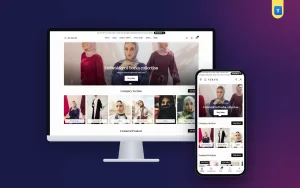
Abaya website design is easier when the theme already follows these rules. The Nurani borka and hijab theme for WordPress and WooCommerce has a calm black-and-gold look, a hero slider, six framed category tiles, product rows by category, tag or newest items, a promises strip, reviews, an FAQ block with a WhatsApp button and a blog block.
It also has size buttons for 52, 54 and 56, a "Save" tag in taka on sale cards, a live search panel, a shop filter card, and mobile number or email sign-in with a wishlist and a Track Order page. Every homepage block can be switched on or off. Import the demo, add your pieces, and you can take orders the same week.
Frequently asked questions
What colours suit abaya website design?
Black, white and one soft accent such as gold or beige work well. They let dark fabric and fine work stand out.
How should abaya website design show sizes?
Show each size as a button with its length in inches, and explain how to measure in the FAQ.
How many photos does each abaya need?
At least four: front, back or side, a close-up of the work and a fabric photo.
Do I need online payment from day one?
No. Cash on delivery is enough at first. Add bKash, Nagad or cards later.
When should I add my Eid collection?
About a month before Eid, with the last order date for delivery shown clearly.