Clothing ecommerce website design is the plan that decides how a visitor goes from your homepage to a paid order. It covers the layout, the photos, the product pages, the checkout and the trust signals around them. Get it right and your Facebook followers become repeat buyers. Get it wrong and they scroll, admire and leave.
This guide explains the design choices that matter for a clothing shop, with steps and checklists you can follow. It pays special attention to shops that sell traditional wear, such as sarees and handloom cloth, where texture and story matter as much as price. All examples are based on how small shops in Bangladesh actually sell.
What clothing ecommerce website design must achieve
Every design choice should serve four goals. If a block on your page does not help one of them, remove it.
- Show the product honestly. Colour, size and fabric must look the same as the item that arrives.
- Remove doubt. Answer questions about size, delivery, exchange and payment before the buyer asks.
- Make buying short. Few taps, few fields, local payment options.
- Build trust. A real address, a phone number, reviews and clear policies.
Beauty matters, but only as far as it supports these goals. A plain page that sells beats a lovely page that confuses.
Know your buyer before you design anything
Clothing buyers are not all the same. A woman buying a saree for a wedding thinks about fabric, border and blouse piece. A student buying a shirt thinks about price and size. Your design should speak to the buyer you actually have.
Write short answers to these questions:
- Who buys: age, city, occasion?
- What do they ask most on Messenger or WhatsApp today?
- What price range sells best?
- How do they pay: cash on delivery, bKash or Nagad?
- Do they buy for themselves or as gifts?
The questions customers ask you in messages are a free design brief. If five people a day ask "Is the blouse piece included?", put that line on every saree page.
Plan your pages and your menu
Start with the pages, then think about looks. A clothing shop needs these pages at launch:
- Home
- Shop, with categories
- Product page
- Cart and checkout
- Delivery and charges
- Exchange and returns
- Size guide, where it applies
- About and our story
- Contact, with phone and map
- Track order
- Privacy policy and terms
Keep the top menu short. Five to seven items is enough: for example, Sarees, Kurtis, Sets, Jewellery, New, Offers and Contact. Put the rest in the footer.
Design the homepage in a clear order
Strong clothing ecommerce website design on the homepage follows a simple flow from interest to action. Here is a reliable order:
- A hero banner with one message and one button
- A promise strip with delivery, exchange and payment notes
- Shop by category, using clear pictures
- New arrivals
- Best sellers in tabs
- One offer with a countdown, if you run real offers
- A short story about who makes or selects your clothes
- Reviews or photos from customers
- Latest posts or care tips
Do not try to use every block. Choose the ones you can fill with real content. An empty "Trending" row looks worse than no row at all.
Photos: the heart of a clothing shop
Online, a buyer cannot touch the cloth. Your photos must do that job.
- Use daylight and a plain background.
- Show the whole item, then a close-up of weave, print or stitching.
- For sarees, show the border, the pallu and the body in separate pictures.
- Show the garment worn when possible, with the model's height and size.
- Add a second picture that appears on hover on desktop.
- Keep colours true. Do not over-edit. Returns for "colour looks different" are expensive.
Tall photos suit sarees and long kurtis. Square or 4:5 photos suit tees and tops. Pick one ratio per category and keep it.
Design for sarees and handloom: the Bangladesh angle
Traditional wear sells on story, texture and trust. A saree and handloom website design for Bangladesh should reflect the cloth, the weaver and the way people actually shop. These saree handloom website design Bangladesh ideas are worth testing:
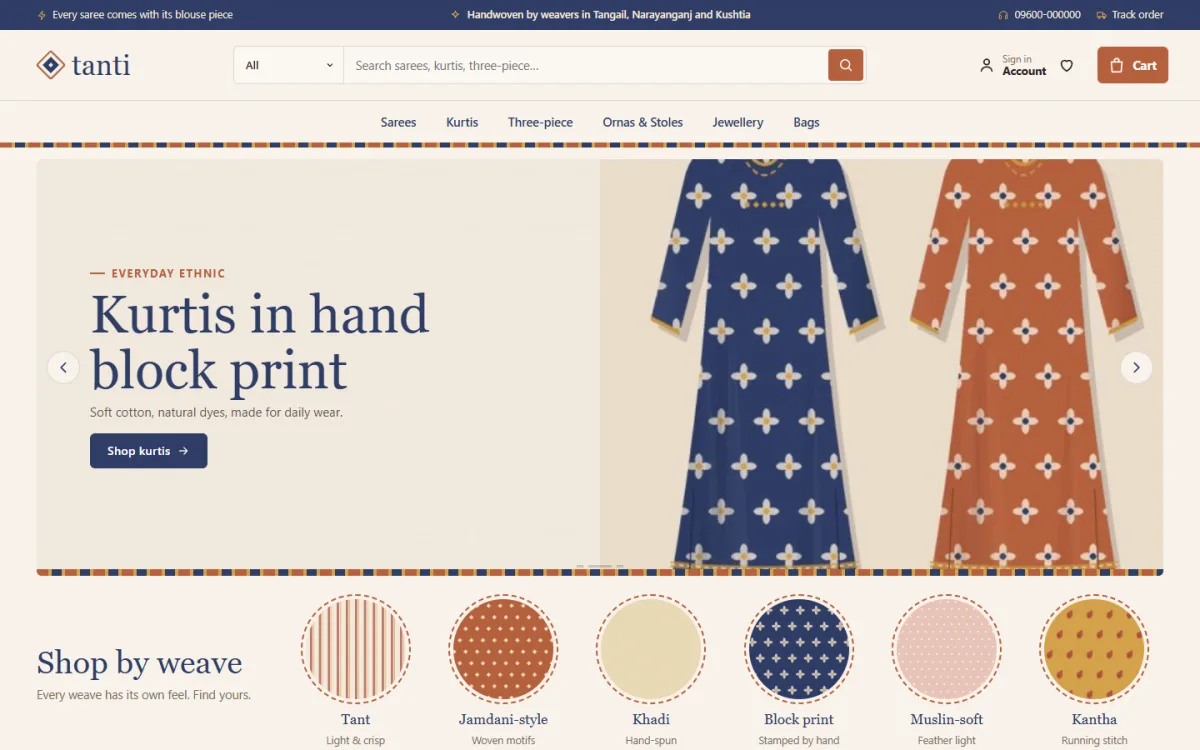
- Shop by weave. Let buyers start from tant, jamdani-style, khadi, block print or kantha.
- Fabric swatches. Round pictures of cloth are quicker than words.
- Blouse piece note. State clearly whether it is included and its length.
- Care instructions. Handloom needs gentle washing; say how.
- Weaver or family story. One short paragraph with a photo builds trust.
- Complete the look. Pair a saree with a bag or jewellery and show the price of the whole set.
- Occasion pages. Eid, Pohela Boishakh, weddings and puja each get a landing page.
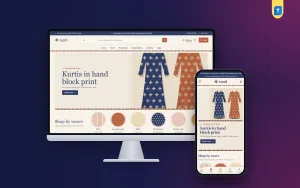
The colours can borrow from the craft: cream cotton, terracotta, indigo and soft ochre. A thin woven border under headings quietly tells visitors what kind of shop they are in.
Product pages that answer every question
The product page is where most of your clothing ecommerce website design effort should go. Put the information in this order:
- Product name and price
- Colour and size buttons
- Add to cart and a buy-now option
- Short bullet list: fabric, length, weight, care
- Size guide link or blouse piece note
- Delivery time and cost
- Exchange rule in one sentence
- Reviews
- Related products
Avoid long essays. People on phones read bullet points. If you want to tell a story, put it in a short paragraph below the bullets.
Checkout, payments and couriers
A buyer who reaches checkout is almost ready to pay. Do not lose them now.
- Use a one-page checkout with only the fields you need: name, phone, address, area.
- Offer cash on delivery. Many first-time buyers will not order without it.
- Offer bKash and Nagad. If you use manual Send Money, add a clear transaction ID field.
- Add a card gateway such as SSLCommerz for those who prefer cards.
- Show the delivery charge before the final button, not after.
- Let buyers use a coupon, but do not make the coupon box so big that people leave to search for codes.
- Book parcels with Steadfast or Pathao from the order screen.
- Show an "Order placed" message and send a confirmation by SMS or email.
Add a track-order page. It cuts the number of calls you receive and shows professional care.
Content that makes handloom easier to sell
Words and pictures about the craft are part of saree handloom website design Bangladesh shops can use to stand apart. Mill-made cloth is everywhere. Your advantage is the story, so tell it simply.
- Write one short paragraph per weave: where it comes from, how it feels, how to wear it.
- Add a photo of the loom, the weaver or the dyeing, if you have permission.
- Explain the difference between hand-woven and machine-made in plain language.
- Share washing and storage tips on a care page, and link it from each product.
- Publish a short blog post before big occasions, such as how to choose a saree for a wedding.
Good content also helps visitors who are not ready to buy today. They read, remember your name and come back at the next festival. A good clothing ecommerce website design leaves room for this slower kind of selling, because regular customers often arrive through stories, not discounts.
Keep the tone honest. Say what the cloth is, what it is not and how it will age. A buyer who knows that khadi wrinkles will not return it for wrinkling. That clarity protects your reputation and lowers returns.
Finally, collect customer photos. A saree worn at a real wedding, shared with permission, is more convincing than any studio picture. Show a few on the product page and on the homepage. Over time they become the best part of your clothing ecommerce website design, because they come from your own customers and cannot be copied by a competitor.
Mobile first: where most orders come from
If your customers find you on Facebook, they open your link on a phone. Design for that screen first and the desktop will follow.
- Keep the phone header to menu, logo and cart.
- Show two product cards per row, compact but readable.
- Make buttons at least 44 pixels high.
- Use body text of 16 pixels or larger.
- Avoid pop-ups that cover the page on load.
- Test on a slow connection. If a page takes more than three seconds, shrink the images.
Press every button on your own phone before launch. Thumb-sized mistakes show up quickly.
A ready-made option: Tanti
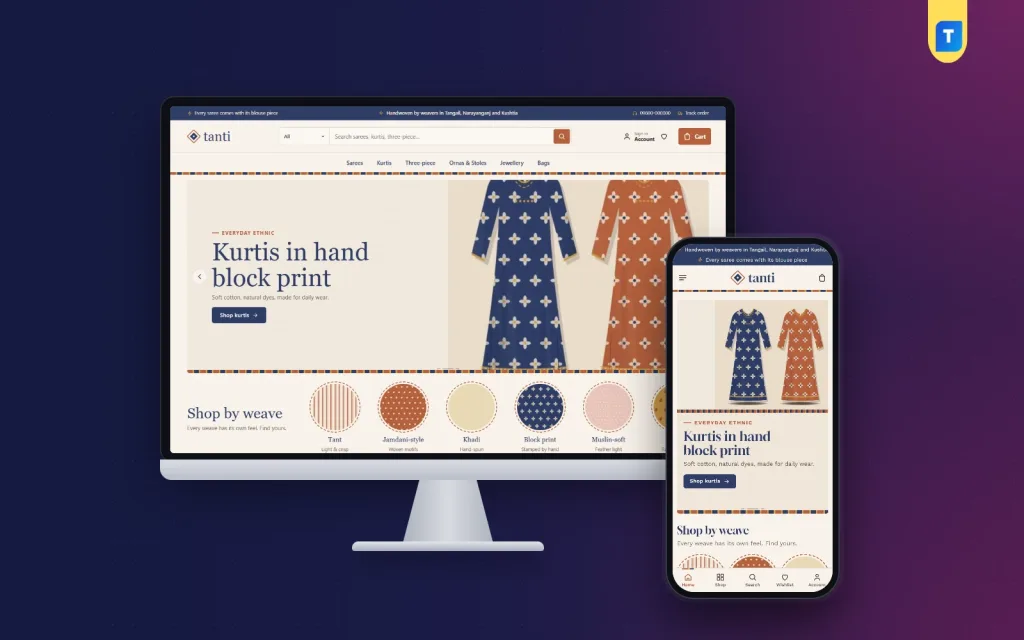
Tanti is a theme we built for exactly this kind of shop. It is a saree and handloom theme that also suits kurtis, three-piece sets, ornas, jewellery and bags.
What the product page lists:
- A woven saree border under every section title
- Shop by weave with six fabric swatches
- Complete the look, with the price of the whole look
- 24 homepage blocks you can switch on, off and re-order
- Tall product photos with a second picture on hover
- Loom offers with a countdown and stock bars
- Five dye palettes and four font pairs
- Sign-in and register in a popup
- bKash, Nagad, SSLCommerz and cash on delivery
- Steadfast and Pathao courier booking with order tracking
- A 36-piece demo from six sample weaving families
The shop plugin comes with it, so you can set up cart, checkout and payments in one go. Open the demo on your phone, then read the details on the Tanti page to see if it matches your range.
Speed, security and basic SEO
Good design includes things visitors never see.
- Speed. Compress images, use lazy loading and avoid stacking many plugins.
- HTTPS. Your site must load with a padlock. Payment pages need it.
- Backups. Schedule weekly backups and keep one copy off the server.
- Titles and descriptions. Write a clear title for each category and product.
- Image names and alt text. Describe the item in plain words.
- Clean URLs. Use readable links such as /saree/tant-green.
None of this brings traffic by itself, but it removes the technical reasons for losing it. Real visitors still come from your posts, your ads, your reviews and your word of mouth.
Common mistakes in clothing ecommerce website design
- Putting every product on the homepage
- Using many fonts and colours
- Hiding the delivery charge until the last step
- Leaving the sample text from a demo on the live site
- Using photos that do not match the real colour
- Forgetting a size guide or a blouse piece note
- Skipping the policy pages
- Never testing checkout on a real phone
Run a test order once a month. Many shop owners find a broken button weeks after it stopped working.
A launch checklist
- Replace every sample picture and sentence.
- Write delivery, exchange and privacy pages.
- Place test orders with cash on delivery and a mobile wallet.
- Check order emails and SMS.
- Book a test parcel with your courier.
- Add your phone, WhatsApp and address to the footer.
- Install analytics and the Facebook Pixel.
- Switch on backups.
- Announce the site on your Facebook page and in groups where your buyers are.
After a month, review your numbers. Look at the top landing pages, the most abandoned products and the questions customers still ask. Use them to improve your photos, prices and text.
If you want to read more on the technical side, the official WordPress documentation is a good, reliable reference.
Frequently asked questions
What is the first step in clothing ecommerce website design?
Write down who your buyer is and what they ask you most often. Then plan your pages and menu. Choose the look last.
How is clothing ecommerce website design different for sarees?
Saree handloom website design Bangladesh buyers trust starts with texture, border and blouse piece details. Use tall photos, fabric swatches and a short story about the weave. Add care notes because handloom needs gentle washing.
Do I need a developer to build a clothing shop website?
Not for most shops. A ready theme lets you change blocks, colours and text yourself. A developer is useful only for very custom features.
Which payment methods should a Bangladeshi clothing shop offer?
Cash on delivery, bKash and Nagad are the basics. A card gateway such as SSLCommerz helps buyers who prefer cards.
How many homepage blocks should I use?
Five to ten is plenty. Use only the blocks you can fill with real products and real words.
How do I reduce returns on clothing?
Use accurate photos, a size guide, clear fabric notes and a plain exchange rule. Most returns come from surprise about size or colour.