Fashion ecommerce in Bangladesh has grown from a few Facebook pages into one of the busiest parts of online shopping in the country. Clothes are bought online every day, and in the weeks before Eid, Puja and Pohela Boishakh the volume jumps many times over.
This guide explains how the market works, how buyers choose and pay, what delivery and returns look like, and what it takes to start or grow your own clothing shop online.
It is written for shop owners, new brands and resellers who want an honest picture before they spend money, and for anyone curious about how online clothing sales work here.
How fashion ecommerce in Bangladesh works today
Three kinds of sellers share the market. First, social sellers who post photos on Facebook and Instagram and take orders in messages or live videos. Second, brands and shops with their own websites, where buyers browse, order and track without chatting. Third, large marketplaces where many sellers list products side by side.
Most growing shops use more than one channel. They find buyers on social media and send them to their own website to order. The website keeps orders, prices, stock and payments clean, while social media brings the reach.
Who the buyers are
The typical online clothing buyer is young, lives in a city or a district town and shops on a mid-range Android phone over mobile data. Many are students and working women who do not have time to visit markets. More and more buyers from smaller towns now order too, because couriers reach most upazilas.
For anyone working in fashion ecommerce in Bangladesh, this means the phone layout, light pages and clear delivery charges matter more than fancy desktop effects.
What people buy most
- Women's wear: three-pieces, kurtis, sarees, abayas, co-ord sets and western tops.
- Men's wear: shirts, polos, T-shirts, panjabis, trousers and winter jackets.
- Kids' wear: festival sets, school wear and baby clothes.
- Accessories: scarves, hijabs, belts, bags and footwear.
Festival wear is the biggest single driver. A shop can sell in the two weeks before Eid what it sells in two or three normal months.
How buyers choose a clothing shop online
Buyers rarely trust a new shop on the first visit. They look for signs that the shop is real and the clothes match the photos. Real photos (not catalogue images copied from elsewhere), reviews with buyer photos, a clear exchange policy, a phone number that answers and a known courier all help.
Price matters, but fit and fabric matter more for repeat orders. A buyer who receives a shirt that fits well and looks like the photo will come back; a buyer who receives the wrong colour or a thin fabric will not, however cheap it was.
What is the best clothes website?
People often search "what is the best clothes website" hoping for one name. In practice there is no single answer, because the best site for a party saree is not the best for school uniforms. A better question is what makes a clothes website good, and the answer is the same for every niche:
- Honest photos in true colour, with fabric close-ups.
- Size guides with real measurements for every cut.
- Clear prices, including delivery, before checkout.
- Cash on Delivery and mobile payments such as bKash and Nagad.
- Easy exchanges for the wrong size.
- Fast delivery with tracking and SMS updates.
- Quick replies on WhatsApp or phone.
When a friend asks you which clothing shop to trust, point them to these signs. A shop that gets all seven right earns trust whatever its size.
Payments: COD, bKash and gateways
Cash on Delivery is still the first choice for most clothing buyers in Bangladesh, especially for a first order from a new shop. It lowers the buyer's risk, but it raises the seller's: some buyers refuse parcels at the door, and a few place prank orders.
Shops handle this in a few ways. Some ask for the delivery charge in advance by bKash or Nagad on risky orders. Some limit how many orders one mobile number can place in a day. Many call new buyers to confirm large orders before shipping.
Write your COD rules on the checkout page and in the order SMS, so buyers know in advance when an advance is needed and why. Clear rules feel fair; surprise rules feel like a trick.
Mobile payments and gateways
bKash, Nagad and Rocket are used everywhere. Small shops often ask for Send Money and check the transaction ID by hand. Larger shops use a payment gateway such as SSLCommerz, or the wallets' own merchant services, so cards, wallets and internet banking are confirmed automatically. Offering at least one prepaid option reduces refused parcels, because a buyer who has paid rarely refuses.
Building trust for prepaid orders
Buyers pay in advance when they trust the shop. Show your trade licence number or business address, real reviews and a working phone number, and send an SMS as soon as payment is received. Shops that reply quickly and refund honestly when something goes wrong slowly move their buyers from COD to prepaid.
Delivery, returns and exchanges
Delivery inside Dhaka usually takes one to three days and outside Dhaka two to five, depending on the courier and the area. Charges are commonly split into inside Dhaka, Dhaka suburbs and outside Dhaka. Many shops offer free delivery above an order amount to raise the average basket.
Courier companies collect cash on delivery and pay the seller later, usually within a few days. Booking parcels by hand, copying addresses into a courier panel, takes a lot of time once orders grow, so most serious shops connect their website to the courier and book with one click.
Packaging
A clean poly mailer or a simple box with a thank-you card costs little but changes how the parcel feels. Fold clothes neatly, add the invoice and a small note about how to request an exchange. In fashion ecommerce in Bangladesh the unboxing is often filmed and shared, so good packaging is free marketing.
Exchanges
Wrong size is the most common problem in clothing. A simple, written exchange policy, such as seven days for an unused item with tags, makes buyers more willing to order. Collect the old item when you deliver the new one when possible, and keep a record of every exchange by product. If one shirt is exchanged again and again, its size chart is probably wrong.
Starting your own shop in fashion ecommerce in Bangladesh
If you are planning to enter fashion ecommerce in Bangladesh, start with a clear niche. "Clothes for everyone" is hard for a new shop; "cotton kurtis for office wear" or "family Eid sets" is easier to photograph, explain and advertise.
The basic steps
- Pick your niche and buyer: who wears it, where they live, what they pay.
- Find suppliers or make your own: local factories, wholesale markets or your own tailors.
- Register the business: trade licence, TIN and a bank account in the shop's name.
- Shoot real photos in the same style for every product.
- Write size guides by measuring your own stock.
- Set up the shop: a page for reach and a website for orders.
- Connect payments and a courier and test one order end to end.
- Launch to your followers with a small opening offer.
Selling to resellers
Many clothing businesses earn steady money by supplying small online resellers who post the same products on their own pages. Give resellers a separate price list, a minimum quantity and clear photos they are allowed to use. Ship in their name if they ask, and keep their orders separate from retail orders so your reports stay honest. It is slower money than retail but far more stable between festivals.
Website or page only?
Many shops start with a Facebook page only, and that is fine for the first few dozen orders. Problems start when orders grow: messages get lost, the same questions are answered a hundred times, stock is wrong and nobody knows which buyers paid. A website with a cart, stock per size, order tracking and courier booking solves these problems and lets you sell while you sleep.
Marketing and the festival calendar
Fashion ecommerce in Bangladesh runs on a calendar. Plan your year around Eid ul-Fitr, Eid ul-Adha, Durga Puja, Pohela Boishakh, Falgun and Valentine's Day, winter and the start of the school year. Each needs new stock, new photos and a homepage change.
- Pre-orders for festival collections so you know how much to make.
- Countdown sales that create a real deadline.
- Combos, such as a family set or three T-shirts for a fixed price.
- Influencer codes that show which partner brought which sale.
- Loyalty points that bring buyers back after the festival.
- Retargeting ads that show buyers the product they looked at.
Live selling and short videos
Facebook live sessions remain a big part of fashion ecommerce in Bangladesh. They work best when every item shown in the live video is also on your website with its price and sizes, so viewers can order with a link instead of typing comments. Short reels that show a dress moving, the fabric in daylight and the fit on two body types often sell better than polished photos.
Content helps too. Short videos showing fabric and fit, styling posts and honest size advice build trust better than heavy discounts. Google's guide to helpful, people-first content is a good standard for your product pages and blog.
Costs, risks and the tools you need
The main costs are stock, photography, delivery, returns, ads and the website. Watch three numbers closely: the refused-parcel rate on COD orders, the exchange rate by product and the cost of ads per order. Together they decide whether a busy shop is actually making money.
Simple monthly numbers
Once a month, write down total orders, delivered orders, refused parcels, exchanges, ad spend and profit after delivery and returns. Many fashion sellers discover that one product or one ad channel loses money while another carries the whole shop. Cut the losers early and put stock behind the winners.
Common mistakes
- Too many designs, too little stock in each size.
- Copied photos that do not match the real product.
- No size chart, leading to endless exchanges.
- Ignoring messages during busy weeks.
- Running every order by hand long after it stopped working.
Choosing the shop software
A clothing shop website needs stock per size and colour, size guides, exchanges, COD with an optional advance, bKash, Nagad and SSLCommerz, courier booking with Pathao, REDX or Steadfast, festival campaigns and a phone-friendly design. A hosted builder is quick but charges every month; a custom build fits exactly but costs the most. A ready, self-hosted shop script sits between the two.
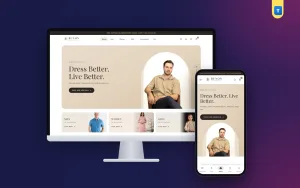
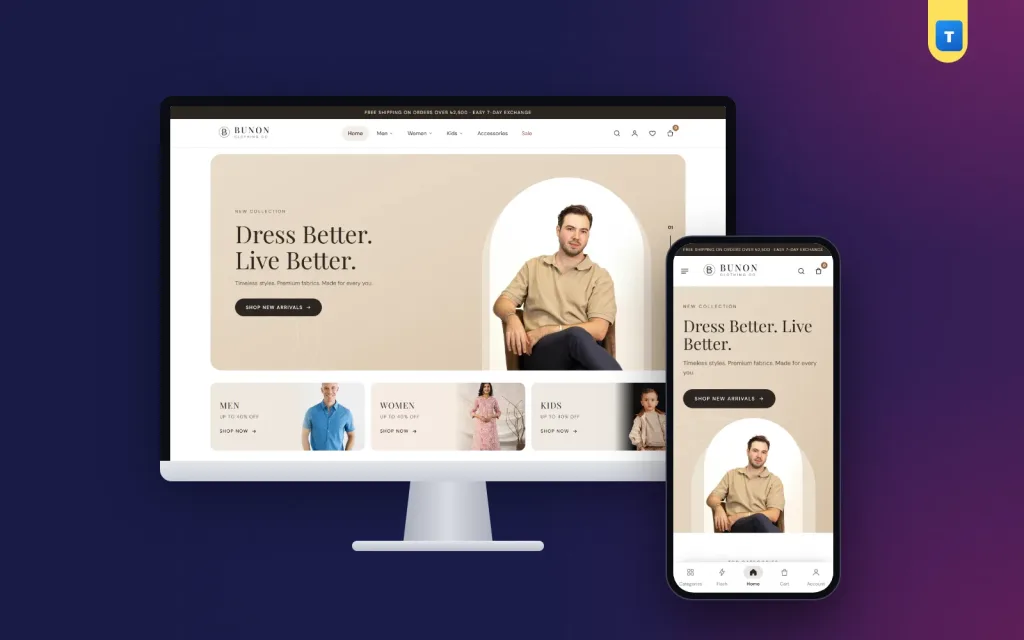
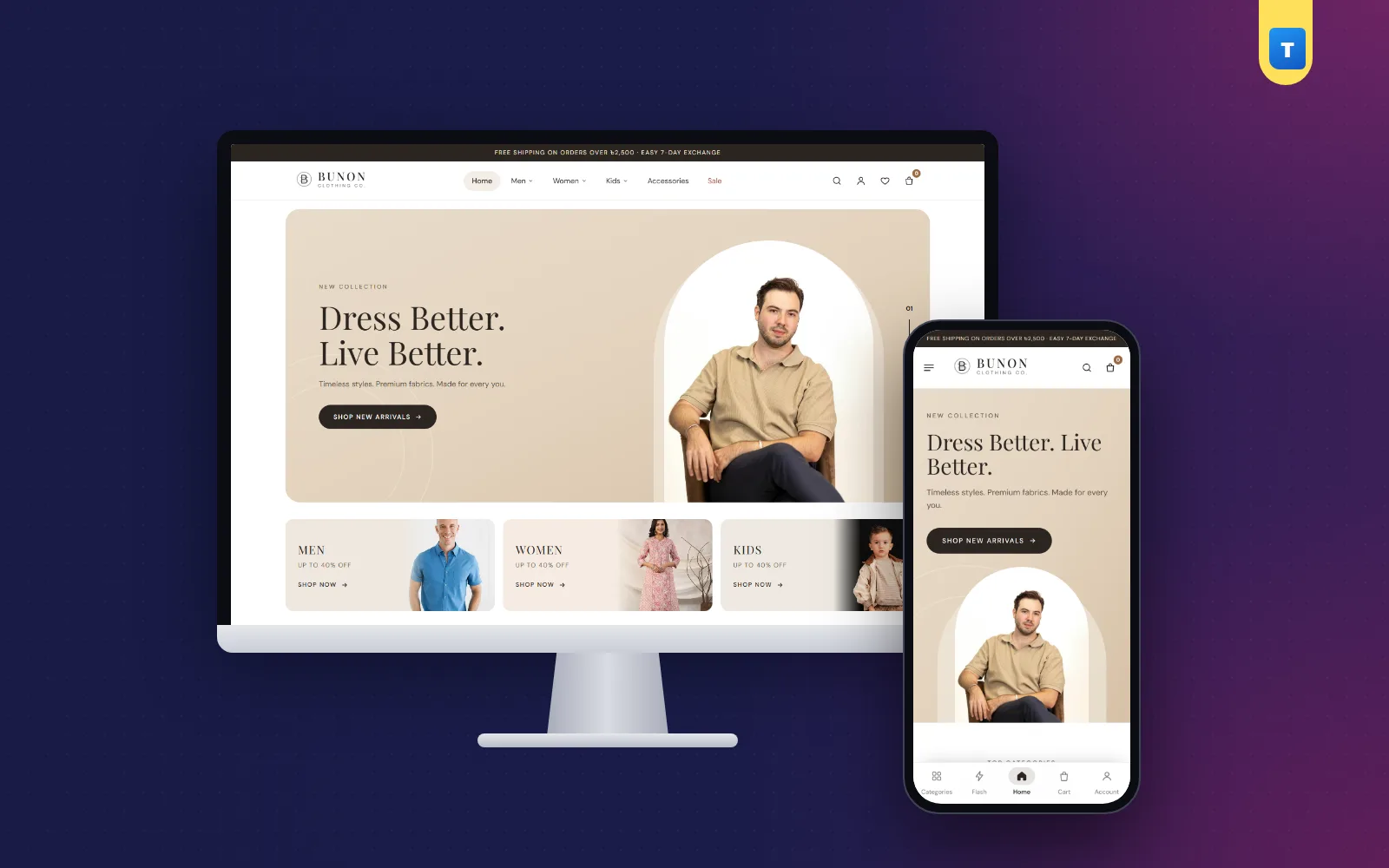
For a family clothing store, Bunon, our Laravel clothing store script, has men's, women's and kids' departments with size variants and size guides, festival campaigns with countdowns, reseller prices, Cash on Delivery with advance, bKash, Nagad and SSLCommerz, and Pathao, REDX and Steadfast booking. You can try the live Bunon demo to see how a family order flows from the homepage to checkout.
Whichever tool you choose, the basics of fashion ecommerce in Bangladesh stay the same: real photos, right sizes, quick delivery and honest service.
Frequently asked questions
Is fashion ecommerce in Bangladesh still growing?
Yes. More buyers order clothes online every year, especially from phones, and festival seasons keep bringing new buyers online.
What is the best clothes website to buy from?
The one that shows true photos, real size charts, clear prices, easy exchanges and fast delivery for the kind of clothes you want.
Do I need a trade licence to sell clothes online?
Usually yes for a registered business, plus a TIN and a bank account. Check the rules for your size with a local office.
How do shops in fashion ecommerce in Bangladesh stop fake COD orders?
By asking for a small advance on risky orders, limiting orders per mobile number per day and calling new buyers before shipping.
Which festival matters most for clothing sales?
Eid ul-Fitr is usually the biggest, followed by Eid ul-Adha, Durga Puja and Pohela Boishakh.