A good home furniture setup makes a flat feel bigger, calmer and easier to live in, even before you add a single decoration. A poor one fills the floor, blocks the light and leaves you walking around the sofa every day. The difference is rarely money; it is planning.
This guide walks you through setting up a home room by room, with budgets, measurements, layouts, materials that suit Bangladesh's climate and simple décor ideas.
It is written for families moving into a new flat, couples furnishing their first home and anyone redoing a room, with notes for small city apartments where every inch counts.
Plan your home furniture setup before you buy
Most furniture mistakes happen in the shop, when a beautiful piece is bought without a plan. Start at home with a notebook or your phone.
- List the rooms and what each one must do: sleep, eat, work, host guests, store things.
- List who lives there: children, elderly parents, guests who stay over, pets.
- Measure every room: walls, windows, doors, switches, sockets and ceiling height.
- Measure the way in: the main door, the stairs and the lift.
- Set a budget per room and per key piece.
- Decide what you keep from your old home and what you replace.
Draw each room on squared paper or in a free floor-plan app, with furniture cut to scale. Moving paper pieces is much cheaper than moving a wardrobe.
Set the budget wisely
Spend most on the pieces you use every day for years: the bed and mattress, the sofa and the dining chairs. Save on pieces you can upgrade later, such as side tables, shelves and décor. A sound home furniture setup is built in stages, not all in one weekend.
Layout basics for every room
A few simple rules work in almost every home:
- Leave walkways of about 75–90 cm through busy areas.
- Do not block windows; light and air matter more than one more cabinet.
- Keep doors free to open fully, including wardrobe and balcony doors.
- Anchor each room with one main piece (the bed, the sofa, the dining table) and arrange the rest around it.
- Think about fans and lights: place seating and beds under the ceiling fan, and reading spots near a lamp or window.
- Use the walls for storage and shelves to keep the floor clear.
Zones in one room
Even a single room can hold several zones: a reading corner by the window, a play mat for a child and a work desk against a wall. Mark each zone with a rug, a lamp or a shelf, and keep the walkways between them open. Zones make a small home feel organised rather than crowded.
Scale and proportion
Big rooms can carry a large sectional sofa; small rooms need slimmer arms, raised legs and lighter colours. A sofa on visible legs makes the floor look bigger because you can see under it.
Living room and dining area
The living room is where most families spend their evenings and receive guests, so plan it for both.
Living room
- Sofa: a three-seater plus one or two chairs suits most families; an L-shape works in larger rooms.
- Centre table at about two-thirds the sofa's length, with enough space to walk around it.
- TV unit with closed storage to hide wires and clutter.
- Rug large enough that at least the front legs of the sofa sit on it.
- Lighting: a main light plus one floor or table lamp for the evening.
Dining area
Allow about 90 cm between the table edge and the wall so chairs can be pulled out. Round tables fit small spaces and make conversation easier; extendable tables are useful when relatives visit at Eid. Choose chairs that are comfortable for a long family meal, not only good-looking.
In many Bangladeshi flats the living and dining areas share one open space. Use a rug, a pendant light over the table or a low shelf to separate them visually without walls. This one trick changes the whole home furniture setup of an open-plan flat.
Bedrooms, kids' rooms and a home office
Master bedroom
Start with the bed and a good mattress, then side tables, a wardrobe and, if space allows, a dressing table. Leave at least 60 cm on each side of the bed. Storage beds with lift-up or drawer storage are a lifesaver in small flats.
Kids' rooms
Choose rounded corners, sturdy pieces and low shelves children can reach. A study table that grows with the child, a bunk bed for siblings and plenty of closed storage for toys keep the room usable. Fix tall shelves and wardrobes to the wall for safety.
Home office
A desk of at least 100–120 cm, a supportive chair, light from the side (not behind the screen) and storage for papers are the basics. If you have no spare room, a wall-mounted fold-down desk or a corner of the bedroom with a slim desk can work.
Entrance and storage
The entrance is the first thing you see every day. A slim shoe cabinet, a few hooks for bags and umbrellas, and a small mirror keep it tidy. Storage is the quiet hero of any home furniture setup: plan wardrobes, a store-room shelf and under-bed storage before buying open shelves for display.
Kitchen and balcony
In the kitchen, wall cabinets and an open rail for daily utensils free the counter. A small trolley on wheels adds work space in tight kitchens. On the balcony or veranda, a pair of cane or metal chairs, a small table and a few plants create a spot for morning tea; choose pieces that can handle sun and the odd monsoon shower.
Guest space
A sofa bed or a daybed in the living room or study gives guests a place to sleep without giving up a whole room.
Homes with elderly family members
Many families in Bangladesh live with parents or grandparents. Give them a bed at a comfortable height, a firm chair with arms, a bedside table with a lamp they can reach and clear paths without loose rugs. A thoughtful home furniture setup for elders is mostly about safety: steady pieces, good light at night and nothing to trip over.
Home furniture setup for small flats
City flats are getting smaller, and a small-space home furniture setup needs a few special tricks:
- Multi-use pieces: sofa beds, storage ottomans, extendable tables, beds with drawers.
- Go vertical: tall shelves, wall cabinets and hooks free the floor.
- Light colours and mirrors make rooms feel bigger and brighter.
- Furniture on legs shows more floor and feels lighter.
- Fewer, better pieces instead of many small ones.
- Sliding doors on wardrobes where swing doors would block the path.
Before buying anything for a small flat, ask "where will this live, and what will it replace?" If you cannot answer, skip it.
Materials for Bangladesh's climate
Heat, humidity and the monsoon are hard on furniture. Choose materials that can handle them.
Wood
Seasoned solid woods such as teak, mahogany and gamari handle humidity well when properly dried and finished. Engineered boards with good laminate or veneer are lighter and cheaper but should be kept away from wet floors and leaking windows. Ask whether the wood is seasoned and how the edges are sealed.
Fabric and leather
Cotton and linen blends breathe well in hot weather. Removable, washable covers are practical with children. Some synthetic leathers peel in high humidity; ask the shop how a material behaves after a few monsoons.
Metal and cane
Powder-coated metal resists rust; cane and rattan add a natural, airy look and suit balconies and verandas, but keep them out of direct rain.
Care
A little care each season adds years to every piece you buy.
Keep furniture a little away from damp walls, use coasters and placemats, dust weekly and polish wood a few times a year. A fan or dehumidifier in closed rooms during the monsoon helps prevent fungus.
Décor, lighting and finishing touches
Décor turns furniture into a home. Looking at home decor examples is the easiest way to find your style before you spend.
Simple home decor examples
- Calm neutral: white or beige walls, wooden furniture, cream fabrics and green plants.
- Warm traditional: rich wood, nakshi kantha throws, brass lamps and terracotta.
- Modern minimal: grey and black accents, slim metal legs, few objects and clear surfaces.
- Bright family home: one colourful wall, patterned cushions, children's art in simple frames.
Pick one direction per room and repeat two or three colours across cushions, curtains, rugs and art. These styles work because they keep the colour story simple.
Lighting
Good light changes how every piece of furniture looks.
Use three layers: a main ceiling light, task lights for reading and cooking, and soft lamps for the evening. Warm-white bulbs feel cosy in living rooms and bedrooms; cooler light suits kitchens and work desks.
Wall art and personal touches
Family photos, children's drawings, a framed piece of calligraphy or a handloom textile on the wall make a home feel like yours. Hang art at eye level, about 145–150 cm to the centre, and group small frames together so they read as one piece. Leave some walls empty; calm walls let the furniture breathe.
Plants and textiles
Plants such as money plant, snake plant and areca palm handle indoor conditions well. Curtains, cushions and rugs soften sound, add colour and are cheap to change with the seasons.
Buying furniture and finishing the setup
Buy in this order: bed and mattress, sofa, dining set, wardrobes and storage, then side tables, shelves, lighting and décor. Live in the space for a few weeks before buying the last pieces; you will see what is really missing.
Common mistakes
- Buying the sofa before measuring the room and the door.
- Filling every wall, so the room feels crowded.
- Choosing all pieces from one set, so the home looks like a showroom.
- Forgetting sockets and switches behind tall furniture.
- Spending the whole budget on décor and keeping an old, bad mattress.
Avoiding these five mistakes does more for a home furniture setup than any expensive piece.
Where to buy
Visit a showroom to sit on sofas and test mattresses, and compare online for dimensions, materials and prices. Ask about delivery days, carrying upstairs, assembly, warranty and advances for made-to-order pieces. Many makers build in your size and finish, which can be the best value for a long-term home furniture setup.
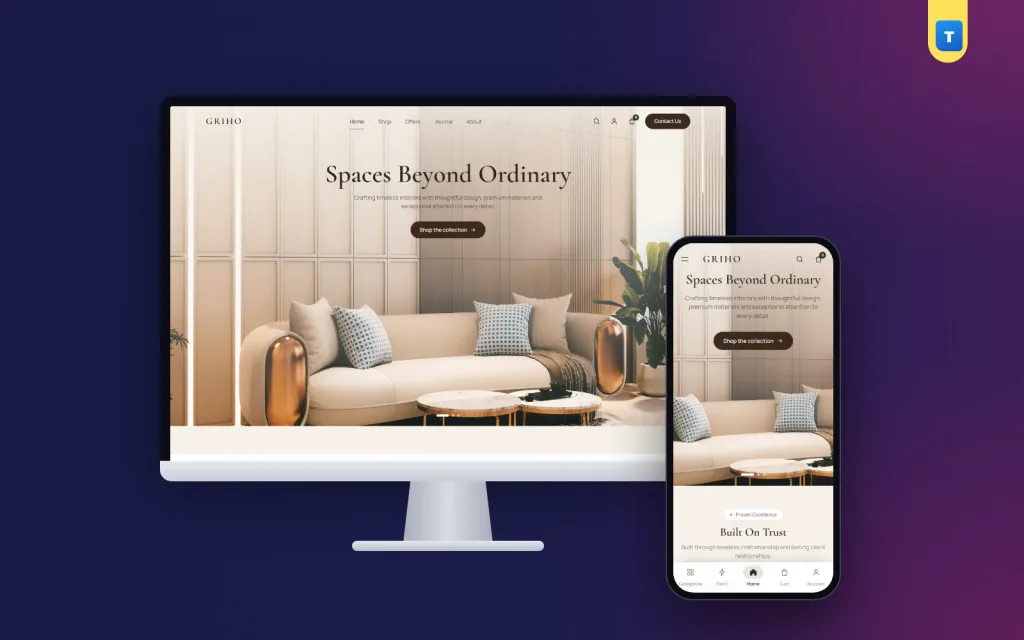
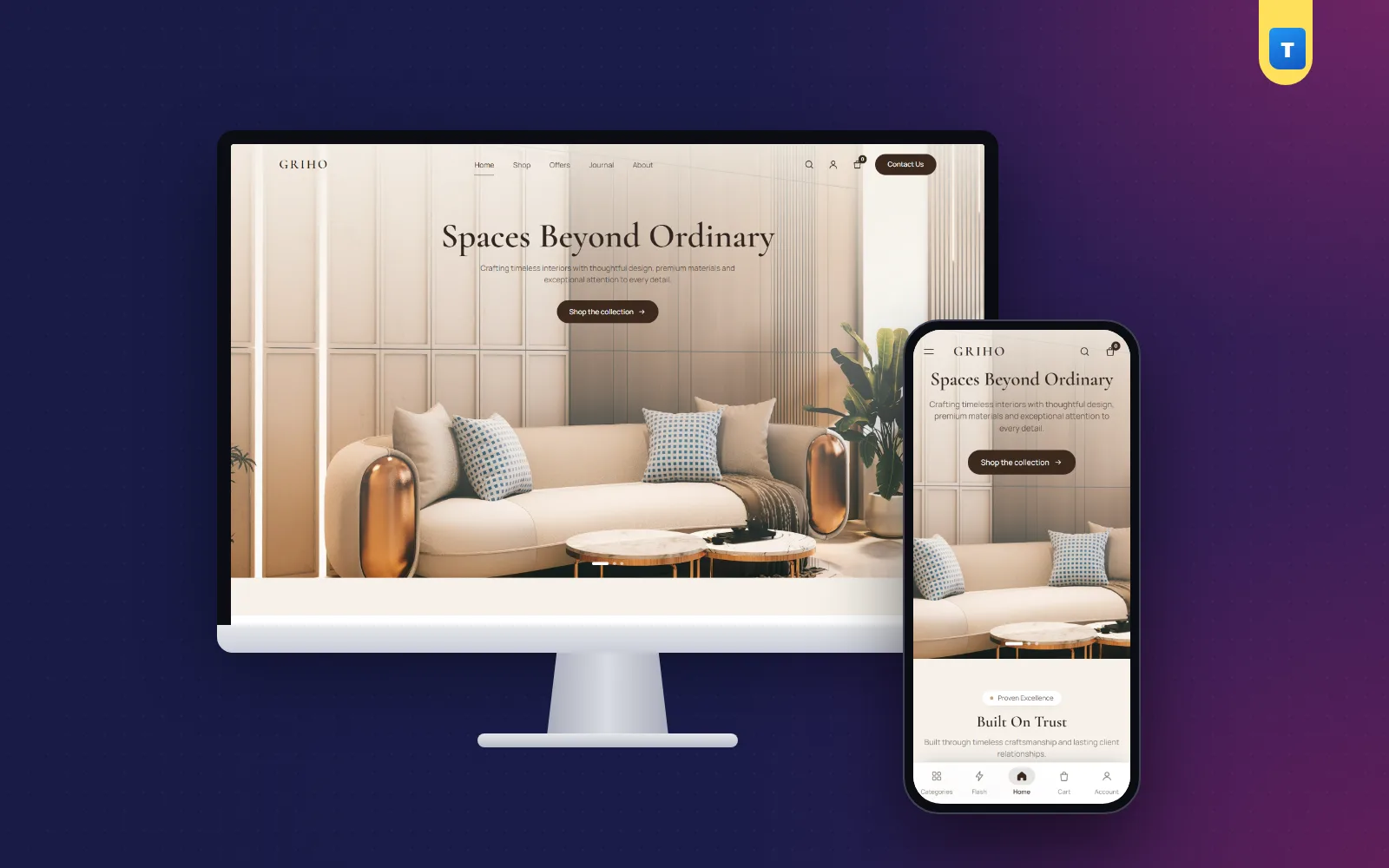
If you run a furniture business and want buyers to plan with you, a website that shows dimensions, materials, projects and delivery days helps. Griho, our Laravel furniture shop software, is made for premium showrooms and makers, with trust and project blocks, collections, dimensions and material specifications, delivery time slots, a COD limit with advance and showroom pick-up. You can browse the live Griho demo for room and collection ideas.
A final checklist
- Every room measured, including doors and stairs.
- A floor plan with furniture to scale.
- Walkways of 75–90 cm kept clear.
- Budget spent first on bed, mattress and sofa.
- Materials chosen for heat and humidity.
- Storage planned on the walls.
- Three layers of light in living spaces.
- One décor direction per room.
Frequently asked questions
How do I start a home furniture setup on a budget?
Measure, draw a floor plan, buy the bed, mattress and sofa first, reuse what you can and add smaller pieces and décor over time.
What size sofa fits a small living room?
Usually a slim two- or three-seater on legs, with a centre table about two-thirds its length and clear walkways around it.
Which wood is best for humid weather?
Properly seasoned solid woods such as teak, mahogany or gamari, with sealed edges and a good finish.
What are good home decor examples for a flat?
Calm neutral, warm traditional, modern minimal or bright family styles, each built on two or three repeated colours.
How long does a full home furniture setup take?
Planning takes a week or two; buying and delivery often take one to two months, longer for made-to-order pieces.