If you are thinking about how to start a grocery shop business, the good news is that people buy rice, oil, eggs and vegetables every week, in good times and bad. The hard part is not finding buyers; it is choosing the right place, buying stock at the right price and keeping waste and credit under control.
This guide walks through each step in plain words, with Bangladesh in mind, from the first budget to taking orders online.
It is written for first-time shop owners, for people turning a small mudi dokan into a proper business, and for Facebook sellers who want to add groceries to what they already do.

Is a grocery shop profitable?
It is one of the first questions people ask, so let us answer it honestly. Is a grocery shop profitable? Usually yes, but on thin margins. Rice, oil, sugar and flour often earn only a few taka per kilo. Packaged snacks, cosmetics, cleaning items, fresh produce and your own packed goods (spices, nuts, dates) earn much more.
The money in groceries comes from volume and repeat buyers. A shop that sells to the same 300 families every week does better than a bigger shop that sees new faces once. Your plan should aim for steady daily sales, low waste and as little credit (baki) as possible.
Where the profit leaks
- Spoilage of vegetables, fruit, bread and dairy.
- Credit given to regular buyers that is never fully collected.
- Theft and miscounting when stock is not checked.
- Dead stock that sits on the shelf for months.
- Buying in small lots at retail prices instead of from wholesalers.
How to start a grocery shop business: choose your model
Before rent and shelves, decide your model. Each one needs a different budget and a different daily routine.
- Neighbourhood mudi shop: small space, daily essentials, buyers within walking distance.
- Mini mart or super shop: more space, more brands, fixed prices, a card or mobile payment counter.
- Fresh produce shop: vegetables, fruit, fish or meat; high margin but high waste.
- Specialty shop: organic food, imported items, dry fruits, honey, ghee.
- Online-first grocery: a small store room, a website or page, and home delivery.
Many successful owners start with a small physical shop and add home delivery within the first year. Starting this way keeps the first investment small while leaving room to grow.
Step 2: Location, licences and budget
Choosing the location
Walk the area at different times of day. Count how many families live within five minutes, how many shops already sell the same goods and where people walk when they come home from work. A corner near a residential lane, a school or a bus stop is often better than a busy main road with no parking.
Location decides more than anything else when you work out how to start a grocery shop business, because a grocery buyer rarely walks more than ten minutes for daily items.
Check the rent, the advance the landlord wants, the electricity supply for a fridge and freezer, and whether the space floods in the rainy season.
Licences and paperwork
In Bangladesh you will usually need a trade licence from your city corporation or union parishad, a TIN certificate, and a bank account in the shop's name. If you sell packaged food or run a larger shop, check the food safety rules and any VAT registration that applies to you. Rules change, so confirm with the local office or a trusted accountant before you open.
A simple starting budget
- Rent and advance for the space.
- Shelves, counter, fridge, scale and lights.
- Opening stock, usually the biggest single cost.
- Licences, signboard and bags.
- Working money for at least three months of rent, salary and restocking.
Most new shops fail because the owner spends everything on stock and has nothing left when sales start slowly. Keep a reserve.
Step 3: Suppliers, stock and pricing
Find two or three suppliers for each main group: rice and lentils, oil and sugar, packaged goods, and fresh items. Wholesale markets such as Karwan Bazar or your district's main bazar, company distributors and local farms all have a place. Ask about credit terms, delivery days and the minimum order.
What to stock first
Start with what your neighbours buy every week, not what you like. A short list of fast items in the right brands beats a long list of slow ones. Track what sells for the first month, then add more of the winners and drop the rest.
Pricing
Keep basic staples close to the market price; buyers compare them. Earn your margin on snacks, personal care, cleaning items, fresh produce and your own packs. Offer small savings for bigger packs, such as a lower per-kilo price on a 5 kg bag of rice.
Waste control
Waste is the quiet cost that most guides on opening a grocery forget to mention. A crate of tomatoes that goes soft can wipe out a day's profit from rice and oil.
Buy fresh items in small lots and often. Put older stock in front. Sell slightly soft vegetables at a lower price in the evening rather than throwing them away the next day.
Step 4: Staff, records and daily routine
A small shop can start with the owner and one helper. Write down who opens, who counts cash, who places orders with suppliers and who handles deliveries. Clear jobs prevent arguments and missing money.
Keep records from day one: daily sales, cash and mobile payments received, purchases, expenses and credit given. A notebook works at first, but a simple sales app or spreadsheet saves time and shows patterns, such as which day of the week sells most.
Anyone serious about running a grocery should also plan for the owner's own time off. One trained helper who can open and close the shop means you can visit suppliers, fall sick or travel without closing.
A sample day
- Morning: receive fresh stock, check prices, arrange the front shelves.
- Midday: handle phone and online orders, pack deliveries.
- Afternoon: count slow items, place orders for tomorrow.
- Evening: busiest selling hours, then cash count and a short note of what ran out.
Step 5: Home delivery and an online grocery shop
Buyers in cities now expect home delivery, especially for heavy items like rice, oil and water. You can start with phone and WhatsApp orders and your own delivery person. When orders grow, messages become hard to track: prices are asked again and again, addresses are lost and nobody knows what was paid.
An online shop fixes this. Buyers see prices and stock, pick a delivery time, pay on delivery or by bKash or Nagad, and you get a clean list of orders to pack. When you plan a new grocery today, plan the website early, even if you launch it a few months after the physical shop.
What a grocery website needs
- Fast search and clear categories (vegetables, fish and meat, rice and lentils, oil, snacks, household).
- Weights and pack sizes with their own prices, such as 500 g, 1 kg and 2 kg.
- Delivery zones and time slots so buyers know when the order arrives.
- Cash on Delivery plus bKash, Nagad or a gateway like SSLCommerz.
- A minimum order and free delivery above an amount, so small orders stay worth it.
- A good phone layout, because most orders come from phones.
- SMS updates when the order is confirmed and on the way.
Fake orders and risk
Cash-on-delivery shops sometimes get prank orders. Call new buyers before sending big orders, limit how many orders one number can place in a day, and ask for a small advance on risky orders. A list of half-finished checkouts is also useful: some of those buyers only need a call.
Step 6: Marketing a new grocery shop
- Opening offer: a small discount or free delivery for the first week.
- Weekly deals on a few items, posted on Facebook and in your WhatsApp group.
- Combos, such as a monthly bazar pack for a family of four.
- Loyalty points or a stamp card for repeat buyers.
- Price lists shared every morning for fresh items.
- Good service: correct weight, fresh items and on-time delivery bring more buyers than any ad.
Common mistakes to avoid
- Too much stock too early, which ties up cash and spoils.
- Unlimited credit for friends and neighbours, with no written record.
- No fixed prices, so every buyer bargains and some feel cheated.
- Ignoring hygiene: dirty floors, flies near fish or uncovered sweets drive families away.
- Copying the next shop instead of offering something it does not have, such as delivery, fresh fish every morning or your own spice packs.
Most of these mistakes come from rushing. Learning to run a grocery is mostly learning patience: open small, watch your numbers for three months, then grow what works.
Festivals matter too. Before Eid and Ramadan, demand for oil, sugar, dates, semai, spices and meat rises sharply, so order early, agree on prices with suppliers ahead of time and plan extra delivery help for those weeks.
Ask happy buyers to tell their neighbours. In groceries, word of mouth in one building or one lane can double sales in a few months.
Google's guide to helpful, people-first content is a good reminder for your shop page and blog too: honest prices, real photos and useful tips earn trust.
How to start a grocery shop business: launch checklist
- Trade licence, TIN and bank account ready.
- Shelves, fridge, scale and lights tested.
- Two suppliers for every main product group.
- Opening stock checked and priced.
- A record book or app for sales, purchases and credit.
- Phone, WhatsApp and delivery area written on the signboard and page.
- Online shop or at least a price list ready for phone orders.
- Three months of working money kept aside.
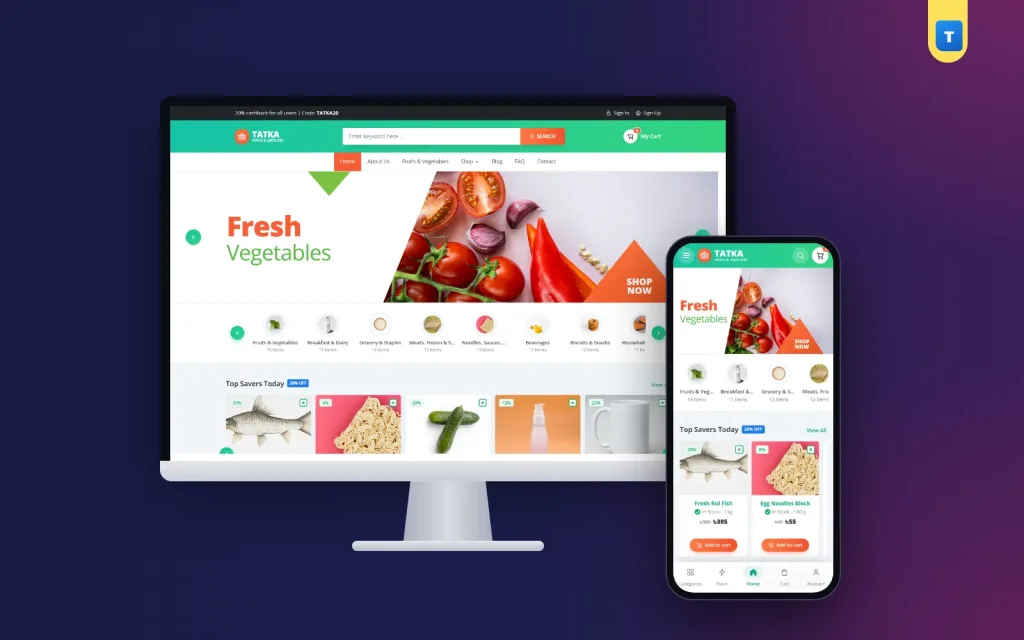
If you want the online side ready from the start, Tatka, our Laravel grocery shop website template, has weight and pack variants, delivery zones and time slots, Cash on Delivery with optional advance, bKash, Nagad and SSLCommerz, Pathao, REDX and Steadfast courier booking, loyalty points, reseller prices and SMS order updates. You can browse the live Tatka demo to see how a grocery order works from search to checkout.
Growing after the first year
Once the first shop is stable, the next steps are usually a second branch, a bigger store room for online orders, or your own brand of packed goods such as chinigura rice, mustard oil or spice mixes. Own-brand packs carry better margins than branded staples and make buyers come back to you by name.
Keep looking at your numbers each month: sales per day, average order size, waste, credit outstanding and the share of buyers who order again. These five figures tell you more than any opinion about whether the business is healthy.
If you choose Tatka, it installs on normal cPanel hosting through a web installer, so you do not need a developer to get started. Whatever tools you pick, the basics stay the same: the right stock, fair prices and on-time delivery.
Frequently asked questions
How to start a grocery shop business with a small budget?
Start with a small space, a short list of fast-selling items, two good suppliers and three months of working money. Add home delivery and an online shop as sales grow.
Is a grocery shop profitable in Bangladesh?
Usually yes, on thin margins. Profit comes from steady volume, repeat buyers and higher-margin items like snacks, personal care, fresh produce and your own packs.
Which licences do I need?
Usually a trade licence, a TIN and a bank account, plus any food safety or VAT rules that apply to your size. Confirm with your local office.
What is the first step in how to start a grocery shop business?
Choose your model and location. Walk the area, count nearby families and competing shops, and check rent and power before buying any stock.
Do I need a website from the first day?
Not on day one, but plan it early. Phone and WhatsApp orders are fine at first; a website keeps orders, prices and payments clean once they grow.