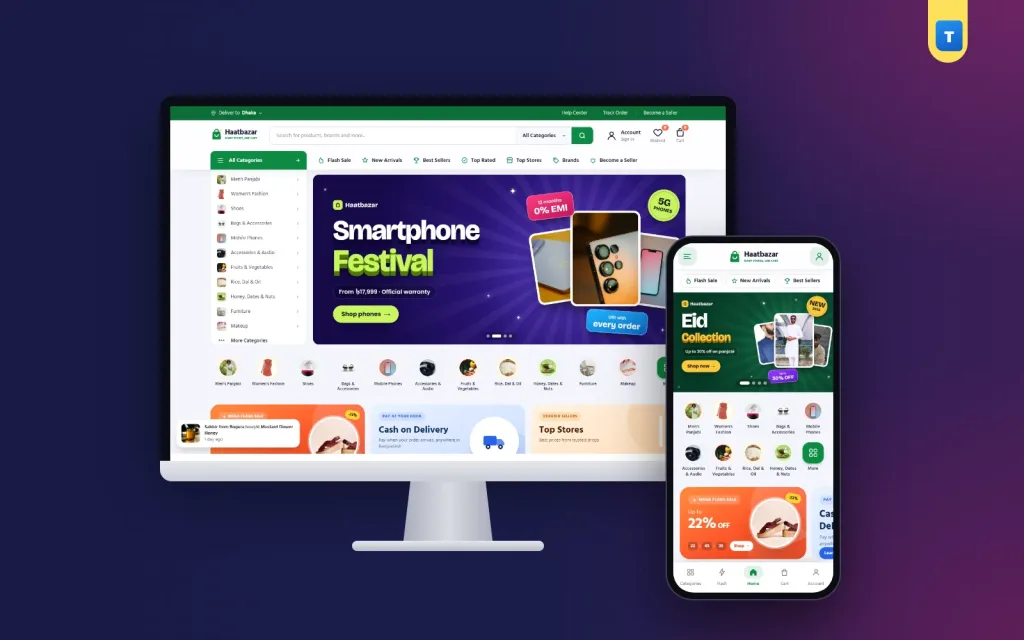
If you are wondering how to start an online marketplace, the honest answer is that the software is the easy part. The hard parts are choosing a niche, signing the first sellers, deciding how money moves and keeping buyers' trust when something goes wrong. This guide walks through each step in order, with examples for founders in Bangladesh.
A marketplace is a website where many independent sellers sell to buyers, and you earn a commission or fee for bringing them together. It sounds simple. It works only when both sides keep coming back.
How to start an online marketplace: the short version
- Pick a narrow niche or area where buyers are badly served.
- Sign 10 to 20 good sellers before you launch.
- Write your rules: commission, payouts, returns, delivery and banned items.
- Choose software that splits orders per seller and keeps a clean ledger.
- Set up payments, couriers and customer support.
- Launch in one area, fix problems fast, then grow.
The rest of this guide explains each step and the traps that sink most new marketplaces.
Choose a niche you can win
Large general marketplaces already sell almost everything. A new one rarely wins by copying them. It wins by being better for one group: a city, a product type or a community.
- Local: every shop in one district town or one big market, with same-day delivery.
- Category: books, handmade crafts, gadgets, kids' clothing, farm produce or building materials.
- Community: sellers from one trade body, women entrepreneurs or campus sellers.
Ask three questions. Do buyers in this niche struggle to find or trust sellers today? Are there enough sellers who would pay a commission to reach more buyers? Can you deliver the goods reliably and cheaply? If any answer is no, pick another niche.
Sign sellers before you build buyers
An empty marketplace cannot attract buyers, and without buyers, sellers will not stay. Break this circle by signing sellers first. Visit them, explain the deal and help them list their first products yourself if needed.
What sellers want to know
- What commission you take, and on what amount.
- When and how they get paid.
- Who handles delivery, and who pays when a parcel comes back.
- How returns and complaints are decided.
- What they must do to get approved.
Write the answers on one clear page before you meet anyone. Sellers trust a founder who has rules, not one who promises to "figure it out later".
Seller onboarding steps
A clean path works best: registration, phone or email verification, business and bank details, document check by your team, store approval, product upload with review, then live selling. Each step filters out fake or weak sellers before they reach your buyers.
Decide how money moves
Money rules decide whether your marketplace survives. Settle them before any code is written.
Commission
Most marketplaces take a percentage of each sale. Many set different rates per category, because margins on electronics and fashion are very different. Some offer a lower rate to a key seller for a while. Whatever you choose, save the rate on each order item at the moment of sale, so later changes never rewrite old orders.
Collect first, pay later
In Bangladesh, a large share of orders is Cash on Delivery. The courier collects the cash, sends it to you, and only then can you pay the seller. Even for online payments, do not let sellers withdraw at order time. Release money after delivery and after the return window closes. This protects you when a buyer returns an item a week later.
Wallets, ledger and payouts
Give each seller a wallet with a ledger: every sale, commission, fee, refund and payout as a separate line that is never edited. Sellers request payouts to bKash, Nagad, Rocket or a bank above a minimum amount, and you pay on fixed days. A clear ledger ends most money arguments before they start.
One order, many sellers
A buyer may put products from four stores in one cart. Behind the scenes, that order must become four sub-orders, one per seller. Each seller sees only their part, packs it and ships it, and each part has its own status. If one seller cancels, the other three parcels still go out.
Refunds and commission should also work per item, not per order. When a buyer returns one shirt from a mixed order, only that seller's earning and your commission on that shirt should change. Anyone who has tried to fix this in a spreadsheet knows why it matters.
Delivery and couriers
Pick one of two models, or offer both:
- Seller ships: each seller books their own courier or rider and updates the status.
- Hub drop: sellers bring parcels to your office or hub, and you hand them to couriers in bulk.
Steadfast, Pathao and REDX are the common couriers here, and connecting them to your software saves hours of copying addresses. Use district and upazila addresses, show the delivery charge before checkout and decide who pays for parcels the buyer refuses at the door.
Payments buyers trust
Offer Cash on Delivery from day one. Add bKash, Nagad and a gateway such as SSLCommerz for cards and wallets once you have a merchant account. Until then, manual Send Money with a transaction ID or payment proof works, as long as your team checks it before the order moves.
Fake COD orders hurt marketplaces twice: the seller wastes stock and the courier charges a return fee. Ask for a small advance on risky orders, verify new buyers by OTP and limit how many orders one phone number can place in a day.
Rules for returns and disputes
When you plan how to start an online marketplace, write the return policy as carefully as the commission. A good flow is: buyer requests a return with photos, seller responds, your team reviews, the parcel is picked up and checked, and the refund is approved or rejected. Decide in advance:
- Which categories can be returned, and within how many days.
- Who pays return shipping in each case.
- When a partial refund is fair.
- How a seller can dispute a decision.
Publish these rules on your site. Buyers forgive problems when the rules are clear and kept.
Trust and quality control
Every bad seller damages every good one. Protect the marketplace with a few habits:
- Moderate products before they go live, at least for new sellers.
- Approve reviews before they show, to stop fake praise and fake attacks.
- Keep chat on the site and hide phone numbers and links, so deals do not move off the platform.
- Score sellers on ratings, shipping on time and reply speed.
- Suspend quickly when a seller breaks the rules.
Trust is the product a marketplace really sells. Buyers come because they believe someone checks the sellers.
Paperwork and legal basics
Part of learning how to start an online marketplace is the paperwork. Register the business and get a trade licence before you take money, because payment gateways and couriers ask for it. Open a business bank account so seller money and your own money never mix.
Write three documents in plain language: terms for buyers, a seller agreement and a privacy policy. The seller agreement should cover commission, payout timing, banned products, fake goods, returns and what happens when a seller is suspended. Keep copies of each seller's trade licence or national ID, and check them before approval.
Sell only items that are legal to ship, and keep a banned list for medicines, weapons, counterfeit goods and anything couriers refuse. A clear list saves you from awkward conversations later.
Design the buyer experience
Buyers judge a marketplace in seconds. Most of them arrive on a phone, from a Facebook ad or a friend's link, and decide whether to stay before the page finishes loading.
- A fast home page with one strong banner, categories with pictures and real products.
- Search that forgives spelling and suggests products as people type.
- Filters for price, brand, rating and seller, with a Load More button instead of tiny page numbers.
- Store pages with the seller's logo, banner, rating and products, so good sellers build a name.
- A clear cart grouped by store, with each store's delivery charge.
- Sign-in by phone and OTP, in a pop-up, without forcing an email.
Anyone serious about how to start an online marketplace should test these screens with real buyers, not only with the team that built them. Watch where people hesitate, then fix that page first.
Choosing the software
Most people who search how to build a multi vendor marketplace face the same choice: build from scratch, rent a hosted service, stack plugins on a blog platform, or buy a ready self-hosted script. Whichever you choose, test it against this list:
- Does one order split into sub-orders per seller with separate statuses?
- Can commission differ by category and by seller?
- Is there a ledger that is never edited, with settlement after delivery and the return window?
- Do payouts, refunds and commission adjust per item?
- Are local payments, COD and local couriers supported?
- Is there a seller approval and product moderation flow?
- Can you edit the homepage, banners and menus without code?
- Are there automated tests for duplicate orders, overselling and double payouts?
A tool that fails several of these will cost more in fixes than it saved in price.
Marketing your launch
The marketing side of how to start an online marketplace is simple: launch small. One city or one category with 20 good sellers beats a national launch with 200 weak ones. Ask each seller to share the marketplace with their own customers; this is your cheapest first traffic.
- Flash sales and vouchers funded partly by sellers bring the first wave.
- Affiliates earn a commission for sending buyers.
- Facebook and Google tracking tells you which ads bring real orders.
- Helpful content such as buying guides earns search traffic over time.
Google's guide to helpful, people-first content explains why honest, useful pages earn more trust than keyword-stuffed ones.
Running the marketplace day to day
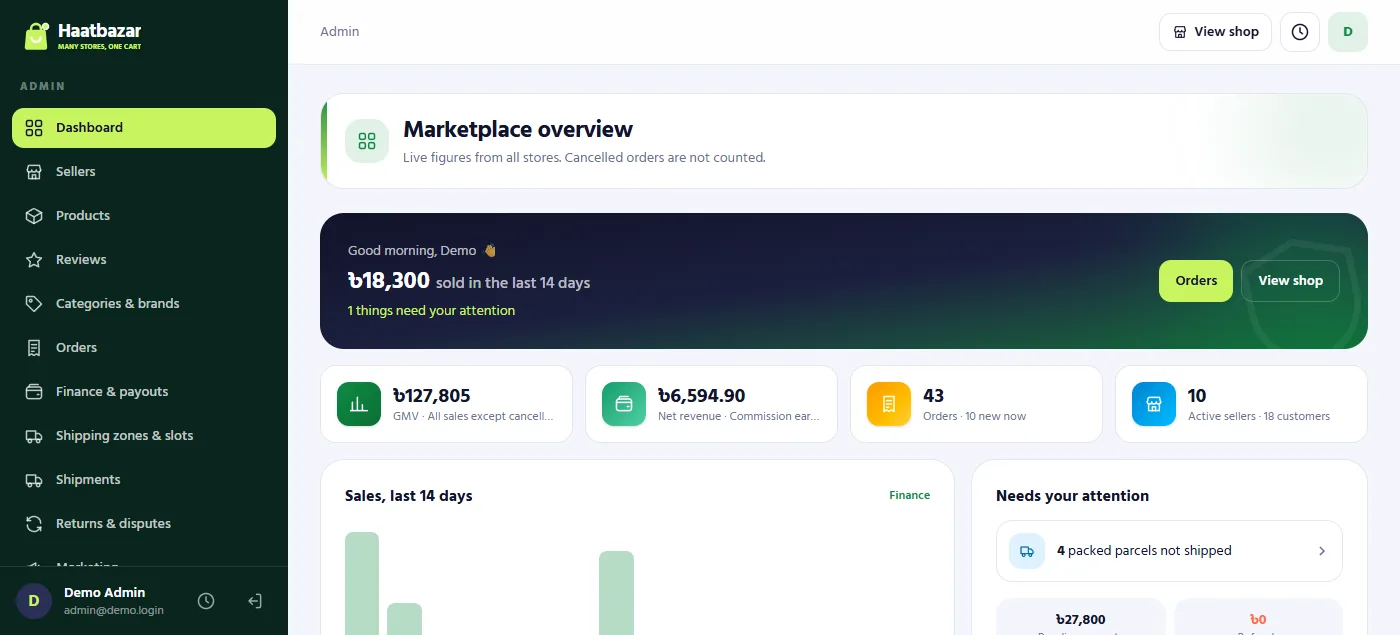
After launch, your job shifts from building to operating. A typical day includes approving new sellers and products, checking manual payments, handling courier exceptions, answering tickets, reviewing returns and paying sellers on payout days. Give each team member a role with only the rights they need, protect admin accounts with two-factor sign-in and keep backups.
Watch a few numbers weekly: gross sales, your commission revenue, the share of COD orders refused at the door, returns per seller and the time sellers take to ship. These tell you which sellers to support and which to warn.
Customer support that scales
Support is where buyers decide whether to come back. Offer two or three channels and answer all of them: a WhatsApp number for quick questions, a ticket system for order problems and an email for sellers. Set a reply target, such as within two hours during working time, and keep to it.
Most questions repeat. Where is my order? How do I return this? When will I get my refund? Answer these on a help page and link to it from the order screen, so buyers find the answer before they write. Track which sellers cause the most tickets; they usually need training, not just warnings.
Notify buyers by SMS at each important step: order placed, shipped and delivered. Fewer "where is my parcel" messages means a smaller support team.
Costs to plan for
Founders who ask how to start an online marketplace often budget only for the website. Plan for these too:
- Hosting on a VPS that can run queues and scheduled jobs.
- A domain, SSL, email and an SMS provider for OTP and order messages.
- Payment gateway setup and fees.
- Courier fees and returned-parcel charges.
- A small team for seller support, payments and disputes.
- Launch marketing and seller incentives.
The software is often the smallest line once the marketplace is running.
Common mistakes
- Paying sellers too early, before returns close.
- No written rules, so every dispute becomes an argument.
- Too many weak sellers with poor photos and slow shipping.
- Ignoring the phone layout, though most buyers shop on phones.
- Letting deals move to private chat, which removes your commission and your control.
Each of these is easy to avoid if you plan for it from the first day.
A launch checklist
- Niche and launch area chosen.
- 10 to 20 approved sellers with at least 200 products in total.
- Commission, payout, return and delivery rules published.
- COD and one online payment tested with real small orders.
- Courier accounts connected and one parcel sent end to end.
- A full test: order, packing, delivery, settlement and payout.
- Support channels ready, including WhatsApp and a ticket system.
- Every page checked on a phone.
How to start an online marketplace with a ready script
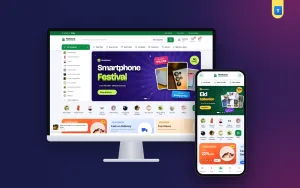
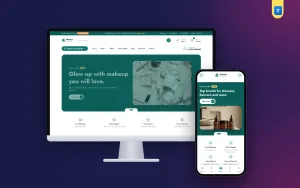
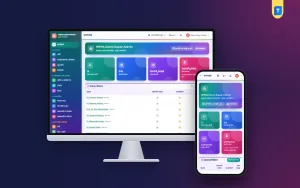
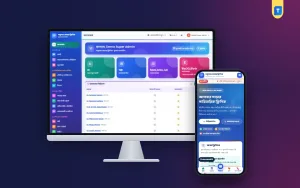
If you want the software side done, the Multi-Vendor Marketplace Laravel script covers the points above. Sellers register, verify and get approved, then manage store, products, inventory, orders, shipping, finance, promotions, reviews and support from their own centre. One order splits into sub-orders per seller, and commission can be global, per category or per seller.
Seller wallets run on a ledger with settlement after delivery and the return window, payouts to bKash, Nagad, Rocket or bank, and refunds per item.
It includes Cash on Delivery with optional advance, manual payments with proof, SSLCommerz, bKash and Nagad gateways, Steadfast, Pathao and REDX couriers, returns and disputes, a homepage builder and more than 200 automated tests. It answers most of how to build a multi vendor marketplace before you write a line of code.
Frequently asked questions
How to start an online marketplace with a small budget?
Pick a narrow niche or one city, sign a few strong sellers, use a ready script on a modest VPS and launch with COD and one mobile payment.
How do marketplaces make money?
Mostly through commission on each sale. Some add listing fees, seller subscriptions, paid ads or delivery fees.
When should sellers get paid?
After the order is delivered, the money is collected and the return window has closed. Paying earlier risks losses on returns.
What is the hardest part of how to start an online marketplace?
Getting both sides at once. Sign sellers first, launch small, and let their customers become your first buyers.
Do I need my own couriers?
No. Connect national couriers such as Steadfast, Pathao or REDX, and let sellers ship themselves or drop parcels at your hub.