The best jewellery website examples for a small brand are not the grand ones with video intros. They are the simple sites that help a buyer pick a gift in two minutes and pay in one more. If you sell studs, hoops, chains, pearls or stacking rings, this guide shows what to copy.
We look at the layout, the pages, the product details and the checkout steps that work for everyday jewellery. The advice is written for small studios and gift shops in Bangladesh, especially brands that began on Instagram or Facebook and now want their own website.
What everyday jewellery buyers want
Fine jewellery buyers study a piece for days. Everyday buyers decide in minutes. They are often young, on a phone, and shopping for a small treat or a birthday gift. Good jewellery website examples for this group follow a few simple rules.
- Show prices early. Surprise prices end the visit.
- Make gifting easy, with ideas by person, mood and budget.
- Keep pages light, since most traffic comes from phones.
- Offer quick payment with bKash, Nagad or cash on delivery.
- Show delivery time in plain words, like "Dhaka in 2 days".
- Give a clear, kind return rule for gifts.
If your site does these six things, it is already ahead of many shops. Reading real jewelry website design ideas from other studios will show how they do each one.
Jewellery website examples: the homepage plan
A small shop does not need twenty blocks. Pick the ones that match how people buy from you. Here is a plan that suits an everyday jewellery brand.
- Top bar: free delivery note, phone number or a small offer.
- Header: logo, search, cart. On phones, a menu, the logo and the cart only.
- Hero: one photo of a worn piece, one line and one button.
- Find a gift: a few ideas such as for her, for mum, for a friend, for a bride.
- Shop by vibe: soft, bold, minimal, classic, party.
- Category tiles: studs, hoops, chains, rings, bracelets, anklets, nose pins.
- Shop by price: steps like under ৳500, under ৳1,000 and under ৳2,000.
- Best sellers or new arrivals.
- Studio story: who you are, how you make or choose your pieces.
- Reviews and customer photos.
- Footer: contact, delivery, returns and social links.
Order the blocks by what your buyers want first. For most gift shops, that is the gift finder and the price steps.
Make gift shopping easy
Gift buyers are often not sure what to pick. They know the person and the budget, but not the piece. Good websites help them.

- A "Find a gift" panel with six ideas, each linking to a ready collection.
- Collections by mood or style, not only by type.
- Price tiles so buyers can start from the budget.
- A gift-wrap option with a short card message.
- Sets that pair pieces, such as a chain with matching studs.
The aim is to take the buyer from "I do not know" to "this is perfect" in a few clicks.
Use reviews and real photos
Social proof matters more for small brands, since buyers do not know you yet. Ask happy buyers for a short review and a photo. Show three to six on the homepage and the rest on the product pages. Name the buyer by first name and city if they agree. Never invent reviews. If you have none yet, show your own photos of the pieces being worn and a short note about how you pack each order.
Also add a clear line about how you pack gifts. A small box, a ribbon and a handwritten card cost little, but buyers mention them in reviews again and again.
Colour, type and mood
Everyday jewellery looks best in a soft, clean frame. Heavy gold and velvet suit wedding houses. A studio that sells silver and pearls can go lighter.
- Pearl, lilac and soft pink: young and gentle.
- Midnight violet or navy for text and buttons: strong contrast without harshness.
- Ivory or white backgrounds: let the metal and stone stand out.
- One serif heading font, one plain body font: simple and readable.
Good jewelry website design ideas for colour stay quiet. Use arches, circles or soft rounded frames for category tiles. They feel friendly and fit small pieces well. Keep decoration low so the jewellery remains the star.
Photos that sell small pieces
Small pieces are hard to photograph. A stud earring can look tiny and flat in a poor photo. These habits help.
- Shoot on a soft, plain background, such as ivory paper or pale stone.
- Use daylight near a window, and avoid direct sun.
- Take a worn photo for every piece, on an ear, a neck or a hand.
- Add one photo beside a coin or a ruler.
- Show the clasp, the back and the length on chains.
- Keep colour true. Do not push saturation to make silver look warmer.
Take a minute to plan each shot before you press the button. Place the piece, clean it with a soft cloth and check the edges of the frame for dust or fingerprints. Two or three clear photos are better than ten messy ones. Compress them before upload so pages open fast on mobile data.
Jewellery website examples for the product page
A good product page answers the five questions every buyer has: what is it, what is it made of, will it fit, what does it cost and when will it come.
What to show
- Finish: silver, gold vermeil, rose gold plating or oxidised.
- Stone: pearl, cubic zirconia, moonstone or none.
- Size: ring size, bangle size or chain length, with a guide.
- Weight and dimensions for small items.
- Care: how to clean and store silver and plated pieces.
- Delivery time and packaging, especially for gifts.
What to promise
- Say how long the plating lasts under normal wear. Be honest, not generous.
- State whether the piece is real silver, and mark it as 925 if it is.
- Explain what happens if the size is wrong.
Honest details cost you nothing and save returns. Buyers remember shops that tell the truth.
Size guides that prevent returns
Ring and bangle sizes cause most returns. Examples from good sites put the guide on the product page, not three clicks away.

- Ring: show the inner diameter in millimetres, plus a printable paper sizer or a string method.
- Bangle: show inner diameter in inches and a simple way to measure the hand.
- Chain: show lengths on a neck picture, such as 16, 18 and 20 inches.
- Anklet: show length on an ankle picture.
Add a line like "Between sizes? Choose the larger one." Short, kind advice helps the buyer and protects your margin.
Payments and delivery for Bangladesh
Many jewellery website examples from abroad do not cover local needs. In Bangladesh, you must plan these parts yourself.
- bKash and Nagad: show them clearly near the cart and at checkout.
- Cash on delivery: popular with first-time buyers. For small items, it is often worth offering.
- Courier: use a service with tracking, and give the buyer a Track Order page.
- Delivery charge: show it before checkout, with one rate for Dhaka and one for outside.
- Packaging: small boxes and pouches make a piece feel like a gift. Say so on the page.
A one-page checkout works well for small orders. Fewer steps mean fewer abandoned carts. Ask only for name, phone, address and payment choice. Email can be optional, since many buyers prefer phone updates.
From Instagram to your own website
Many studios start on Instagram or Facebook. It is a good way to find first buyers. But it is hard to run a shop from a feed. Buyers ask the same questions in messages, prices change, and posts sink.
- Keep posting photos on social media, since that is where people discover you.
- Link every post to the product page on your website.
- Put the full catalogue, sizes and prices on the website.
- Use the site's order system, so you do not copy orders from messages into a notebook.
- Collect emails or phone numbers for new drops.
When you plan the move, jewelry website design ideas from other studios can show how they group pieces and present sets.
A ready-made option
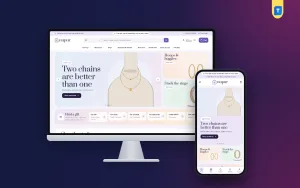
If you want a working design today, Nupur is an everyday jewellery WordPress theme for silver, vermeil and pearl studios. It has a Find a gift panel with six ideas, Shop by vibe pastel cards, arch category tiles and a Stack and layer block for pairing pieces.
It also has Shop by price with your own steps, a studios row with a studio spotlight, ring, bangle and chain size guides, and finish and stone choice on product pages. You get 22 homepage blocks to hide or re-order, 5 pastel palettes and 4 font pairs. The demo has 43 pieces from 6 studios, and bKash, Nagad, cash on delivery and Pathao courier work through the bundled Themeve Commerce plugin. Read the details on the Nupur product page.
Pages every jewellery site needs
- About: your story, your photo and how you choose or make your pieces.
- Size Guide: ring, bangle, chain and anklet sizes in one place.
- Care Guide: how to clean silver, protect plating and store pearls.
- Delivery and Returns: time, cost, rules for gifts and size changes.
- Contact: phone, message link and, if you have one, a studio address.
- Track Order: so buyers do not need to message you.
- Privacy and Terms: simple and short.
These pages build trust and cut the number of repeat questions. Write them once, in simple words, and keep them updated.
Mistakes seen on many sites
Most of these slips are small and easy to fix. Fix them early, because each one costs you orders every week.
Look at enough jewellery website examples and the same slips repeat.
- Dark or yellow photos: silver looks dull and cheap.
- No size guide: returns pile up.
- Price only in a photo: text should always be real text.
- Too many popups: one welcome offer is enough.
- Slow slider with eight slides: one strong hero is better.
- No stock status: sold-out items must be marked clearly.
- Weak mobile layout: test every page on a phone.
- Hidden delivery cost: show it early.
A launch checklist
Before you share the link, test the site the way a buyer would. Use your own phone, your own mobile data and a friend's help. Strong jewellery website examples are the result of this kind of plain testing, not luck.
- Every product has two or three clear photos, a price, a finish and a size.
- Size guides are on the product pages.
- The gift finder links go to real collections.
- Price steps match your actual range.
- A test order works with bKash, Nagad and cash on delivery.
- Courier and delivery charges are set.
- Return and care pages are written.
- The site opens in under four seconds on mobile data.
- Your contact details are visible on every page.
If you want to read more on the technical side, the official WordPress documentation is a good, reliable reference.
Frequently asked questions
What do good jewellery website examples have in common?
They show clear photos, honest details, visible prices and a simple path to checkout. They also load fast on phones and make it easy to contact the seller.
How many products should a jewellery site start with?
About 30 pieces is a good start for a small studio. Make sure each one has clear photos and complete details before you add more.
Do I need a separate site if I already sell on Instagram?
It helps. A website gives you a permanent catalogue, an order system and a place to answer common questions. Keep Instagram for reach and link back to your site.
Which jewellery website examples suit gift shops?
Sites with a gift finder, collections by mood and price tiles. They help a buyer who does not know what to choose, which is the usual gift shopper.
Should I offer cash on delivery for small jewellery?
Many shops do, because first-time buyers like it. Add a clear return rule and confirm the order by phone for higher-value items.
How do I show sizes for rings and bangles?
Put a size guide on the product page with inner diameters, a simple home measuring method and advice for in-between sizes.
Can I use these jewellery website examples for silver and pearl pieces?
Yes. The same ideas work for silver, vermeil, pearl and small fine pieces. Adjust the colours, the details you show and the price steps to suit your range. Keep the layout simple and let the photos do the work.