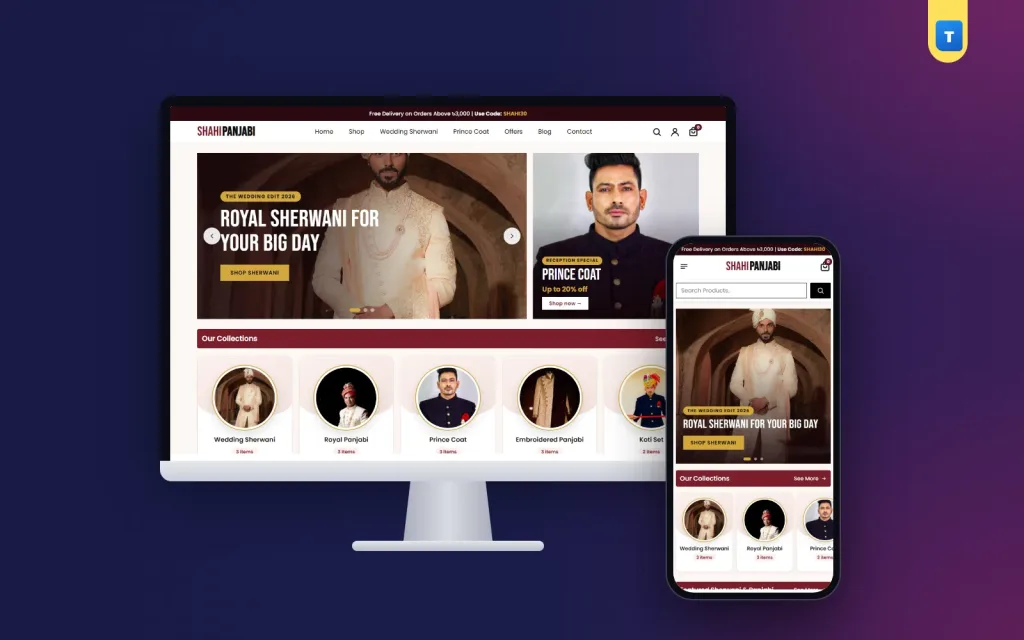
Mens panjabi ecommerce website design is not the same as designing a T-shirt shop. A panjabi is often bought for one day that matters: Eid, a wedding, a reception or a family photo. The buyer looks closely at fabric, embroidery and fit, compares prices and asks questions before paying. This guide explains how to plan a panjabi and sherwani shop that answers those questions and turns visitors into orders.
The ideas come from the shops we build for Bangladeshi menswear sellers, from small Facebook page brands to family tailoring houses. They work whether you sell ৳1,500 cotton panjabi or ৳20,000 wedding sherwani.
Why mens panjabi ecommerce website design needs its own plan
Three things make panjabi selling different from general fashion. First, sales come in waves. The two weeks before each Eid and the winter wedding season can bring more orders than the rest of the year together.
Second, the price range is wide. One shop may sell a daily short panjabi and a hand-embroidered sherwani side by side, and both need to look right on the same page.
Third, fit matters more than trend. A panjabi that is two inches too short looks wrong at a wedding, and the buyer will not order again. A good design deals with all three: seasons, price levels and fit.
Start with occasions, not only categories
Most buyers do not think "I need a royal panjabi". They think "my cousin's wedding is on Friday". So the homepage should show occasions as well as product types.
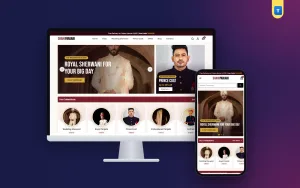
Four large cards work well: Wedding Day, Eid Day, Reception and Family Sets. Each card has a photo of a man dressed for that event and links to a category. Under it, keep the normal category row for buyers who already know what they want.
This simple idea is one of the strongest moves in mens panjabi ecommerce website design, because it matches how people actually shop for traditional clothes.
The banner: one message per slide
The banner is the first thing a visitor sees, and it should change with the calendar. Use three slides at most, each with one clear message and one button:
- "The Wedding Edit" pointing to sherwani during wedding season.
- "Eid Collection" with silk and festive panjabi before Eid.
- "Prince Coat" or "Koti Sets" for reception and family looks.
Use real photos of a man wearing the piece, not flat folded shirts. On phones, a square banner works better than a wide one, because a wide photo shrinks into a thin strip and the face and the embroidery disappear.
Product photos that show the work
Embroidery is what people pay for, so it must be visible. For each product, plan at least four photos: the full outfit from the front, the back, a close-up of the collar and chest work, and a detail of the fabric or the button placket.
Shoot in soft daylight against a plain wall. Keep the same light and background for the whole collection, so the shop looks calm and the colours stay true. A buyer who receives a maroon panjabi that looked red on screen will send it back.
A hover zoom on desktop and pinch zoom on phones lets buyers inspect zardozi or resham work without asking for extra photos on WhatsApp. In mens panjabi ecommerce website design, the zoom is a small feature that saves many messages.
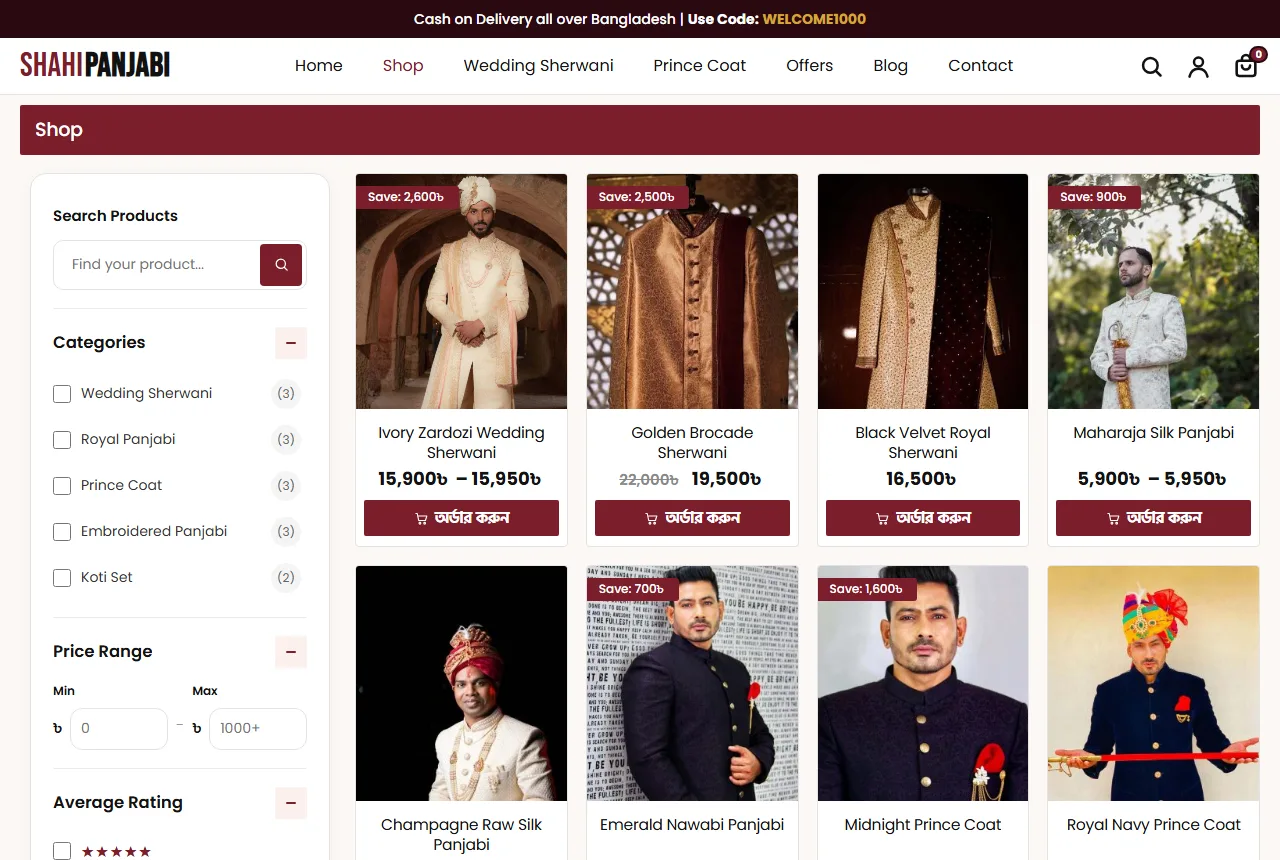
Mens panjabi ecommerce website design for sizes and fit
Sizes are where most returns start. Three habits reduce them:
- Real size buttons. Show M, L, XL and XXL as buttons, not a drop-down. Grey out sizes that are sold out so nobody orders a size you do not have.
- A size chart next to the buttons. List chest, length and sleeve in inches, the way local tailors measure. A pop-up keeps the page short.
- A note on fit. One line such as "Regular fit, length 42 inches in L" answers the most common question.
In WooCommerce, each size should be a variation with its own stock. Then the XL can sell out while M and L stay available, and a larger size can cost a little more if it uses more fabric.
Prices, offers and trust
When the average order is high, trust matters more than flashy discounts. Show the regular price and the sale price clearly, and keep offers simple: a percentage off a collection, or a koti free with a sherwani.
Place trust details near the buy button, not only in the footer. A short box with the return rule, the delivery time and a phone number does more than a long About page. Real customer reviews with names and cities help too, especially for wedding wear where people fear a bad fit on the big day.
A product page that answers questions
A good panjabi product page answers the usual inbox questions before they are asked:
- What is the fabric and does it feel heavy?
- Is the embroidery hand work or machine work?
- Which size should I take?
- When will it arrive, and what does delivery cost?
- Can I return it if it does not fit?
Answer each one in the short description, the size chart or a small info box. Add a WhatsApp button for anything else. Many buyers in Bangladesh still want to talk to a person before a big purchase, and the button keeps that conversation tied to the product.
Add a Buy Now button next to Add to Cart. Someone buying one sherwani for their own wedding does not need a cart; they need the checkout.
Checkout: fewer fields, local delivery
The checkout is where most panjabi shops lose orders. Keep it short:
- Let guests order. Offer an optional "Create an account" box instead of forcing sign-up.
- Allow sign-in with a mobile number as well as an email. Many buyers do not use email at all.
- Show the delivery charge as two simple choices, such as Inside Dhaka and Outside Dhaka, instead of a complicated shipping table.
- Offer cash on delivery from day one, and add mobile wallets when you are ready.
Every extra field costs orders. Name, phone, address and area are enough for most shops, and a short form is one of the easiest wins in mens panjabi ecommerce website design.
Designing for phones first
Most panjabi buyers in Bangladesh shop on a phone, often on mobile data. Good mens panjabi ecommerce website design starts on a small screen and grows to the desktop, not the other way round.
Check these on a real phone: the menu opens easily with one thumb, the size buttons are large enough to tap, the price is visible without scrolling, and the Buy Now button stays within reach. Filters on category pages should open in a drawer, with the page title and a Filters button on one line.
Speed: keep the theme light and the photos optimised
Large photos are necessary for embroidery, so the rest of the page must be light. Avoid heavy page builders and slider plugins. Choose a theme with one small script and no jQuery on the front end, then compress photos to WebP and size them for the screen.
A fast shop matters most in the Eid rush, when many people open your pages at once. Test the homepage on a mid-range phone; if it takes more than a few seconds to show the banner, fix that before the season.
Colours and type that fit the product
Colour sets the mood before anyone reads a word. For wedding wear, deep maroon with gold or ivory feels rich and traditional. A classic serif heading font adds a sense of craft, while a simple sans-serif body font keeps prices and buttons easy to read.
Use the accent colour only for buttons and small details. This restraint is a mark of careful mens panjabi ecommerce website design. If everything is gold, nothing stands out. Make sure the font you choose also displays Bangla names clearly if you use them.
Content that brings buyers back
A blog may seem odd for a clothing shop, but useful posts bring search visitors and help buyers decide. Ideas that work for panjabi sellers:
- How to choose a wedding sherwani for your skin tone.
- Zardozi, resham or brocade: what each embroidery looks like.
- Matching panjabi for the groom's family without looking identical.
- How to wash and store a silk panjabi after Eid.
Link each post to the products it mentions. Write for people, not for search engines; Google's guide to creating helpful content explains why.
A mens panjabi website design template to start from
Building all of this from scratch takes weeks. A mens panjabi website design template gives you the layout, the product page and the checkout ready, so you can spend your time on photos and products instead.
When you compare templates, look for occasion blocks, real size variations with a size chart, a WhatsApp button, guest checkout with phone sign-in and local delivery charges. A template that only looks pretty in the demo will cost you more later.
Plan the year around Eid and weddings
Because panjabi sales come in waves, the shop should change with the calendar. Six weeks before each Eid, move the Eid collection to the first banner slide, open the occasion card for Eid Day and add a short note about the last order date for delivery before Chaand Raat.
In the winter wedding season, bring sherwani, prince coats and koti sets to the front. After the season, switch the banner to everyday cotton so the homepage never looks out of date. Seasonal planning is a quiet part of mens panjabi ecommerce website design, yet it often decides whether the busy weeks bring record sales or missed orders.
Prepare stock per size before each wave. If L and XL sell three times faster than M, order the fabric accordingly and keep the product page honest about what is left.
Measure what works
Good design is never finished. After launch, look at a few simple numbers every week: how many visitors reach a product page, how many add to cart, and how many finish the checkout. A big drop between cart and checkout usually means too many fields or a surprise delivery charge.
Read your WhatsApp and inbox questions too. If ten people ask about the length of the same panjabi, add the length to its description. Small fixes like this are the most useful kind of mens panjabi ecommerce website design work, because they come straight from your buyers.
Watch returns as well. If one size comes back often, check the size chart for that piece and correct the numbers before the next season.
Launch checklist
- Homepage shows occasions, categories and a current offer.
- Every product has four or more photos and a size chart.
- Sold-out sizes are greyed out.
- Delivery charges and the return rule are visible on the product page.
- Guests can order, and sign-in accepts a phone number.
- The shop loads quickly on a mid-range phone.
- A test order works from cart to the thank-you page.
Common mistakes
- Using flat-lay photos only, so buyers cannot judge the fit.
- Hiding the size chart on a separate page.
- Forcing account creation before the first order.
- Leaving last Eid's banner on the homepage for months.
- Loading several plugins for things the theme could do, which slows the shop.
Putting it into practice with Shahi
If you would like these ideas ready to use, our Shahi mens panjabi ecommerce website template follows this plan.
It has a wedding banner slider, Shop by Occasion cards, size buttons with a size chart, a WhatsApp button, guest checkout with phone or email sign-in, and Inside and Outside Dhaka delivery charges on WooCommerce. You add your photos and prices, and the structure of good mens panjabi ecommerce website design is already in place.
Frequently asked questions
What should a mens panjabi ecommerce website design include first?
Occasion cards, clear categories, product pages with several photos and a size chart, and a short checkout with local delivery.
How many photos does each panjabi need?
At least four: front, back, a close-up of the embroidery and a fabric detail.
Is mens panjabi ecommerce website design different for wedding wear?
Yes. Wedding wear needs larger photos, more trust details near the buy button and a calmer, richer colour scheme.
Should buyers be able to order without an account?
Yes. Guest checkout gets more first orders. Offer an optional account box for repeat buyers.
Which payment methods should I start with?
Cash on delivery first, then mobile wallets and cards once orders are steady.