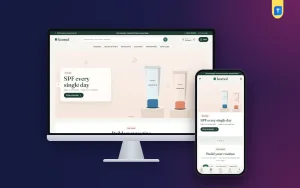
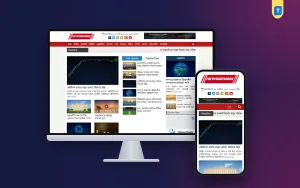
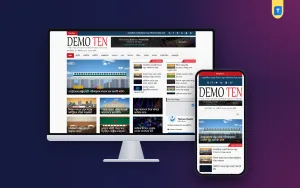
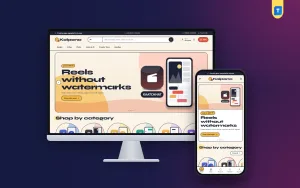
Looking at good multi vendor website examples is the fastest way to decide what your own marketplace should look like. You see what works, what confuses buyers and which parts you can copy on a small budget.
This guide does not just list sites. It explains the main types of marketplace, the pages every one of them needs, and how to turn what you see into a plan. It also covers what a Bangladesh seller must add, such as bKash, Nagad, cash on delivery and a courier.
What a multi vendor website really is
A multi vendor site is one website where many sellers list products. The owner of the site brings the buyers. The sellers bring the stock. Buyers shop in one place but may receive parcels from several stores.
There are two common set-ups, and people mix them up all the time:
- True multi vendor: sellers register, add their own products, see their own orders and get paid after the site takes a commission.
- Multi-brand shop: one owner buys from many brands and sells everything under one roof. The look is a marketplace, but there are no seller accounts.
Both can look the same on the front page. The difference is in the back office. Know which one you want before you study any example.
Five types of multi vendor website examples to study
Most marketplaces fall into a few groups. Look at one of each kind and note how the home page is built.
- General marketplaces. They sell everything, from phones to groceries. The home page is crowded with categories, flash sales and vouchers.
- Niche marketplaces. They sell one thing only, such as phones, books, handmade goods or furniture. The pages are calmer and the filters are deeper.
- Service marketplaces. Buyers hire a tutor, a tailor or a repair person. Profiles and reviews matter more than product photos.
- B2B marketplaces. Shops buy in bulk from wholesalers. Price lists and minimum order quantities are the key features.
- Local marketplaces. Shops from one city or one mall list together. Delivery area and store location are the key features.
For a first project in Bangladesh, a niche or local marketplace is usually the safer start. It is easier to fill a small catalogue with good photos than a huge one with poor photos.
What strong multi vendor website examples have in common
Open any marketplace that has been running for years and you will see the same habits. These are worth copying.

- A search box that is large and always visible.
- A category bar in the header, not hidden behind a menu icon.
- Seller names on every product card and product page.
- Clear prices, discounts and delivery dates.
- Filters that match how people think, for example price, brand and size.
- Reviews and ratings that are easy to find.
- A sale block with a countdown, which gives people a reason to buy today.
- Trust signs near the checkout: return days, warranty and payment logos.
Notice what is not on the list. Fancy animation, long sliders and big paragraphs of text do not appear. Marketplaces win by being fast to scan.
Home page blocks worth copying
A marketplace home page is a stack of blocks. Each block answers one question the buyer has. Here is a simple order that works well.
- Header with logo, search, cart and login.
- Category bar.
- Hero slider with two or three current offers.
- Icon grid of the main categories.
- Flash sale with a timer and stock bars.
- Shop by brand or shop by seller.
- Shop by budget, for example under 10,000 taka.
- Best sellers and newest products.
- Reviews or a trust strip.
- Footer with help pages, courier details and payment methods.
You do not need all ten on day one. Start with five and add more as your catalogue grows.
Product pages that turn visitors into buyers
The product page decides the sale. Study how the best sites lay it out and you will see a pattern.
- Large photos, with a close-up and a back view.
- Price and discount near the top.
- Three or four key facts in short tiles, such as warranty or battery size.
- Variants, such as colour and storage, as simple buttons.
- Seller name and expected delivery date.
- Full specifications in a clean table.
- Reviews below, with a prompt for the first review.
Buyers who cannot find the warranty or the delivery date will leave and ask on Facebook instead. Put the answer on the page.
Seller pages and trust
On a true marketplace, the seller page is as important as the product page. Buyers want to know who they are buying from before they pay.
A good seller card shows:
- The store logo and name.
- A rating from past orders.
- Items sold and number of products.
- Return days.
- A badge for official or verified stores.
Even if you run a single-owner shop, you can borrow this idea. A brand card with the logo and the number of models you stock tells the buyer you are serious about that brand.
Payments and delivery for a Bangladesh marketplace
Most examples you find online were built for cards. In Bangladesh the buyer often wants something else, and your site must match.
- bKash and Nagad: put the logos on the home page and at checkout. People look for them.
- Cash on delivery: keep it, but protect yourself with a phone check or a small advance for large orders.
- Cards and bank payments: a payment gateway covers these.
- Couriers: link your orders to a courier and show a tracking page. Buyers who can track a parcel call you less.
- Phone first: most visitors come from a phone and from Facebook. Test everything on a small screen.
How to study multi vendor website examples in 30 minutes
Do not browse without a plan. Pick five sites and give each one six minutes. Use a notebook or a phone note and answer the same questions every time.
- What is the first thing I see on the home page?
- How many taps does it take to find a product I want?
- What does the product card show, and what is missing?
- How does the site build trust: ratings, badges, return days?
- How many steps does checkout need?
- Which payment options are shown before I pay?
After five sites, you will see the same answers repeating. Those repeated answers are your minimum standard. The things only one site does are optional extras.
Small shop ideas from multi vendor website examples
You do not need thousands of products to use these ideas. A phone shop in a Dhaka market or a gadget shop in Chattogram can borrow the same patterns on a smaller scale.
- Shop by brand: one tile per brand, each linking to a filtered list.
- Shop by budget: tiles such as under 15,000 or under 30,000 taka. Buyers in Bangladesh often start with a budget, not a model.
- Spec chips: tap to filter by the facts people ask about most.
- Sale strip: three or four products with a timer and a stock bar.
- Track order page: one link in the footer that saves many phone calls.
Mistakes to avoid when you copy an example
Copying a successful site is smart. Copying it blindly is not. Watch for these problems.
- Too many blocks. A busy home page with ten empty sections looks worse than a short one with real products.
- Poor photos. Mixed sizes and dark pictures make a marketplace look unsafe.
- Slow pages. Heavy sliders and large images punish phone users on a weak connection.
- No clear owner. Add a real address, a phone number and a return policy.
- Promising what you cannot run. If sellers cannot log in, do not say they can.
A marketplace website design template: what to look for
You can hire a developer to build from zero, or you can start from a ready-made template. A good marketplace website design template saves weeks. When you compare options, check this list.
- A one-click demo, so you can see real content before you change anything.
- Home page blocks that you can switch on, off and re-order.
- Filters and sort options on the shop page.
- A cart and a short checkout.
- Local payments and couriers built in, not added later.
- Good speed on phones.
- Settings in one place, so a non-developer can manage them.
Also be clear about the seller question. Some templates add seller accounts. Others give the marketplace look for a single owner. Both are valid, but they are not the same product.
A ready-made option for phone and gadget sellers
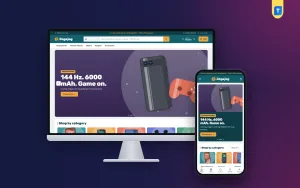
If you sell phones from many brands, Jogajog is built for that case. It is a WordPress theme with the busy look of a marketplace, made for one owner who sells many brands.
Here is what it includes:
- An instant spec filter with chips for 5G, RAM, battery, camera and budget.
- A grid of brands against price bands, showing the lowest price in each cell.
- Cards with three spec bullets, and sorting by popularity, price or battery.
- Key-spec tiles, warranty and a 0% EMI line on product pages.
- 24 home page blocks, 17 on by default.
- A demo with 36 products from seven brands.
- bKash, Nagad, SSLCommerz and cash on delivery, with Steadfast and Pathao courier and a tracking page.
To be clear, Jogajog has no seller accounts, no seller dashboards and no commissions. You sell your own stock. If you need sellers to register and earn payouts, you need a theme with a seller module.
If you want to see how these blocks look when they are put together, the Jogajog demo is a working shop with real products, so you can test the filter and the grid on your own phone.
A simple plan to build your own
Use this plan after you have studied a few multi vendor website examples and chosen your direction.
Take the list slowly. Most mistakes come from rushing into design before the stock and the delivery plan are clear.
- Decide the type: general, niche, service, B2B or local.
- Decide if sellers will log in, or if you will manage all stock.
- Pick five to ten categories. Do not start with fifty.
- Collect good photos and short, honest descriptions.
- Choose a theme and import its demo.
- Replace the demo products with your own.
- Set up bKash, Nagad, cash on delivery and your courier.
- Write return, delivery and contact pages.
- Place three test orders from your own phone.
- Share the link on your Facebook page and ask friends for feedback.
What to do after you launch
A marketplace is never finished. The first month teaches you more than any amount of research. Keep a short weekly routine.
- Check which products get views but no orders. Improve the photos or the price.
- Read every customer message and note the repeated questions. Answer them on the product page.
- Look at your courier returns. A high return rate often means unclear photos or wrong sizes and specs.
- Add five new products each week, so the site feels alive.
- Post offers on Facebook with a direct link to the sale page, not just the home page.
Keep notes. After three months you will have your own set of multi vendor website examples, drawn from your own sales, and that is worth more than any list.
Launch checklist
- Every product has at least three photos and a price.
- Seller or brand names are correct on every item.
- Search finds products by name and by brand.
- Filters work on a phone.
- Checkout takes less than two minutes.
- Payment confirmation messages arrive.
- The courier receives the order details.
- Policy pages and contact details are live.
- The site loads in a few seconds on mobile data.
If you want to read more on the technical side, the official WordPress documentation is a good, reliable reference.
Frequently asked questions
Where can I find good multi vendor website examples?
Search for marketplaces in your own niche and country, then open them on your phone. Note the home page order, the filters and the checkout steps. Local sites show you what buyers in Bangladesh expect.
Can I build a marketplace without coding?
Yes. A WordPress theme with a demo import lets you launch with no code. You change text, logo, colours and products from the dashboard.
What is the difference between multi vendor and multi-brand?
In a multi vendor site, sellers have their own accounts and earn from sales. In a multi-brand shop, one owner sells products from many brands. The home page can look the same.
Does Jogajog let other sellers list phones?
No. It is made for a single owner. There are no seller accounts, seller dashboards or commissions.
Which payment methods should a Bangladesh marketplace offer?
Offer bKash, Nagad and cash on delivery at least. Add a card gateway if your buyers ask for it, and connect a courier for tracking.
How many products do I need to launch?
Thirty to fifty good listings are enough to look real. Quality matters more than number.