Good rice website design is about prices, weights and trust. People who buy rice, dal and oil online compare prices every week and buy in large amounts, so the site has to show today's rate, the exact weight and the delivery time without any guesswork. This guide covers the homepage, product pages, monthly packs, bulk pricing, delivery and phone layout for a rice and staples shop in Bangladesh.
The ideas are plain and practical. Pick the ones that fit your shop, test them for a month and keep what brings orders.
Why rice website design is its own job
Rice is not an impulse buy. A family eats 25 to 40 kg a month, and a restaurant may use that in two days. Buyers know prices well and switch shops for a few taka per kilo. Three things decide where they buy:
- Price: is today's rate fair compared with the bazar?
- Weight: will I really get 25 kg?
- Delivery: who carries the sack up to the fourth floor, and when?
Your homepage should answer all three before the buyer scrolls. Pretty banners that hide the price make bulk buyers leave.
Rice also comes in many varieties: miniket, nazirshail, BRRI-28, chinigura, basmati. Buyers know exactly which one they want. Your categories and search must make each variety easy to find.
Show today's market rates
A small rates board is the most useful block a staples shop can have. List six to eight items with the unit, today's price and the change since yesterday:
- Miniket rice, per kg, ৳78, down ৳2
- Masoor dal, per kg, ৳140, up ৳5
- Soybean oil, per litre, ৳174, down ৳3
Update it every morning at the same time, and say where the rates come from, such as "updated 8 AM from the wholesale market". Buyers who see honest daily rates, including rises, trust the shop. A rates board turns ordinary rice website design into something buyers check every day.
Keep the board honest
Never leave old rates up. If you cannot update the board one day, hide it. A board that shows last week's price does more harm than no board at all.
Categories and search
Keep main categories simple: Rice, Dal & Lentils, Edible Oil, Flour & Suji, Sugar & Salt, and Onion, Potato & Garlic. Put varieties inside each category as products, not as more menus.
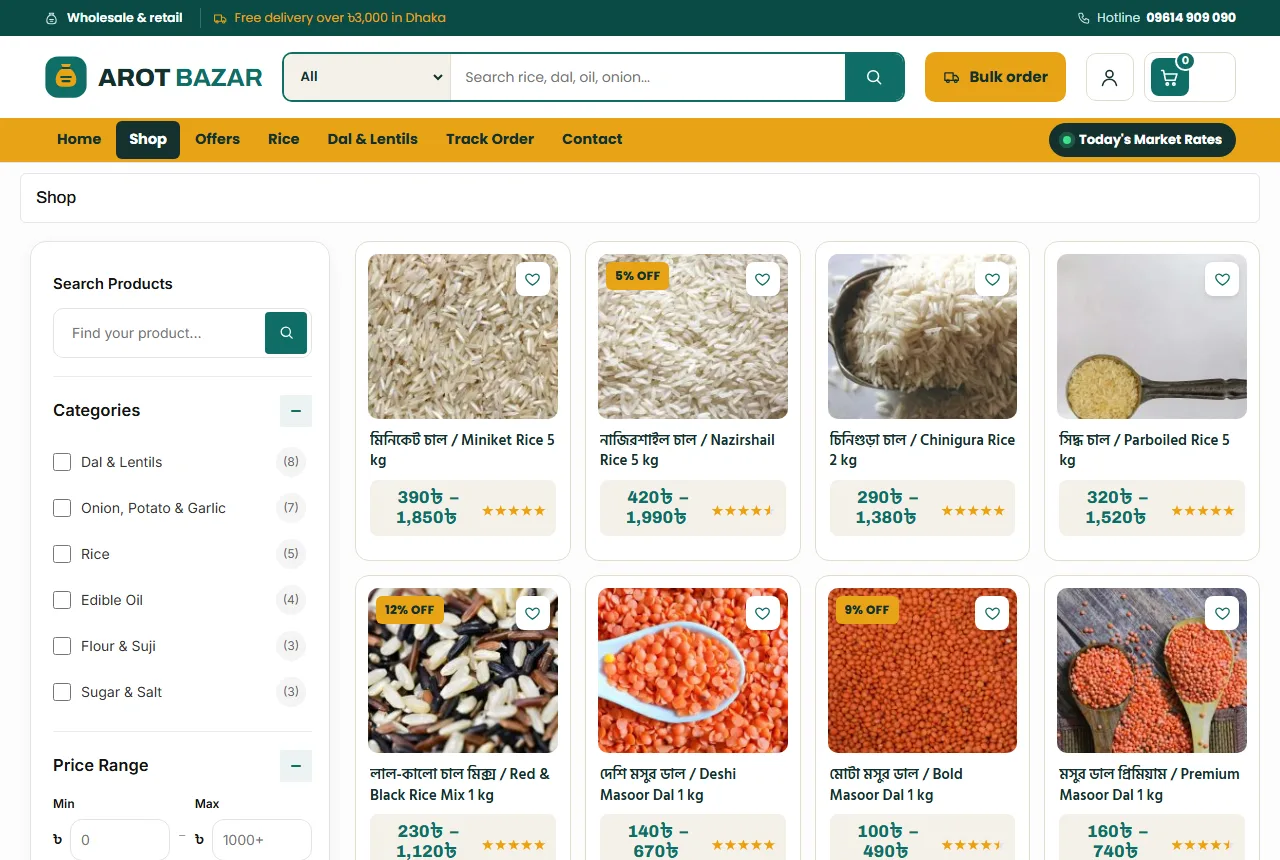
Search matters more than menus here. Shop owners type "miniket 50 kg" or "soybean 5 litre". Put the variety, the brand or mill and the weight in every product title, and show results as the buyer types.
Sack-shaped category cards or simple icons of a rice sack, a dal bowl and an oil bottle are understood at a glance, even by buyers who read little English. Add Bangla names beside English ones, such as "চাল / Rice".
A homepage order that works
Think of the homepage as the front of a godown: rates on the board, sacks in front, the price list on the wall. An order that suits most staples shops:
- Search hero with the rates board beside it.
- Category cards for rice, dal, oil and the rest.
- Monthly bazar packs: three ready packs with price and contents.
- This week's wholesale deals.
- Buy more, pay less: a simple tier table.
- Quick price lists for rice, dal and oil.
- Most ordered items.
- Trust strip: fair weight, cash on delivery, fast delivery, easy returns.
- Reviews, FAQ and bazar tips from your blog.
Each block should end with one clear button. "See all rice" beats "Explore more".
Monthly bazar packs
Many families buy the whole month at once: rice, dal, oil, atta, sugar, onion and potato. A ready pack saves them from adding ten items one by one. Offer three sizes:
- Bachelor Pack for one or two people.
- Family Pack for four or five people.
- Big Family Pack for six or more.
Each pack card needs who it is for, the full list with weights, the price and the saving compared with buying items one by one. An "Order this pack" button that opens a chat lets buyers swap one item, such as nazirshail instead of miniket. Packs are one of the strongest ideas in rice website design, because they raise the order value and bring the same family back every month.
Product pages for rice, dal and oil
A staples product page should answer five questions near the top: what variety, what weight, what price, is it in stock, and when will it come?
- A clear photo of the sack or bottle with the label readable.
- Pack options, such as 5 kg, 25 kg and 50 kg, each with its own price.
- An "In Stock" pill beside the price.
- A short line on the variety, mill and harvest, such as "new season miniket, Kushtia mill".
- Add to Cart and Buy Now buttons.
- Delivery time and a fair-weight promise.
Show the price per kilo next to the pack price. A buyer comparing a 25 kg sack with five 5 kg bags wants to see the saving at once.
Fair weight, in writing
Say how you weigh: "weighed in front of you on request" or "digital scale, ±50 g". Short-weight complaints are the fastest way to lose a monthly buyer.
Bulk pricing and wholesale accounts
Shops, restaurants and offices buy more and expect a better price. Show the rule openly in a simple tier table:
- 1 to 4 packs: shop price.
- 5 to 9 packs: 3% off and free delivery.
- 10 to 24 packs: 6% off.
- 25 packs or more: ask for a quote.
Next to it, invite businesses to open a wholesale account with weekly delivery and a named buyer. Good wholesale website design makes this invitation easy to find, with a WhatsApp button rather than a long form.
If you want the cart to apply tier prices by itself, add a bulk-pricing plugin. Until then, a clear table and a fast reply on WhatsApp work well for most shops.
Delivery for heavy orders
A 50 kg sack is heavy. Be clear about how and when it arrives:
- Areas you deliver to and the charge for each, such as ৳80 inside Dhaka and ৳120 outside.
- Whether the charge changes with weight.
- Whether the rider carries sacks upstairs.
- Delivery days for each area, and the last order time.
- A free-delivery amount for large orders.
Show the delivery charge in the cart, before the last step. A free-delivery bar that says "Add ৳800 more for free delivery" often turns a 10 kg order into a 25 kg one.
Pack oil bottles upright and separate from sacks, wrap glass in paper and seal dal bags twice. A torn bag of masoor in the van ruins three other orders.
Photos and labels
Staples look alike in photos: one white sack of rice is much like another. What buyers want to see is the label, the grain and the size. Shoot each sack with the label facing the camera, in daylight, on a plain background. Add a second photo of a handful of grains on a dark plate, so the buyer can see whether the rice is long, short, polished or parboiled.
For oil, show the bottle with the litre mark visible. For dal, show the dry lentils in a bowl. Keep every photo square and the same size. Clear, matching photos are a small part of rice website design that buyers notice when they compare two shops side by side.
Checkout and payment
Keep checkout short: name, mobile number, area, address and a note field for the floor or gate. Cash on delivery is still the main payment method for staples. Add bKash, Nagad and cards as you grow, and show their logos on product pages.
Business buyers often pay weekly or monthly. You can handle this by hand at first, with a note in the order. Later, a B2B plugin can add credit limits and invoices.
Accounts help a lot here. A buyer who signs in with a mobile number or email sees their past orders and can repeat last month's bazar in two minutes.
Rice website design for phones
Shop owners and families both order from phones, often on slow mobile data. Plan the phone view first:
- A menu button, the logo and the cart in the top bar.
- A large search box near the top.
- The rates board as a short, scrollable card.
- Product cards two per row with price per kilo.
- Pack buttons and Add to Cart big enough for a thumb.
- A bottom tab bar with Home, Shop, Cart and Account.
Test on a cheap Android phone. Compress photos and use a light theme without a page builder. A rice website design that loads slowly in a busy shop will not be used twice.
Trust pages
New buyers read your help pages before a big first order:
- About: where your godown is, and where your rice comes from.
- Delivery: areas, charges, days and heavy-item rules.
- Returns: what happens with wet, broken or short-weight items.
- FAQ: weights, packs, bulk prices and payment.
- Contact: phone, WhatsApp, address and hours.
Put your godown address and opening hours in the footer. A real address in a known market, such as Badamtoli or Moulvibazar, tells buyers there is a real business behind the site.
Seasons and price changes
Staples follow the calendar too. Ramadan raises demand for oil, sugar, chickpeas and dates. Eid-ul-Adha raises demand for onion, garlic and spices. The new rice harvest changes prices for weeks.
- Before Ramadan, add an iftar pack and move oil and sugar to the top.
- Before Eid-ul-Adha, push onion, garlic and cooking oil.
- At harvest time, write a short post about the new season's rice.
When prices rise, say so on the rates board. Buyers know when prices go up; hiding it only loses trust.
Common mistakes in rice website design
- No price per kilo, only pack prices.
- Old rates left on the homepage.
- Product titles without the variety or weight.
- Delivery charges for heavy items shown only at the end.
- No bulk prices or wholesale contact.
- Blurry photos where the label cannot be read.
Google's guide to helpful content is a useful reminder: write for the buyer, answer the questions they really ask, and keep information like prices up to date.
A launch checklist
- Every product has the variety, weight, price per kilo and stock.
- The rates board is filled in with today's prices.
- Three monthly packs are written with full contents.
- The tier table and wholesale contact are visible.
- Delivery zones and heavy-item rules are set.
- You placed three test orders from a phone, including one pack.
After launch
Track monthly reorders: how many families bought their bazar again within 35 days? That one number shows whether your rice website design works. Ask business buyers what they need each week and build packs for them.
Building a staples shop with Arot
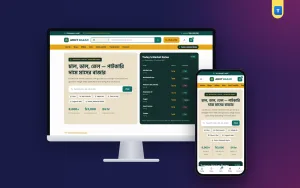
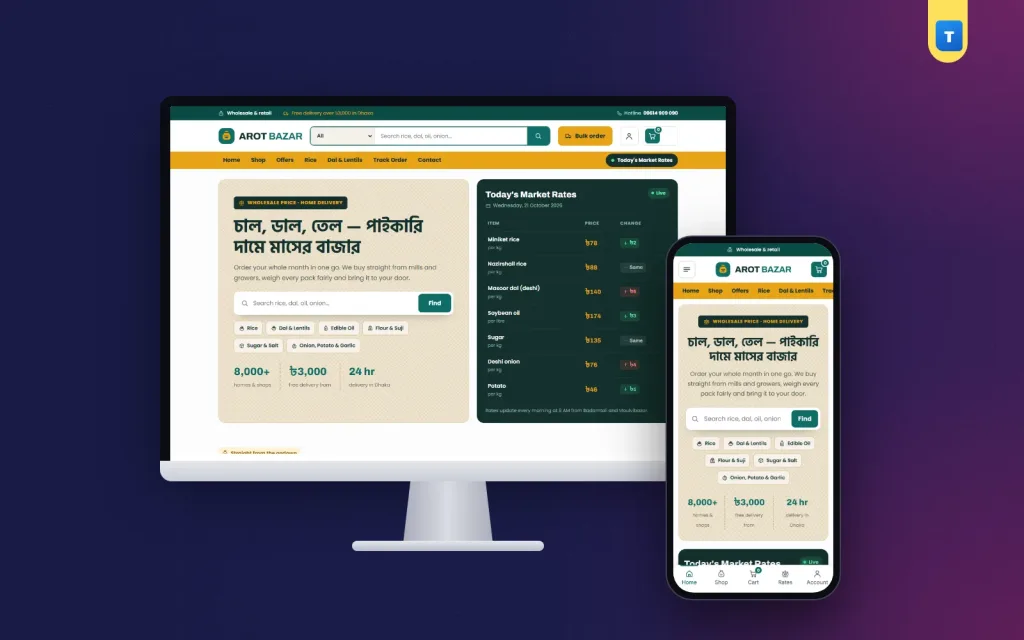
These ideas are easier when the theme already has them. The Arot wholesale WordPress theme for WooCommerce has a big search header with a bulk-order button, a hero with a market rates board, sack-shaped categories, three monthly bazar packs, wholesale deals, a buy-more-pay-less table, quick price lists for rice, dal and oil, a most ordered grid, a trust strip, reviews, FAQ and a blog block.
Every demo product has a Family Pack and a Bulk Pack. Delivery zones, cash on delivery, mobile or email sign-in, a wishlist and a phone tab bar are ready after the demo import. For shops that also sell to businesses, it covers the basics of wholesale website design from day one.
Frequently asked questions
What should rice website design show first?
Today's rates, the main categories and a search box. Bulk buyers want prices before anything else.
Should I show the price per kilo?
Yes. Show it beside every pack price, so buyers can compare sizes quickly.
How do I sell monthly bazar packs?
Offer three ready packs with full contents and prices, and let buyers swap items by chat.
Is rice website design different for wholesale buyers?
Yes. Add a tier table, a wholesale account invitation and weekly delivery options.
Can I start with cash on delivery only?
Yes. Add bKash, Nagad and cards later as orders grow.