The best sleepwear website design ideas start with comfort, because comfort is what you are really selling. Nobody buys pyjamas for the logo. People buy them because they sleep hot through a Dhaka summer, shiver on a January night, or want matching sets for the family on Eid morning.
This guide is for owners of pyjama, nightie, loungewear and kids' nightwear shops who want a proper online store. It covers the layout, colours, photos, fabric advice, matching sets, checkout and delivery, and a launch checklist. Use it as a plan, whether you build the site yourself or hire someone.
What buyers want from a sleepwear shop
Think about why a person visits your site. Usually it is one of these reasons:
- She needs something cool for summer nights.
- He wants warm flannel for winter.
- A couple wants a matching set.
- A family wants the same pattern for photos.
- A new mother needs soft, easy nightwear.
- Someone is buying a gift and wants it to arrive on time.
Notice that none of these is about a brand name. They are about feeling, fabric and occasion. Your website should speak to those needs in plain words, with the same warmth as a friendly shopkeeper.
Sleepwear website design ideas for the homepage
A sleepwear shop should look calm. The homepage is your first chance to show that. Keep it clean, soft and easy to scan.
- Header. Logo, search, cart and a short menu of five to seven items.
- Hero banner. One soft photo, one short line, one button. "Shop night sets" is enough.
- Shop by category. Pyjama sets, nighties, robes, loungewear, men, kids and baby.
- A helper block. A small tool or guide that helps people choose a fabric (more on this below).
- Matching sets. A clear place for couple, family and mom-and-me sets.
- New arrivals and best sellers.
- An offer block with a countdown if you run a sale.
- Trust strip. Soft fabric promise, exchange, delivery time and cash on delivery.
- Footer. Address, phone, social links and policies.
Fewer blocks make a calmer page. Choose the ones your customers use, and switch the rest off.
Choosing colours, shapes and mood
Your site should feel like bedtime. That does not mean it should be dull. Choose a calm look and apply it everywhere.
Colours
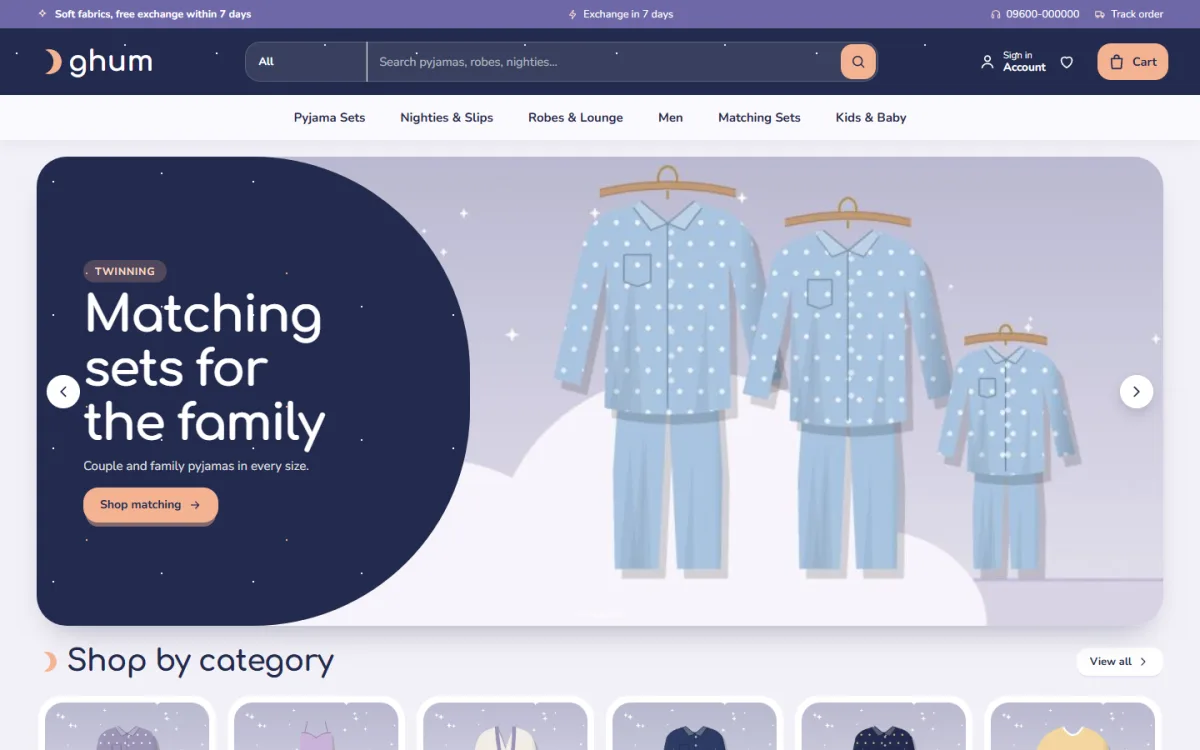
- Soft tones such as lavender, peach, cream and misty blue feel restful.
- A deep night blue for the header can look elegant, with light cards below.
- Use one accent colour for buttons and sale labels.
- Avoid pure black text on bright backgrounds. Dark grey is gentler on the eyes.
Shapes and fonts
- Rounded corners and soft shadows suit sleepwear better than sharp edges.
- Choose a friendly, rounded heading font and a plain body font.
- Keep body text at 16 pixels or more.
- Test any Bangla text on a real phone.
Many people shop for nightwear late in the evening, in bed, on a phone. A dark or low-glare option can make that more pleasant.
Help buyers pick the right fabric
Fabric decides whether pyjamas feel good or bad. Yet most sites show only a photo and a name. A short fabric guide gives you a clear edge.
- Cotton: breathable and easy to wash. Good for most nights.
- Bamboo: soft and cool. Good for people who sleep hot.
- Satin: smooth and light. Good for a dressy look, though it can feel warm.
- Flannel: thick and warm. Good for winter.
Go one step further and ask two questions: how warm is the bedroom, and does the person sleep hot or cold? A simple tool can take those two answers and suggest one fabric, then show the pieces you sell in it. It works like advice from a good shopkeeper across the counter.
If you cannot build a tool, add a short "How to choose" box at the top of each category page.
Matching sets for couples and families
Matching sets are a strong gift and festival product, but they are awkward to sell online. The usual problem is ordering four pyjama sets one by one and mixing up whose size is whose.
Make it simple:
- Give each set type its own tab or page: couple, family of three, family of four, mom and me.
- List the pieces in the set.
- Add a size picker for every person.
- Update the set total as sizes change.
- Offer one button to add the whole set to the cart.
Ask for a name for each size if you can. It cuts mistakes when the parcel is packed. Matching sets also work well for Eid, weddings and baby gifts, so give them a place on the homepage near the festival season.
Sleepwear website design ideas for photos
These sleepwear website design ideas are simple, and they work with a phone camera. Good photos in soft light do more than any design trick.
- Use natural light and a plain, light background.
- Show the front, back, a close-up of the fabric and the item worn.
- Photograph in a calm, bedroom-like setting for lifestyle shots.
- Show matching sets together, with every person in the picture.
- Include a model of the size you describe, and state her height.
- Keep colours true. Soft pastels often shift on a screen, so check them on a phone.
- Resize and compress all images to keep the pages light.
For kids and baby wear, show the label or fabric tag. Parents look for soft, safe cotton and want proof.
Product pages that answer questions
Every unanswered question is a lost order. Your product page should include:
- Price and any sale price.
- Fabric and feel, in one or two lines.
- A size chart in centimetres or inches.
- A fit note: loose, regular or slim.
- Care instructions.
- Expected delivery date, which matters for gifts.
- Exchange rule in one or two lines.
- Reviews from real buyers.
A fit meter is a nice touch. It shows at a glance whether a set runs small, true to size or large.
Sleepwear website design ideas for mobile
Sleepwear is often bought in bed, on a phone, on a mobile connection. Your site must load fast and feel light.
- Use large buttons and a sticky add-to-cart bar.
- Keep the menu short and the search box visible.
- Load images as the visitor scrolls.
- Keep animation gentle, or let users switch it off.
- Limit pop-ups to one.
- Choose a one-page checkout.
Test on an older phone. If the product page opens in about three seconds, you are in a good place.
Payment, checkout and delivery
Customers in Bangladesh expect choices at checkout. Offer several ways to pay and keep the form short.
- Cash on delivery for new customers.
- bKash and Nagad for quick payment.
- Card payment through a gateway such as SSLCommerz.
- One-page checkout with name, phone, address, area and payment method.
- Delivery charge shown before the final step.
- Courier tools such as Steadfast and Pathao, with order tracking.
For gifts, add a note field and a clear delivery date. A gift that arrives late is a lost customer.
Festival and seasonal planning
Sleepwear sells in waves. Plan your shop around them.
- Summer: cotton and bamboo sets, light nighties.
- Winter: flannel, thicker sets, robes.
- Eid and weddings: matching sets, gift packs.
- Newborn season: baby sets and mom-and-me sets.
- Sale seasons: a night sale with a countdown and stock bars.
Change your homepage banner at the start of each season. It tells returning visitors that your shop is alive.
A ready-made option for sleepwear shops
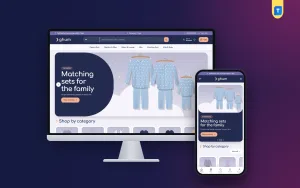
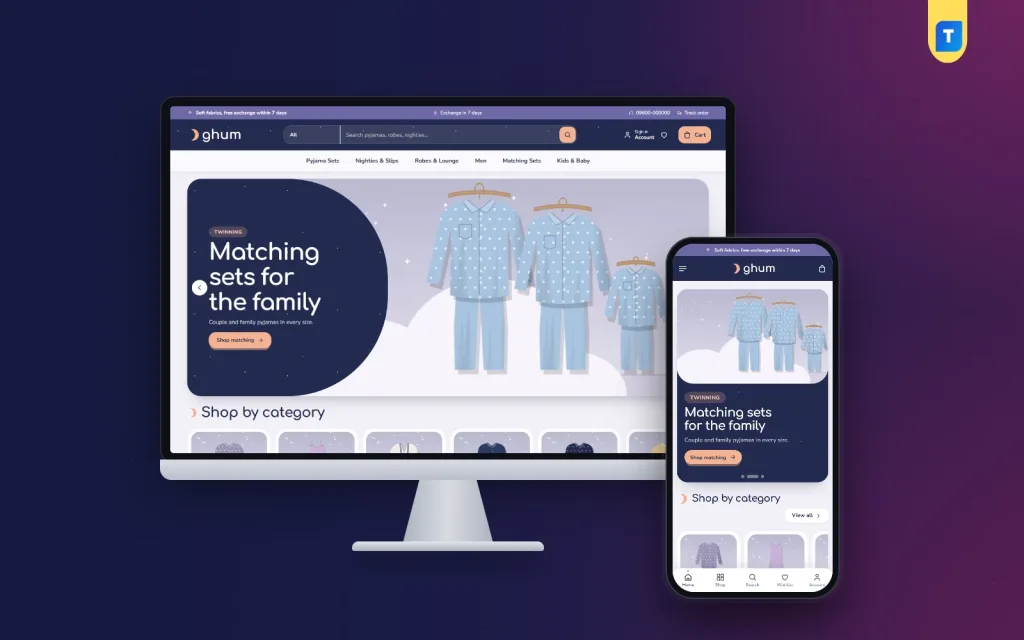
You can build all of this yourself, or begin with a theme made for the job. Ghum is a WordPress theme for pyjama, nightie and loungewear shops. It has a midnight header full of stars, lavender and peach tones, pillow-soft cards and rounded headings.
From the product page, here is what it includes:
- A Sleep match block that uses room temperature and sleeper type to suggest bamboo, cotton, satin or flannel.
- A Matching sets block for couples, families of three and four, and mom and me, with a size picker for every person and one button for the set.
- A fit meter and expected delivery date on product pages.
- 24 homepage blocks that you can switch on or off and drag into order.
- A night sale block with a countdown and stock bars.
- A login pop-up and a reviews fold on product pages.
- A one-click demo with 25 products from two lines.
- bKash, Nagad, SSLCommerz and cash on delivery, plus Steadfast and Pathao courier tools.
The store system is part of the package, so you do not need a separate shop plugin. If you want to see these ideas in a working shop, open the Ghum sleepwear theme page and try the live demo.
How to compare themes before you buy
Whichever sleepwear website design template you consider, test it with a short list of questions. Do not decide from one screenshot.
- Does the demo open fast on your phone?
- How many taps does it take to go from a product to the end of checkout?
- Can you turn homepage blocks off, or are you stuck with them?
- Does the product page show fabric, size, fit and delivery date?
- Does the package include the store system, or do you need paid add-ons?
- Can you change colours, and can you switch off Google Fonts for speed?
- Where do you ask for help if you get stuck?
Thirty minutes with a demo tells you more than any list of features. A sleepwear website design template that passes all seven checks is worth a closer look.
Writing the words on your site
Words matter in a sleepwear shop, because buyers cannot feel the fabric. Write like a helpful person, not like an advert.
- Name products clearly: type, fabric and colour, for example "Bamboo Pyjama Set, Lavender".
- Start each description with who the set is for and when to wear it.
- Say how the fabric feels: soft, cool, warm or smooth.
- List what is in the set: top, bottom, robe or shorts.
- Give the care advice in one line.
- Write your own text. Copying from a supplier hurts your search results.
Every sleepwear website template you try will have empty text boxes. Fill them with real details, because the design cannot do that part for you.
Mistakes to avoid
- Harsh colours and sharp shapes that feel wrong for a bedtime product.
- No fabric information. Buyers will ask in chat, or leave.
- Unclear sizes for sets. Mixed-up sizes cause returns.
- Dark or yellow photos.
- Hidden delivery charges.
- Heavy pages that load slowly on mobile.
- Fake reviews. Customers can often tell, and it hurts trust.
- Using other shops' photos.
Moving from a Facebook page to your own site
Many sleepwear sellers in Bangladesh begin on Facebook. You do not need to leave it. Let the website hold your full catalogue, and let Facebook bring people to it.
- Link every Facebook post to its product page.
- Add your website address to the page bio and the Messenger auto-reply.
- Move your twenty best sellers first.
- Offer a small first-order code to bring regular buyers across.
- Put common answers on the site, so you type them less in chat.
A ready sleepwear website design template makes this move easier, because the demo content shows you where each photo and line of text belongs.
Launch checklist
Go through this list on a phone and on a computer.
- Every product has fabric, size, fit and care details.
- Each product has at least four photos.
- Matching set pages let you pick a size for each person.
- Cash on delivery, bKash and Nagad all work in a test order.
- The courier is connected and a test parcel can be booked.
- Delivery charges and times are published.
- Exchange policy is written in plain language.
- Contact page, address and phone number are correct.
- HTTPS is on and pages open fast on mobile.
- Backups are scheduled.
Place two or three real test orders, including one matching set.
After launch
Look at your numbers every week for the first month. Which products get views but no orders? Where do people leave the checkout? Small changes often help more than a full redesign.
Keep a note of customer questions. If three people ask the same thing, put the answer on the page. The most useful sleepwear website design ideas come from your own buyers, so ask your first ten customers what nearly stopped them from ordering.
If you want to read more on the technical side, the official WordPress documentation is a good, reliable reference.
Frequently asked questions
What are the best sleepwear website design ideas for a new shop?
Use soft colours, clear photos, a short menu and a fabric guide. Add a size chart, a delivery date and a one-page checkout with cash on delivery and bKash. Keep the pages light so they open fast on a phone.
How do I sell matching family sets online?
Create a page or tab for each set type, add a size picker for every person and show a set total. One button should add the whole set to the cart.
Which sleepwear website design ideas work best on mobile?
Large buttons, a sticky add-to-cart bar, small images, gentle animation and a one-page checkout work best. Test on a low-cost phone.
Do I need WooCommerce to sell sleepwear on WordPress?
No. Some themes include their own store system, so cart, checkout, payments and courier tools are ready. Check the package before you buy.
How many products should I list at launch?
Start with 20 to 30 well-photographed pieces. A small, tidy range looks better than a large one with weak photos.
Can I show a seasonal sale with a countdown?
Yes. Many store themes have an offer block with a countdown and stock bars. Turn it off when the sale ends.