Streetwear website design breaks many of the usual e-commerce rules. A streetwear brand does not sell by being the cheapest or having the biggest catalogue. It sells through culture, timing and scarcity. This guide explains how to design a streetwear site that builds hype before a drop, sells out on release day and keeps fans coming back for the next one.
We have built online shops for hoodie labels, T-shirt brands and drop-based streetwear crews. The ones that sell out share a handful of design habits, and almost none of them involve flashy effects.
Why streetwear website design is different
A normal fashion shop wants visitors to browse a large range at any time. A streetwear brand wants fans to come back at a specific moment, buy fast and talk about it. That changes everything about the layout.
Good streetwear website design is built around events: the next drop, the current drop and the archive of past drops. The homepage should always answer three questions: what is coming, what is available now, and what is almost gone.
Lead with the drop
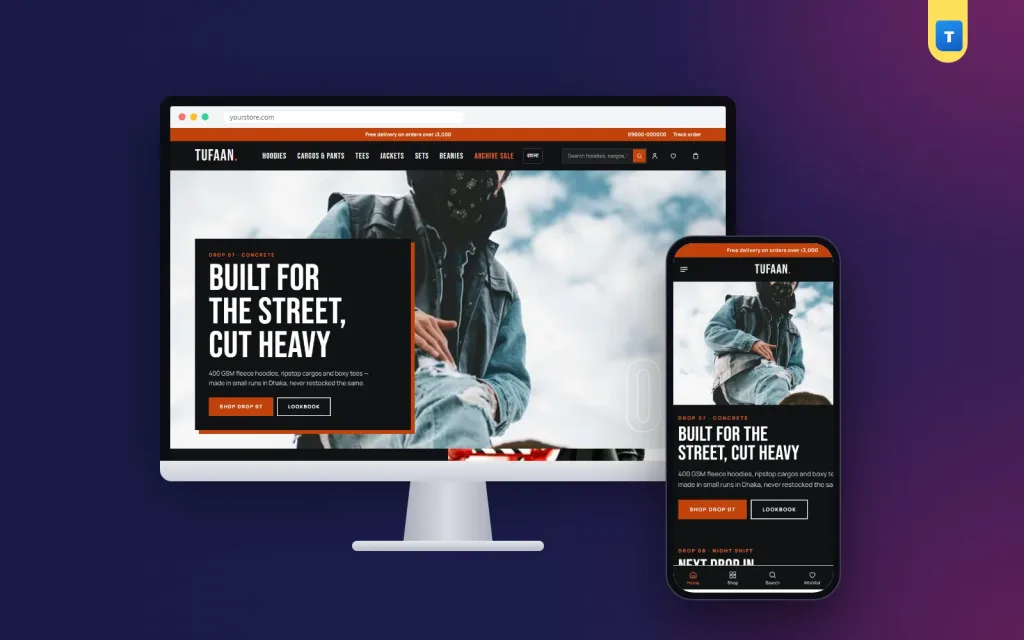
The first screen should feel like a poster. Use a full-width photo of the new collection, a bold drop number such as "Drop 07" and one button. Condensed capital fonts, high contrast and plenty of empty space give the poster feel that streetwear fans recognise.
Keep text to a minimum. Fans do not need a paragraph about your values on the first screen; they need to see the pieces and know how to buy them.
Build hype with a countdown
Before a release, a countdown to the drop date is your most powerful tool. Place it high on the homepage with the date, the time and a short teaser. Fans check back, share screenshots and plan to be online at the exact minute.
Pair the countdown with a sign-up or SMS list, so fans get a message when the drop goes live. A clothing brand website design that gathers phone numbers before each release turns one-time visitors into a community.
Colours and fonts in streetwear website design
Streetwear looks best with a tight palette: concrete grey with one signal colour, black with acid green, or night blue with cobalt. Use the accent colour only for buttons, drop numbers and stock bars, so they jump out. Pick one condensed display font for headings and one simple sans-serif for everything else. In streetwear website design, a bold but limited style feels more confident than a busy one.
Show scarcity honestly
Limited stock is part of streetwear, but fake scarcity destroys trust. Show real numbers: "Only 4 left" with a small bar under the product name. When stock is honest, fans believe it and act on it. When it is fake, they notice and leave.
Mark sold-out pieces clearly, and offer a back-in-stock alert if you plan to restock. Many fans will wait for a restock rather than buy a different piece.
Lookbooks that sell
Streetwear is sold as a look, not as single items. A lookbook photo with numbered hotspots, where fans tap a hoodie or cargo in the picture and go straight to that product, combines storytelling with shopping. It is one of the most effective ideas in streetwear website design.
Shoot lookbooks in real places: streets, rooftops, skate parks, college campuses. Real locations make the clothes feel like part of a lifestyle, which is what fans are buying. Shoot a few short videos at the same time; they work well on social media and as product page clips.
Explain the fit
Streetwear fits are different: oversized hoodies, boxy tees, wide cargos. Buyers who are used to regular fits often order the wrong size. A simple fit check block that compares oversized and regular cuts side by side, with photos on real people, saves many exchanges.
On each product page, state the fit clearly and give the model's height and size. Add the fabric weight, such as 240 GSM or 400 GSM, because streetwear fans care about heavy, quality fabric.
Clothing brand website design: tell your story
Fans buy into the people behind the brand. Clothing brand website design should include a section about the crew: who you are, where you come from and why you started. Photos of the team, the studio or the print shop work better than polished stock images.
A short "how we cut" or "how it is made" section explains your process and justifies your prices. Fans who understand the work behind a hoodie are happy to pay for it.
Plan a drop calendar
Successful brands release on a rhythm, such as one drop a month or one per season. Put the calendar into your streetwear website design: a countdown for the next drop, a teaser photo a week before, and an archive sale a few weeks after. Fans learn the rhythm and come back on their own, which lowers what you need to spend on ads.
Prepare each drop in advance: photos, product pages, sizes and stock. Upload the pieces as hidden products and switch them on at release time, so nothing goes live too early.
The archive: a second life for past drops
Past drops do not have to disappear. An archive section, with its own sale page, gives older pieces a second life at a lower price. It also shows new visitors the history of your brand, which builds credibility.
Keep the archive visually separate from the current drop, so fans do not confuse old and new pieces. A different background colour for the archive section is usually enough.
Product pages for fast decisions
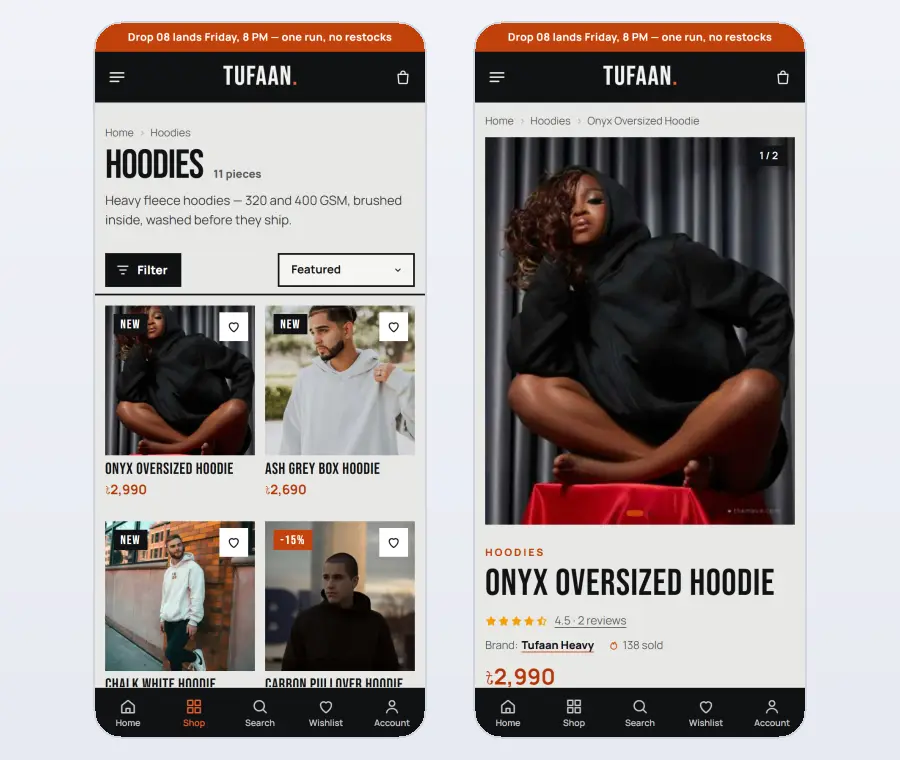
On release day, fans decide in seconds. The product page should show large photos, the price, the sizes in stock, the fit and one clear add-to-cart button, all visible without scrolling on a phone. Put details such as fabric, care and shipping below.
Keep sign-in optional or quick. A popup login with a phone code is ideal, because typing passwords on a phone during a drop loses sales.
Checkout for drop day
A one-page checkout with name, phone, address and district is enough. Show the delivery charge straight away and offer bKash, Nagad and cash on delivery. During hyped drops, fake cash-on-delivery orders can lock up your stock; a small advance payment by bKash or Nagad solves this without scaring real fans.
After the order, send an SMS confirmation and let fans follow their parcel. Excited buyers check their order status many times, and a Track Order page saves you dozens of messages.
Speed is part of the hype
Nothing kills a drop faster than a slow site. When hundreds of fans arrive at once on their phones, every heavy script and oversized photo slows everyone down. Avoid page builders and heavy animation libraries, compress photos and load lower images only when they come into view.
Test your site on a mid-range phone with mobile data before every drop, not just on office Wi-Fi.
Mobile-first streetwear website design
Almost all streetwear traffic comes from Instagram, TikTok and Facebook, which means phones. Design every page for a thumb: a compact header with menu, logo and cart, large product photos, a readable countdown and stock bars, and a checkout that fits on one screen.
Make sharing easy too. Fans love to share a new piece with friends, so clean product URLs and good sharing previews help your drop spread.
Content between drops
Between releases, give fans a reason to visit. A journal with behind-the-scenes posts, design sketches, studio photos and stories from the crew keeps interest alive. Each post can end with a link to current pieces or a teaser for the next drop.
Helpful articles also bring visitors from Google, such as "how to style oversized hoodies" or "what GSM means for T-shirts". That is a part of streetwear website design that many brands forget.
Bundles and sets
Hoodie-and-cargo sets, tee packs and matching beanies raise the value of each order. Show sets as complete looks with one price, and offer a small saving for buying the full set. Good streetwear website design presents bundles as outfits, not as discounts, so they feel desirable rather than cheap.
Social proof from real fans
Repost photos from fans wearing your pieces, with their permission, and show reviews that talk about fabric weight and fit. A grid of real customer photos tells new visitors that people like them wear your brand. Ask for a review after every delivery and reward the best photos with a discount on the next drop.
Working with creators
Streetwear grows through people, not ads alone. An affiliate or referral program lets creators, musicians and campus ambassadors share their own link and earn a commission on sales. It turns your biggest fans into your sales team. Make the program easy to join and show creators their results.
After the drop: keep fans close
The work does not end when a drop sells out. Send a thank-you SMS with the tracking link, ask for a review after delivery and post a "sold out" message with a teaser for what comes next. Fans who missed the drop should be able to join an alert list for restocks or the next release.
Look at the numbers after every release: how fast each size sold, which colourways stayed and where the visitors came from. Use what you learn to plan quantities and sizes for the next drop. Over a few releases, these small lessons make every launch smoother and more profitable.
Clothing brand website design for wholesale and pop-ups
As a brand grows, other shops may want to stock your pieces, and you may run pop-up stores at events. Clothing brand website design can support both: a wholesale price list for approved resellers and a page that lists your pop-up dates and locations. Both bring new fans to your online shop.
Common streetwear website design mistakes
A homepage that looks like every other fashion shop. No countdown before drops. Fake "only 2 left" messages. No explanation of oversized fits. A slow site on release day. A long checkout with many fields. No archive for past pieces. Each of these costs sales and, worse, costs fan trust.
Build it with a ready theme
You can design all of this yourself, or start with a theme made for it. Our clothing brand WordPress theme, Tufaan, was built for drop-based streetwear.
It includes a full-width hero with a drop box and outlined drop number, a "Next drop" countdown, "Shop the rack", a lookbook with numbered shop spots, an oversized-versus-regular fit check, "Only N left" stock bars on every card, "Most worn" tabs, an archive section with its own sale page, "The crew", "How we cut" and a journal.
The included shop plugin handles sizes and stock per colourway, bKash, Nagad and cash on delivery with an optional advance, district delivery charges, Steadfast and Pathao courier, SMS updates, fake order protection, back-in-stock alerts and an affiliate program for creators. A one-click demo shows a finished brand site that you then make your own.
Checklist before your next drop
On a phone, check: is the drop date and countdown visible, are stock levels honest, is the fit explained, does the lookbook link to products, does the checkout fit on one screen and does the site load quickly on mobile data? If all six are yes, your streetwear website design is ready for release day.
Want to see these ideas on a working website? Open the Tufaan live demo and browse it on your phone and your computer.
Frequently asked questions
What makes good streetwear website design?
A poster-like hero, a countdown to the next drop, honest stock levels, clear fit information, lookbooks that link to products and a fast one-page checkout.
Should a streetwear site show how many pieces are left?
Yes, if the numbers are real. Honest scarcity builds trust and helps fans decide quickly.
Which fonts suit streetwear website design?
Condensed capital fonts such as Bebas Neue for headings, with a clean sans-serif for body text.
How do I stop fake orders on drop day?
Ask for a small advance by bKash or Nagad on cash-on-delivery orders and use phone verification.