What is a digital marketplace? It is a website where buyers find and pay for products that are delivered online, such as fonts, templates, photos, music, ebooks, software or courses, often from many different creators in one place. The site handles listing, payment and delivery, so a buyer can discover a design, pay and download it in a few minutes.
This guide explains how digital marketplaces work, the main types, how digital downloads actually reach the buyer, the pros and cons for creators, and how to start a curated creative shop of your own in Bangladesh.
What is a digital marketplace, exactly?
A marketplace brings buyers and sellers together. In a digital marketplace, the things sold are files, codes or access rather than physical items. The platform usually does four jobs:
- Listing: each product gets a page with previews, a description, file details and a price.
- Discovery: search, categories, creator pages, trending lists and recommendations.
- Payment: the buyer pays the platform by card, wallet or bank.
- Delivery: the platform releases the file, key or access as soon as payment is confirmed.
On an open marketplace, the platform also pays the creators, usually keeping a commission on each sale. On a curated shop, one business lists the work, sells it and pays creators under its own agreements.
Who uses digital marketplaces
Buyers include designers looking for fonts and mockups, small businesses needing social media templates, students buying ebooks and courses, photographers buying presets and developers buying plugins. Sellers range from single illustrators to studios with a team. If you are asking what is a digital marketplace good for, the short answer is saving time: buyers pay for work that would take them hours or days to make themselves.
Digital marketplace versus online shop
Every online shop sells products, but a marketplace is built around many creators and discovery. When people ask what is a digital marketplace compared with a normal shop, the simple answer is variety: buyers come because they can browse the work of many makers in one place, compare styles and find something they did not know they wanted.
Types of digital marketplaces
Open multi-seller marketplaces
Anyone can sign up, upload products and sell. The platform reviews items, handles payments and pays out to sellers after taking a commission. These sites have huge catalogues but strong competition, and creators follow the platform's rules and prices.
Curated creative shops
One business chooses the creators and products, lists them under each creator's name and sells under its own brand. Quality is more consistent, the shop sets its own prices and licences, and creators are paid by agreement. This model suits studios, type foundries and small teams.
Subscription libraries
Some marketplaces sell a monthly or yearly plan that lets members download from the whole library. It gives steady income but needs a large catalogue and careful licence rules, so most new shops start with single sales and add subscriptions later.
App and software stores
Stores for apps, plugins, themes and game keys, where products often come with licence keys and updates.
Course and learning platforms
Sites where teachers sell video courses, lessons and certificates, delivered as access rather than as a single file.
Stock media libraries
Collections of photos, videos, music and sound effects, sold one by one or by subscription.
These suit photographers, videographers and musicians with large back catalogues.
Knowing what is a digital marketplace of each type helps you choose where to sell and what kind of shop to build.
How do digital downloads work?
Buyers often wonder how do digital downloads work after they pay. Behind the "Download" button, a good shop follows a careful process:
- The file is stored privately on the server, not in a public folder anyone can open.
- Payment is confirmed, either by the payment gateway instantly or by the shop after checking a manual transfer.
- A personal link is created for that buyer and that order.
- The link has limits: it works only when the buyer is signed in, for a set number of downloads and for a set period.
- The buyer downloads from their account page, and can come back later within the limits.
This is why buyers can lose access if they share their link with others, and why a well-built shop can update a file and let every buyer download the latest version. The same process explains why most shops do not offer refunds after a file has been downloaded: the product cannot be "returned".
File formats and sizes
Good shops say exactly what is inside the download: file types (OTF and TTF for fonts, PSD, Illustrator or Figma files for templates, XMP or DNG for presets, PDF for ebooks), the software version needed and the file size. Large packs are usually zipped. Buyers on mobile data appreciate knowing the size before they start a 150 MB download.
Licence keys
Some digital products, like software and plugins, also need a key to activate. The shop keeps a stock of keys, gives one to each buyer per unit sold, and stores them securely.
Keys add a second layer of protection on top of the private link.
Licences: what buyers actually buy
With creative products, the buyer is usually buying a licence to use the file, not the file's ownership. Clear licences protect both sides.
- Personal licence: use in personal, non-commercial projects.
- Commercial licence: use in client work, products for sale or business marketing.
- Extended licence: use in items for resale, large print runs or apps, if the creator allows it.
Show the licence options as clear choices on the product page, each with its own price, and write a short note on what is allowed. "Can I use this font in a client's logo?" is the most common question in creative shops, and the licence should answer it before it is asked.
Updates and versions
Fonts gain new weights, templates get fixes and courses get new lessons. A good digital marketplace replaces the file and lets every past buyer download the newest version from their account, and tells them by e-mail when something important changes. Free updates are one of the strongest reasons buyers return to the same shop.
Copyright and originality
Only sell work that you created or have written permission to sell. A good digital marketplace checks new items for copied fonts, stolen photos and traced artwork, because one copyright complaint can damage trust in the whole shop.
Previews that sell
Buyers cannot open the file before paying, so previews do the selling. Show the template in use, the font in real words (including Bangla if it supports it), before-and-after photos for presets and a sample chapter for ebooks. Add a watermark to large previews so they cannot be used for free.
Pros and cons for creators
Selling on a big open marketplace
- Pros: built-in traffic, trusted checkout, no website to run.
- Cons: commissions, strict rules, price pressure, little control over your brand and customer list.
Selling through your own or a curated shop
- Pros: you set prices and licences, keep the customer list, build your own brand, and pay no platform commission on each sale.
- Cons: you need to bring your own visitors through social media, search and email.
Many creators use both: a big platform for discovery and their own shop for loyal buyers, bundles and launches. In Bangladesh, an own shop has one more advantage: local payment methods such as bKash, Nagad and Rocket, which many international platforms do not support.
What is a digital marketplace opportunity in Bangladesh?
Creative work from Bangladesh, such as Bangla fonts, nakshi-inspired patterns, festival social media templates, wedding invitations, photo presets and Bangla ebooks, has a real market at home and abroad. A curated shop is often the easiest way to start.
Steps to launch a curated creative shop
- Choose a focus: fonts and lettering, social media templates, presets, courses or printables.
- Sign creators with a simple written agreement on licences, prices and their share.
- Prepare products: clear previews, file formats, software versions and a licence note.
- Set licences as Personal and Commercial options with their own prices.
- Connect payments: a gateway such as SSLCommerz for instant delivery, plus bKash, Nagad and Rocket.
- Test delivery with a real order for each payment method.
- Launch with a deal of the week and a free sample pack for newsletter sign-ups.
Pricing creative products
Look at what similar items sell for, then price by the time you save the buyer. A social media template pack that saves a small business a week of design work can carry a fair price; a single icon cannot. Offer a lower Personal price and a higher Commercial price, and use bundles to raise the average order.
Avoid racing to the bottom; buyers of creative goods value quality and clear licences more than the cheapest option.
Paying creators
Keep a simple monthly report of sales per creator and pay their share by bank or mobile wallet. Being transparent and on time is how a curated digital marketplace attracts the best creators.
Quality control
Check every new item before it goes live: open the files, test them in the software listed, check the licence and look for copied elements. A curated digital marketplace earns its reputation by what it refuses as much as by what it sells. Keep a short quality checklist and share it with creators so they know what to send.
Bringing in buyers
- Freebies that show quality and grow your email list.
- Tutorials on your blog showing how to use the templates and presets.
- Affiliates: designers and teachers who earn a share of the sales they bring.
- Bundles such as "Eid social media pack" or "wedding invitation set".
- Weekly deals with a countdown.
Google's guide to helpful, people-first content is a good standard for tutorials and product pages: show real results and answer real questions.
Choosing the software for a creative shop
Once you understand what is a digital marketplace and how it delivers, the software list becomes clear. You need creator names on every product with a filter, licence options as variants, private file storage with personal links, download limits and expiry, instant release on online payment, release on approval for manual payment, a Downloads page in the buyer's account, bundles and deals, and a phone-friendly design.
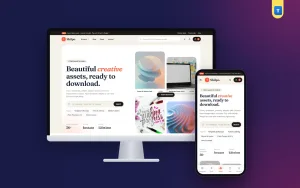
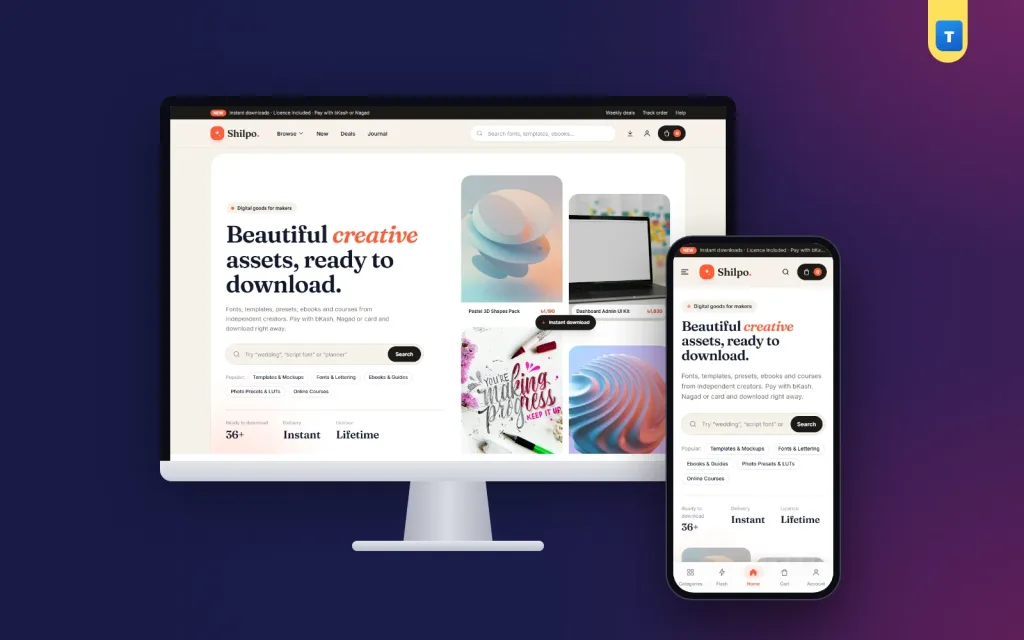
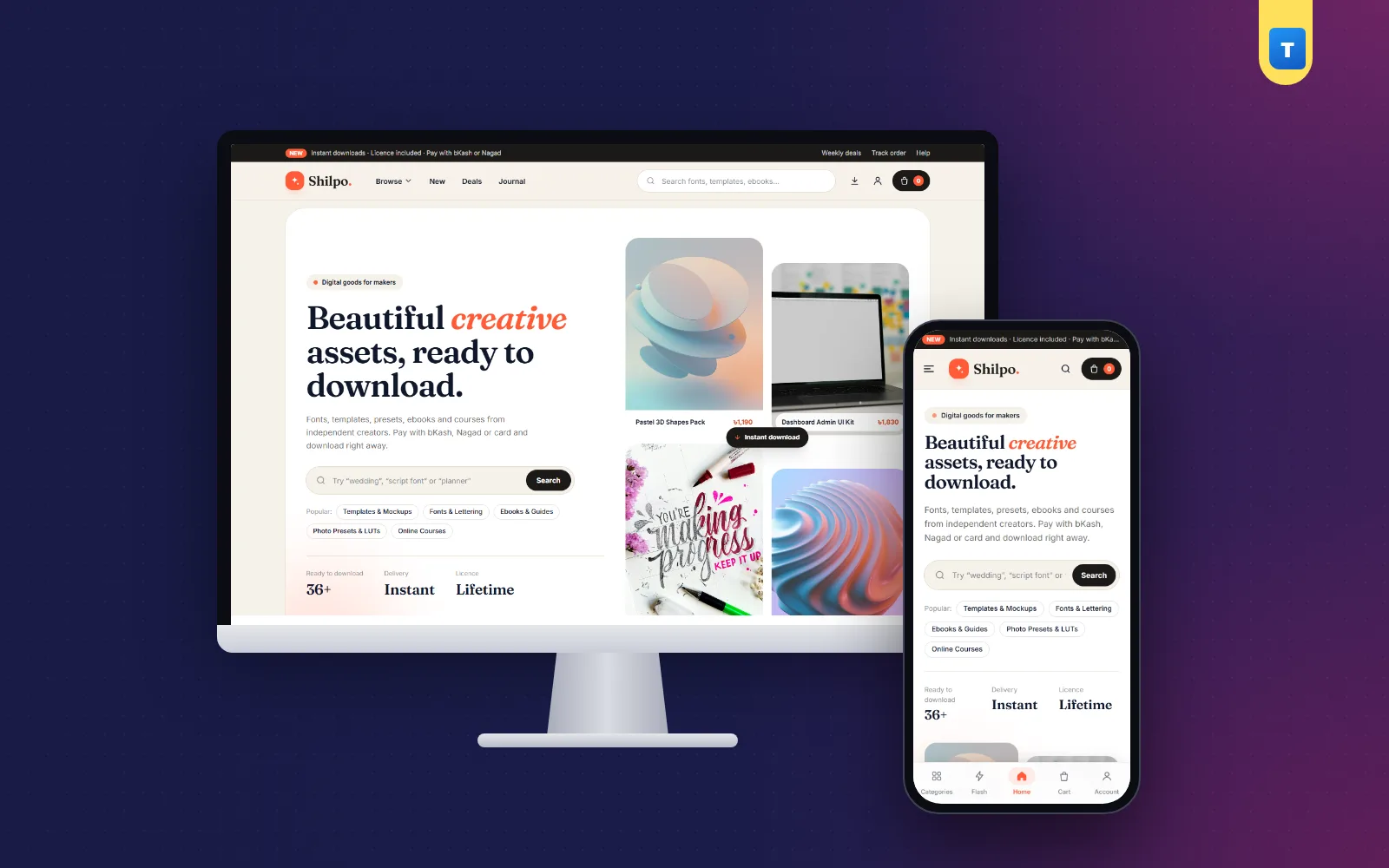
Shilpo, our Laravel digital product selling website script, is built for exactly this kind of curated creative shop: creators shown on every card with a filter, Personal and Commercial licences, private downloads with limits and expiry, instant release through SSLCommerz, bKash and Nagad, and a warm editorial design. You can browse the live Shilpo demo to see how buying and downloading a template works.
Measuring success
Watch sales per creator, refunds, support questions per product and the share of buyers who come back. For anyone still asking whether a marketplace is worth running, these numbers give the honest answer after the first three months.
A short checklist
- A clear focus and a first set of creators.
- Written agreements and licence notes.
- Clean previews and file details for every product.
- Private downloads with limits, tested for each payment method.
- A refund policy for faulty files.
- A newsletter freebie and three tutorials ready for launch.
Frequently asked questions
What is a digital marketplace in simple words?
A website where buyers browse and pay for files, codes or access from one or many creators, and receive them online right after payment.
How do digital downloads work after I pay?
The shop confirms your payment, creates a personal link for your order and shows it in your account, usually with a download limit and an expiry date.
Is a curated shop a digital marketplace?
Yes, in a broad sense. It sells many creators' work in one place, but one business lists the products and handles sales.
What is a digital marketplace good for selling in Bangladesh?
Bangla fonts, social media templates, presets, wedding and festival designs, ebooks, printables and courses.
Can buyers get a refund on downloads?
Usually only if the file is faulty or not as described, because a downloaded file cannot be returned.