What is shipment tracking, and why does every courier now offer it? In short, shipment tracking is the record of where a parcel is and what has happened to it, from the moment it is booked until it is delivered, shared with the sender and the receiver.
This guide explains how tracking works step by step, what each status means, how numbers and barcodes are used, how cash on delivery fits in and what a courier company needs to offer good tracking in Bangladesh.
It is for online shop owners who send parcels every day, for buyers who want to understand their tracking page and for people starting or running a courier business.
What is shipment tracking, in simple words
Every parcel gets a unique tracking number when it is booked. Each time something happens to the parcel, such as pickup, arrival at a hub or handover to a rider, a staff member or driver records an event against that number: the status, the place, the time and sometimes a note or photo. The list of these events is the tracking history.
The sender and receiver type the tracking number on the courier's website and see the history, usually with a simple progress bar on top. That is the whole idea. The rest is about how reliably and quickly the events are recorded.
An everyday example
Imagine Karim orders a phone case from a Facebook shop in Dhaka. The shop books the parcel with a courier and sends Karim an SMS with the tracking number.
Over two days he sees: booked, picked up, at the Chattogram hub, out for delivery with the rider's phone number, and delivered. If someone asks Karim what is shipment tracking, that SMS and that page are the answer: five lines that saved him five phone calls.
Why it matters
Without tracking, every question becomes a phone call: has it been picked up, where is it now, when will it arrive? With tracking, most of those calls disappear. Buyers feel safer ordering online, shops spend less time answering messages and couriers can see where their own work is stuck.
The journey of a parcel, status by status
The exact names differ between couriers, but most use a path like this one.
- Pending: the booking has been made but not yet confirmed.
- Booked or confirmed: the courier has accepted the parcel and planned a pickup.
- Picked up: a rider or driver has collected it from the sender.
- In transit: it is moving between cities or hubs.
- At hub: it has reached a sorting centre and waits for the next leg.
- In customs: for international parcels, it is being cleared.
- Out for delivery: a rider has it and is on the way to the receiver.
- Delivered: the receiver has it, ideally with their name or a photo as proof.
Some parcels take another path: on hold when an address is wrong or the receiver cannot be reached, returned when the receiver refuses it, or cancelled before pickup. Good tracking shows these honestly too.
The progress bar
Customers rarely read every event. A four-step bar, such as Dispatched, In Transit, Out for Delivery and Delivered, gives the answer at a glance, with the detailed history below for anyone who wants it.
What is shipment tracking for a courier company?
For the courier, tracking is not only a service to customers; it is how the company sees its own work.
Tracking numbers and labels
Each parcel carries a printed label, often 100 by 150 mm, with the tracking number as a barcode, the sender, the receiver and the route. Scanning or typing the number at each step keeps events quick and accurate. A clear number prefix, such as your company's initials, helps staff spot your parcels at a glance.
Speed of updates
An event recorded two days late is almost as bad as no event. Set a simple rule: every scan or status change is entered within an hour, and riders update from the doorstep, not at the end of the day. When managers ask what is shipment tracking worth to the company, the answer depends on this one habit.
Who records the events
- Office and hub staff record booking, arrival and departure.
- Drivers and riders record pickup, out for delivery and delivery from their phones.
- The system can flag shipments that passed their estimated delivery date.
Asking what is shipment tracking inside a courier company really means asking who updates what, when. If riders do not update on the road, the tracking page lies, and customers lose trust faster than if there were no page at all.
Proof of delivery
Delivered is the most important status, and the one most often disputed. Recording the receiver's name, a photo of the parcel at the door or a signature settles most arguments in seconds.
Late shipments
Every parcel has an estimated delivery date based on the route and the transit days. A daily check that lists shipments past that date lets the operations team act before the customer complains.
Real-time or step-by-step?
Some people expect a moving dot on a map, like a ride-sharing app.
Most courier tracking works step by step instead: events are recorded at fixed points such as pickup, hub and delivery. GPS maps are useful for riders and the office, but for most customers the real answer to what is shipment tracking is simpler: a reliable list of steps with times, updated without delay.
Cash on delivery and tracking
In Bangladesh, a large share of online orders are paid in cash on delivery. That makes tracking about money as well as parcels.
- The COD amount is set when the parcel is booked.
- The rider collects the cash and records it at delivery.
- The courier holds the cash until it pays the shop, usually weekly or after a set number of days.
- The shop sees which parcels were delivered, which were returned and how much COD it is owed.
For an online shop, this is half of what is shipment tracking about: knowing not only that a parcel arrived, but that the money will come back. A courier that shows COD clearly on every shipment wins the trust of shop owners.
Returns
Refused parcels are a cost for everyone. Tracking that shows the reason for each return, such as the receiver not answering or refusing the parcel, helps shops spot fake orders and problem areas.
Choosing a parcel delivery service in Bangladesh
If you send parcels as a shop, tracking is one of the best ways to compare couriers. Before you choose a parcel delivery service in Bangladesh, check these points.
- Coverage: does it deliver to every district you sell in, and how many days does each area take?
- Prices: are charges for inside Dhaka, outside Dhaka and by weight clearly listed?
- Tracking: does the tracking page update at each step, including out for delivery?
- Proof of delivery: do riders record the receiver's name or a photo?
- COD payouts: how often is cash paid back, and can you see what is owed?
- Returns: how quickly do refused parcels come back, and what does it cost?
- Booking: can you book online or through an API from your shop?
- Support: is there a phone number and a ticket system for problems?
Test two or three couriers with real orders for a month and compare delivery times, return rates and how many customers asked "where is my parcel".
Tracking for international parcels
Parcels sent abroad, or bought from abroad, pass through more hands: the local courier, an airline or shipping line, customs and the courier at the other end. Each may use its own number.
Ask your courier which number to share with the buyer, and expect fewer updates while the parcel is in the air or at sea. The in customs status can last several days; it does not mean the parcel is lost.
Tips for shops
Send the tracking number to the buyer by SMS as soon as the parcel is booked. Write the phone number clearly on every label. Call buyers before shipping large COD orders. These three habits cut returns more than any software.
Building tracking into a courier business
If you run or plan a courier company, good tracking needs the right system behind it. These are the parts most couriers need.
On the website
- A price calculator by route, weight and size, so customers see the cost before booking.
- Online booking with pickup address, date and time slot.
- Public tracking of one or several numbers at once, without sign-in.
- A customer account with shipments, quotes and support tickets.
In the office
- A shipment list with status tabs, filters and bulk updates.
- A dispatch board for each branch with pickups, transit and deliveries.
- Rate cards by mode and zone, with fuel, insurance, COD fee and VAT.
- COD payouts to shops and credit accounts for regular senders.
- SMS at each status to the sender and receiver.
On the road
Drivers need a phone screen with only their jobs, a map link, a call button and a quick way to update the status, record cash collected and add a delivery photo. If updating takes more than a few taps, riders will skip it, and tracking will fail.
Ready software
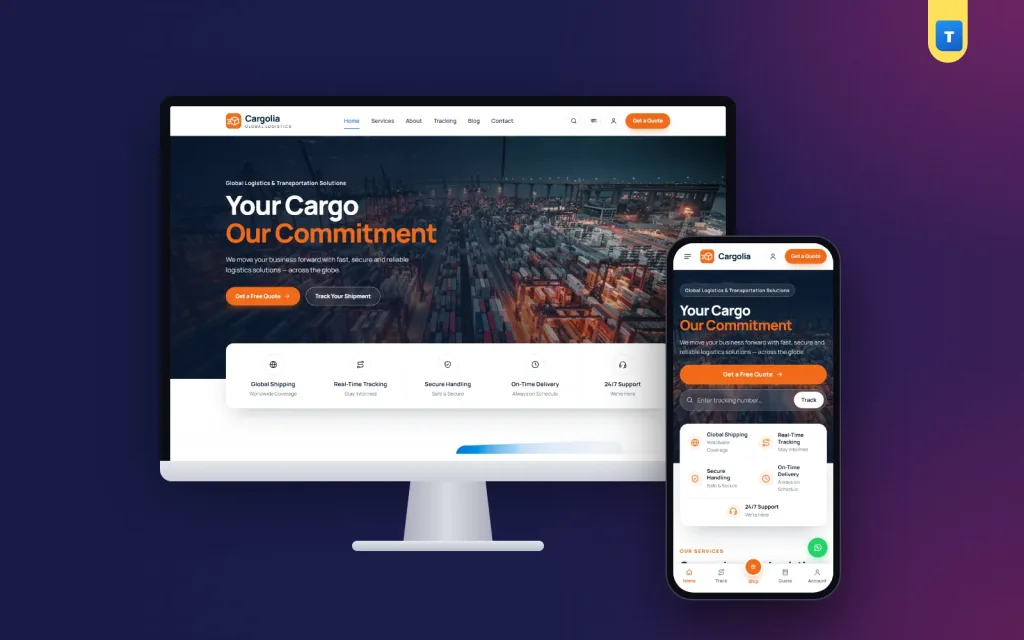
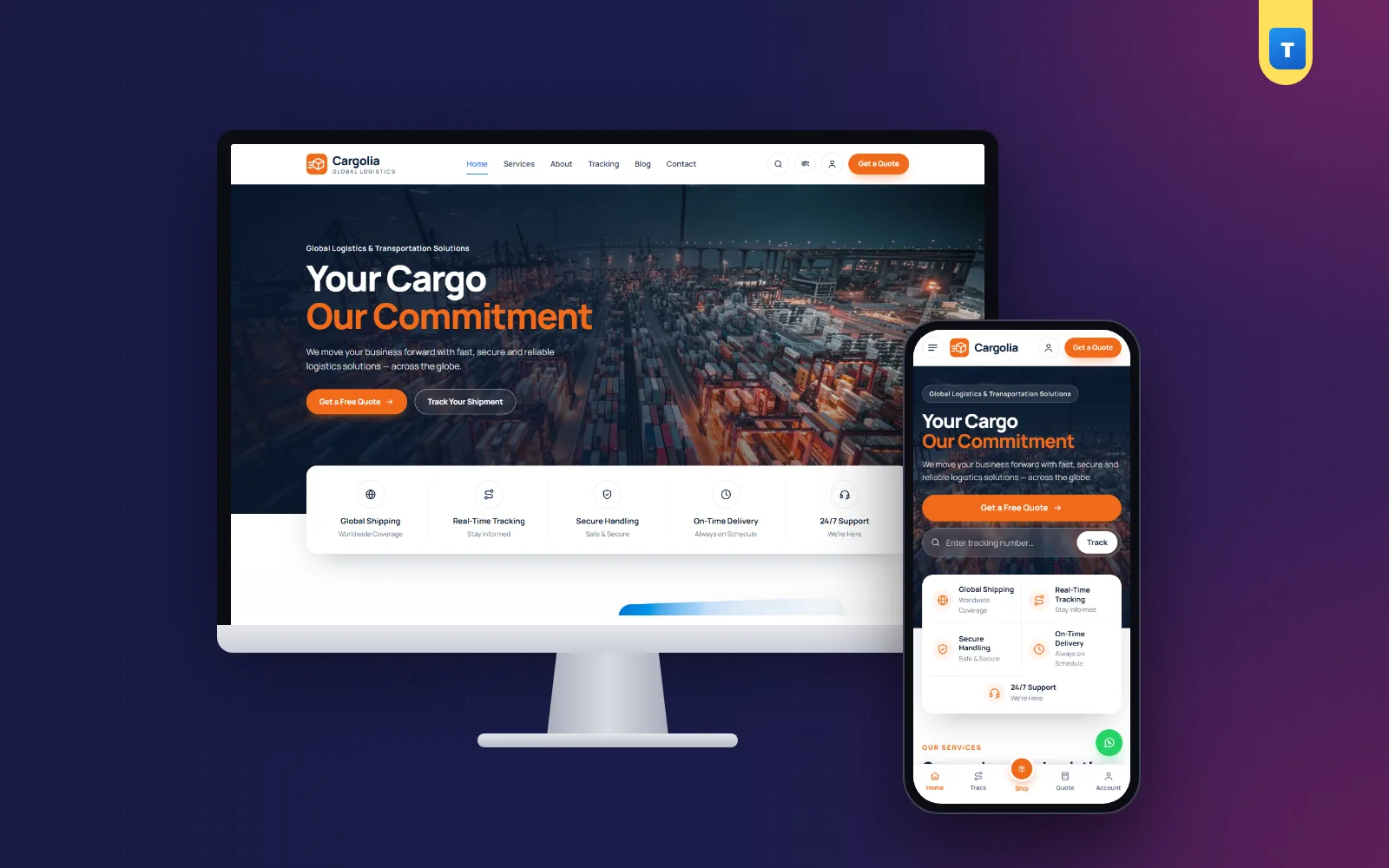
Building all of this takes a team months. Cargolia, a courier management system in Laravel, already includes these parts: an instant price calculator, online booking with pickup slots, public tracking of up to ten numbers with a four-step bar, proof of delivery, a dispatch board, a driver panel, COD payouts, rate cards, zones, SMS at every status and an API for online shops.
Its customer website works in English and বাংলা, and it installs on cPanel from the browser. You can follow a parcel from booking to delivery on the Cargolia live demo.
Common tracking problems and fixes
Once you know what is shipment tracking meant to do, its common failures are easy to spot. Here are the three that cause most complaints.
The page stays on "picked up" for days
Usually hub staff are not scanning arrivals. Make the hub scan a required step before a parcel can move on.
Delivered, but the buyer says no
Require the receiver's name and a photo at delivery. Disputes drop sharply once riders know proof is needed.
Too many "where is my parcel" calls
Send an SMS at each key status, especially out for delivery, with the rider's number. Most calls come from people who simply did not know the parcel was close.
Fixing these three problems is often the fastest way for a parcel delivery service in Bangladesh to look more professional, without hiring more staff.
Frequently asked questions
What is shipment tracking in courier service?
It is the record of a parcel's statuses, places and times from booking to delivery, shown to the sender and receiver through a tracking number.
What is shipment tracking used for besides finding a parcel?
Proving delivery, following cash on delivery, spotting late parcels, finding problem areas and measuring a courier's on-time rate over time.
Is shipment tracking the same as GPS tracking?
No. Shipment tracking records steps such as pickup, hub and delivery. GPS shows the live position of a vehicle. Many couriers use GPS for their own fleet and step tracking for customers.
Do I need an account to track a parcel?
Usually not. Most couriers let anyone with the tracking number see the status. An account helps regular senders, who can then see all their parcels, payments and COD in one list.
Why does my tracking not update?
Often the parcel is moving between hubs, or staff have not scanned it yet. If it stays the same for more than two days, contact the courier.
How long does delivery take inside Bangladesh?
Often one to two days inside Dhaka and two to five days to other districts, depending on the courier and the area. Remote upazilas, hill districts and festival seasons can add a day or two, so check the estimated date shown when you book.