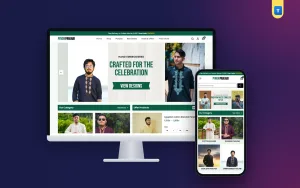
The right sherwani website design ideas turn a Facebook page full of panjabi photos into a shop where buyers can pick a size and order in two minutes.
Men's ethnic wear is not like other clothing. Sales jump before Eid and during the wedding season, buyers care about fabric and embroidery, and the wrong size means a return. This guide shares practical ideas, checklists and common mistakes for panjabi and sherwani shops in Bangladesh.
You do not need every idea on day one. Pick the ones that fit your shop, try them for one season, and keep what brings orders.
Why sherwani website design ideas need their own approach
A panjabi shop has three problems that a general clothing shop meets less often. Sales come in short, busy waves. Fit matters more than colour. And buyers want to see the detail of the work, not only the full garment.
- Busy waves mean your homepage must change quickly for Eid, weddings and winter.
- Fit means sizes, a size chart and clear measuring help must sit on every product.
- Detail means close-up photos of collars, buttons and embroidery.
Keep these three points in mind as you read the ideas below. Every choice on the site should help with at least one of them.
Start with the buyer, not the banner
Ask who buys from you. A young man buying a cotton panjabi for Jumu'ah wants a quick, cheap order. A groom's family buying five matching sherwanis wants to compare, ask questions and maybe visit the shop. A father buying for two sons wants kids' sizes next to adult sizes.
Write these buyers down. Then look at your homepage and ask whether each of them can find their item in three taps. If not, the design needs work before the photos do.
Homepage layout that sells panjabi
A good homepage for men's ethnic wear has a clear order. Here is one that works well:
- A slider with one or two strong collection photos and one button each.
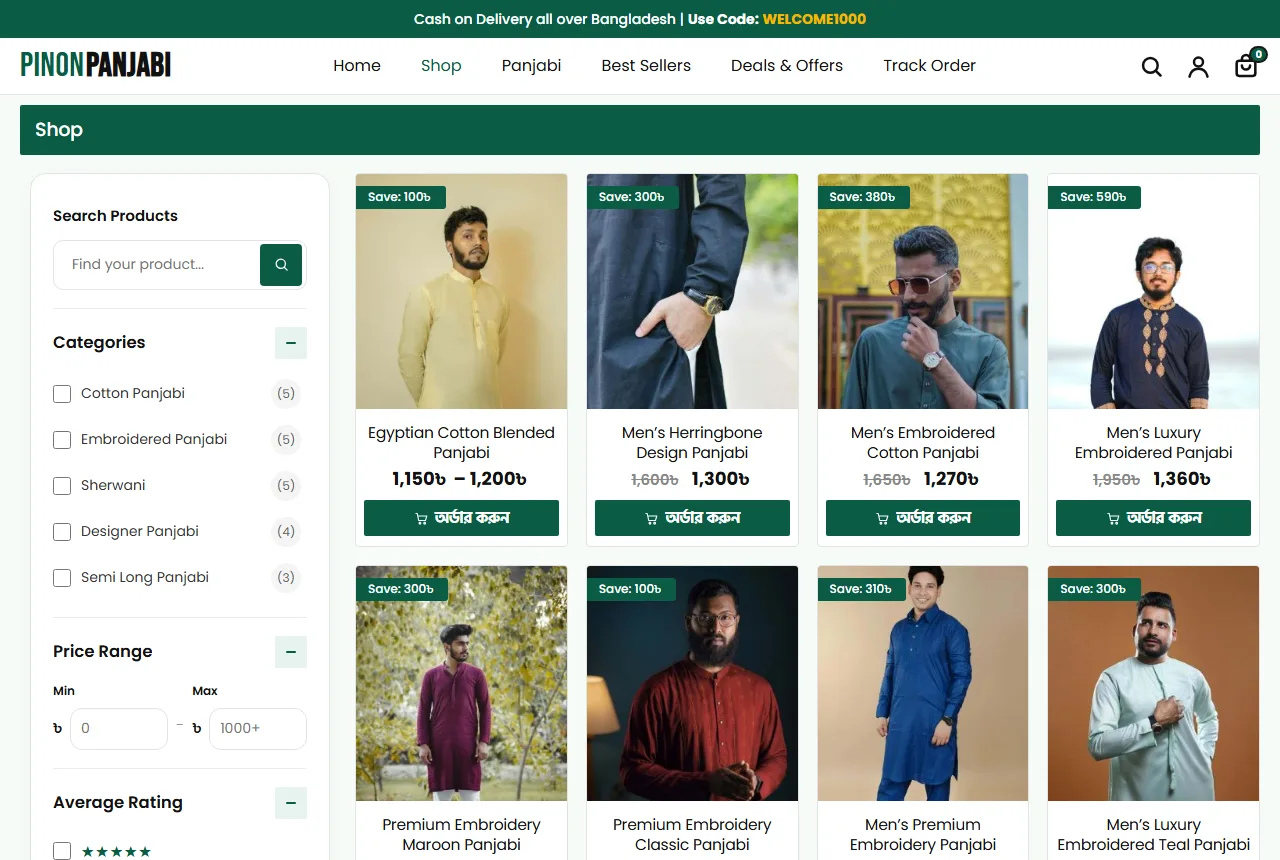
- Categories such as Cotton Panjabi, Designer Panjabi, Semi Long, Embroidered and Sherwani.
- An offer block with a countdown, used only when the offer is real.
- Featured products, then the latest arrivals in a grid.
- Shop by occasion: Eid, Wedding, Jumu'ah and Everyday.
- Best sellers, a short FAQ and a help strip with phone and WhatsApp.
Of all the sherwani website design ideas here, this order is the easiest to copy. It lets a buyer start from a category, an occasion or an offer. Each path ends at a product page with sizes.
Shop by occasion, not only by category
Most panjabi buyers think in occasions. "I need something for Eid" is more common than "I need a semi long panjabi". Photo tiles for Eid, Wedding, Jumu'ah and Everyday give these buyers a door into the shop.
Link each tile to a product tag or category. A cotton panjabi can sit in both Everyday and Jumu'ah. A heavy embroidered piece fits Wedding and Eid. Review the tags every season so each tile shows fresh items.
Sizes and size charts done right
Fit is the biggest cause of returns in men's ethnic wear. The best sherwani website design ideas put size help right next to the size buttons, not at the bottom of the page.
- Show sizes such as M, L, XL and XXL as buttons, not a dropdown.
- Let each size carry its own stock, so buyers see what is left.
- If XXL uses more fabric, charge a little more, such as ৳50, and show it clearly.
- Add a size chart pop-up with chest, length and sleeve in inches.
- Add one line of measuring advice: "Measure a panjabi that fits you well, flat on a table."
A small WhatsApp help card under the chart catches the buyers who are still unsure. One quick answer often saves a return.
Photos that show the craft
Buyers pay more for work they can see. Shoot each piece in daylight, on a hanger or a model, against the same plain background. Then add close-ups:
- the collar and the button line;
- the embroidery or print, at full size;
- the fabric texture, so cotton looks like cotton;
- the length, shown on a model of normal height.
Use square photos so they fit cards and galleries without cropping. Keep the colour true. A cream panjabi that arrives looking yellow is a return and a bad review.
Product page checklist: sherwani website design ideas that sell
The product page is where the sale happens. Check that yours has each of these:
- A gallery with zoom and thumbnails.
- Title, stars and price, with the saving shown when on sale.
- Size buttons, the size chart and a stock badge.
- Buy Now for fast buyers and Add to Cart for those still shopping.
- A WhatsApp button that opens a chat with the product name filled in.
- A return box that says plainly what you accept.
- Tabs for description, fabric details and reviews.
- Related products from the same collection.
Write the description for a person. Mention the fabric, the fit, the occasion and how to wash it. Two short paragraphs are enough.
Keep the price honest and visible. If a piece is on sale, show the old price, the new price and the saving in taka, such as "You save ৳400". Buyers in Bangladesh compare prices across many Facebook pages, so a clear number builds trust faster than "inbox for price".
Colours and style for men's ethnic wear
Panjabi and sherwani pages look best when they are calm and light. Many shops start from a punjabi dress website design template and only change the colours. Let the clothes bring the colour. A single deep accent such as emerald, maroon or navy works for buttons and labels. Gold can appear in small touches, but too much gold looks cheap on a phone screen.
Use one clear font for headings and one for body text. A condensed heading font feels festive in a slider. Soft patterns, such as a light curtain stripe behind the hero, suggest a wedding stage without hiding the product.
A good punjabi dress website design template gives you these choices in settings, so you can change the accent colour for Eid and back again later.
Planning for Eid and wedding season
Most shops make a big share of their yearly sales in a few weeks. Plan the site for those weeks:
- Add the new range as drafts a month early.
- Prepare a slider photo and an offer block for launch day.
- Set a clear last order date for delivery before Eid.
- Show that date in the top bar, the cart and the checkout.
- Have extra stock of the popular sizes, usually L and XL.
Seasonal sherwani website design ideas only work if you also clean up afterwards. After Eid, switch off the countdown and move the slider to everyday or winter wear. A homepage that still says "Eid offer" two weeks later looks abandoned.
Checkout and payment for Bangladesh
A long foreign checkout loses orders. Ask only for what your delivery team needs: name, mobile number, district and address. Cash on delivery should be on from day one. Add bKash, Nagad or card later through a payment plugin when buyers ask for it.
Show delivery charges early. A common setup is ৳80 inside Bangladesh with free delivery over a certain amount, such as ৳5,000. Dhaka buyers often expect delivery in one or two days, so say clearly what you can do.
Asking buyers to sign in with a mobile number or email before ordering cuts fake orders. It also saves their address for the next Eid.
Phones first
Most panjabi orders are placed on a phone, often late at night. Test every page on a cheap phone over mobile data. Keep the theme light, with few scripts and no heavy page builder. Put the menu in a side drawer and give search its own panel. Show two products per row with large size buttons that a thumb can hit.
Many sherwani website design ideas are really about removing things. Every extra pop-up or animation is one more reason for a buyer on a slow connection to give up.
Common mistakes to avoid
- Only one photo per product, with no close-up of the work.
- Sizes hidden in the description instead of on buttons.
- No size chart, so every buyer asks on WhatsApp.
- Prices that say "inbox" instead of a real number.
- An Eid countdown still running after Eid.
- Hidden delivery charges that appear only at the last step.
- Copying product text from another shop instead of writing your own.
Google's guide to helpful content is a useful reminder here: write for the buyer first, not for search engines.
Content that brings buyers back
Content is one of the cheapest sherwani website design ideas to try. A small blog helps buyers and your shop. Write short guides that answer real questions: how to choose a panjabi size, which colours suit Eid this year, how to wash an embroidered panjabi. Link each guide to the matching products.
Add a two-column FAQ on the homepage with the questions you hear most: delivery time, return rules, size help and payment. Each answer you write there is one less call during the busy weeks.
Collect reviews after delivery. A photo from a happy groom in your sherwani convinces the next family better than any studio shot.
Trust signals buyers look for
A buyer who has never met you is sending money, or at least waiting at home for a parcel, on trust. Small signals help a lot.
- A real shop address or showroom photo on the About page.
- A phone number and WhatsApp that someone answers.
- A plain return rule, such as exchange within seven days if the size is wrong.
- Reviews with names and cities, not only stars.
- A Track Order page, so buyers can check without calling.
Put the return rule on every product page, in a small box near the price. Buyers worried about size will read it before they decide.
Handling exchanges calmly
Some size exchanges will happen. Make them easy. Ask the buyer to keep the tags on, send the rider to swap the piece, and charge only the delivery fee. Note which products get the most exchanges and check their size chart. Often one wrong number in the chart causes most of the trouble.
Selling sets and family orders
Weddings and Eid bring family orders: a groom with brothers, or a father with sons. Group matching pieces under one tag, such as "Family Eid Set", and show them together. Offer a small discount on three or more pieces with a WooCommerce coupon. Families like to order once and get everything in one parcel.
A launch checklist
- Every product has real photos, close-ups, sizes, a price and stock.
- The size chart opens from every product page.
- Categories and occasion tiles sit near the top of the homepage.
- Delivery charges and the last order date are visible.
- Cash on delivery works and the checkout is short.
- Track Order, Return, Shipping and Contact pages exist.
- You placed three test orders from a phone.
Run through this list again before every Eid, and add any new sherwani website design ideas you tested that season. It takes half an hour and catches most problems before buyers do.
Putting these ideas into a shop with Pinon
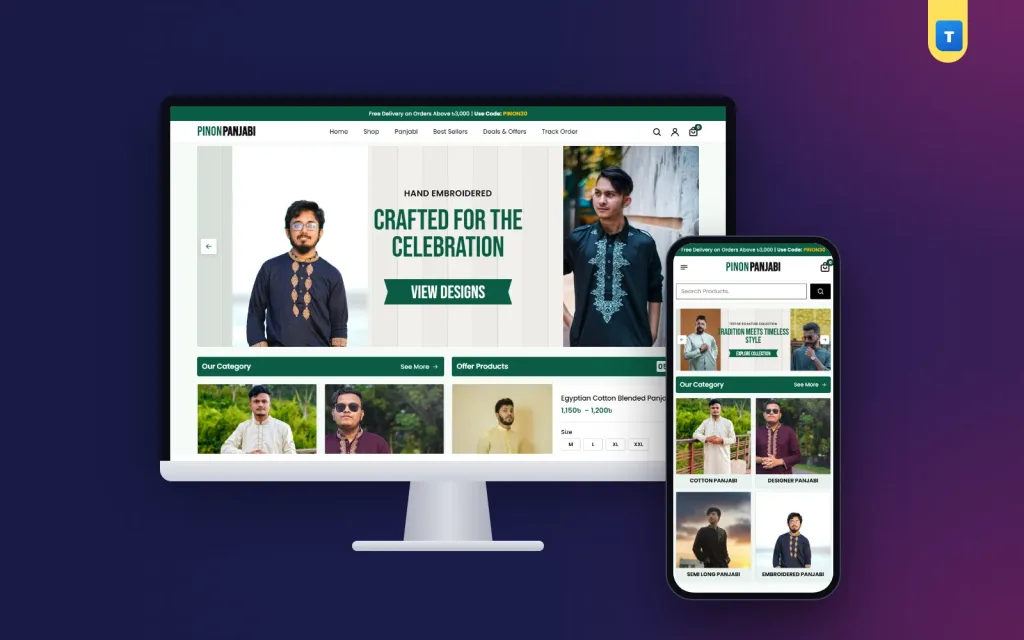
The Pinon panjabi and sherwani shop theme for WordPress already follows most of this guide. It has a hero slider on a light curtain-stripe background, categories next to an offer block with a countdown, featured and latest products, shop by occasion tiles, best sellers and a two-column FAQ with a WhatsApp help strip.
Every product has M, L, XL and XXL size buttons, a Size Chart pop-up, a stock badge, Buy Now and a WhatsApp button. An optional size guide block shows chest, length and sleeve in inches. It runs on the free WooCommerce plugin, and every homepage block has an on/off switch in Theme Options.
If you want a punjabi dress website design template that is already a working shop, import the demo, add your collection and you can take orders the same week.
Frequently asked questions
Which sherwani website design ideas matter most?
Clear categories, occasion tiles, size buttons with a size chart, close-up photos, a short checkout and a WhatsApp help button.
How many products should a panjabi shop start with?
Twenty to forty pieces is enough. Add more once orders and delivery run smoothly.
Do I need online payment at the start?
No. Cash on delivery is enough at first. Add bKash, Nagad or card later.
How much do these sherwani website design ideas cost to set up?
WordPress and WooCommerce are free. Your main costs are hosting, a shop theme and good photos.
How do I cut size returns?
Put a size chart beside the size buttons and offer quick help on WhatsApp before the order.