Good spices website design has to do something a photo on Facebook cannot: prove that your masala is clean, fresh and worth the price before the buyer has smelled it. Turmeric that looks dull, chili with no weight on the label or honey with no source all make people scroll away.
This guide covers photos, pack sizes, product pages, checkout and daily habits that help a spice shop in Bangladesh get steady orders.
Every idea about spices website design here is simple and cheap. Pick the ones that fit your shop, try them for a few weeks, and keep what works.
Why spices website design is about trust first
People buy spices every week, but they rarely buy them online from a shop they do not know. They worry about mixed powder, old stock, colour added to chili and short weight. Your site has to answer those worries without a salesperson standing beside the buyer.
- Purity: where the spice comes from, how it was dried and how it was ground.
- Freshness: when it was packed and how long it keeps.
- Honest weight: 100 g, 250 g, 500 g or 1 kg, written clearly.
- Fair price: shown in taka, with no surprise charges at the end.
When every page answers these four questions in the same way, buyers learn to trust your shop quickly.
Start with categories that match the kitchen
Spice shops often sell more than spices. Dates, gur, honey, nuts, oil and ghee sit well beside masala because the same buyer cooks with them. Group your items into five to eight main categories, such as Spices & Masala, Dates & Gur, Honey, Nuts & Seeds, Oil & Ghee, and Tea & Lentils.
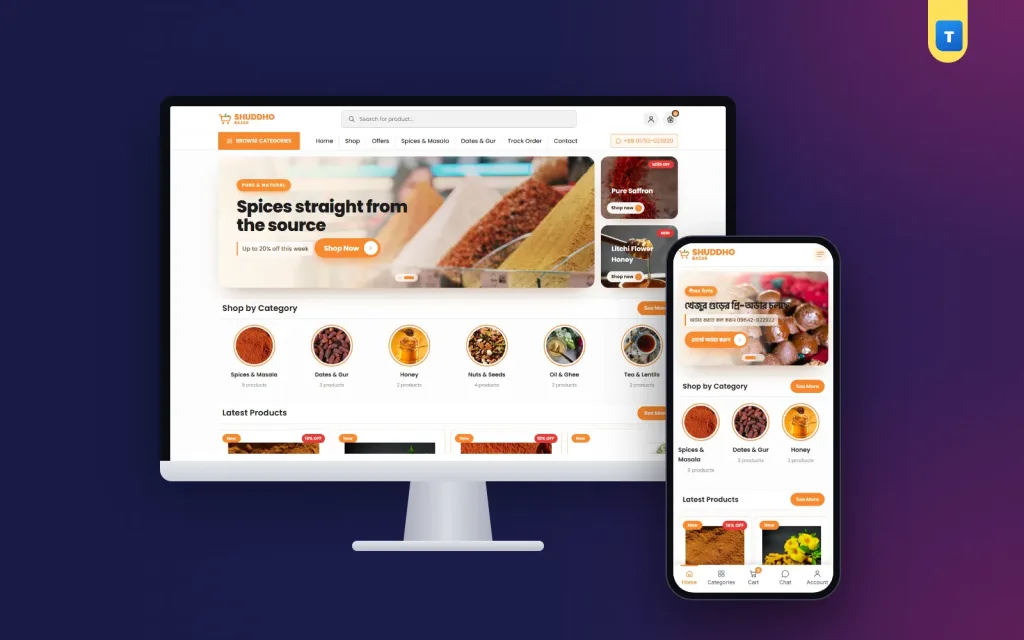
Show these as round or square photos near the top of the homepage, with the number of products under each name. On a phone, one row that scrolls sideways keeps the page short. Use one photo style for every category so the row looks calm.
Naming products buyers recognise
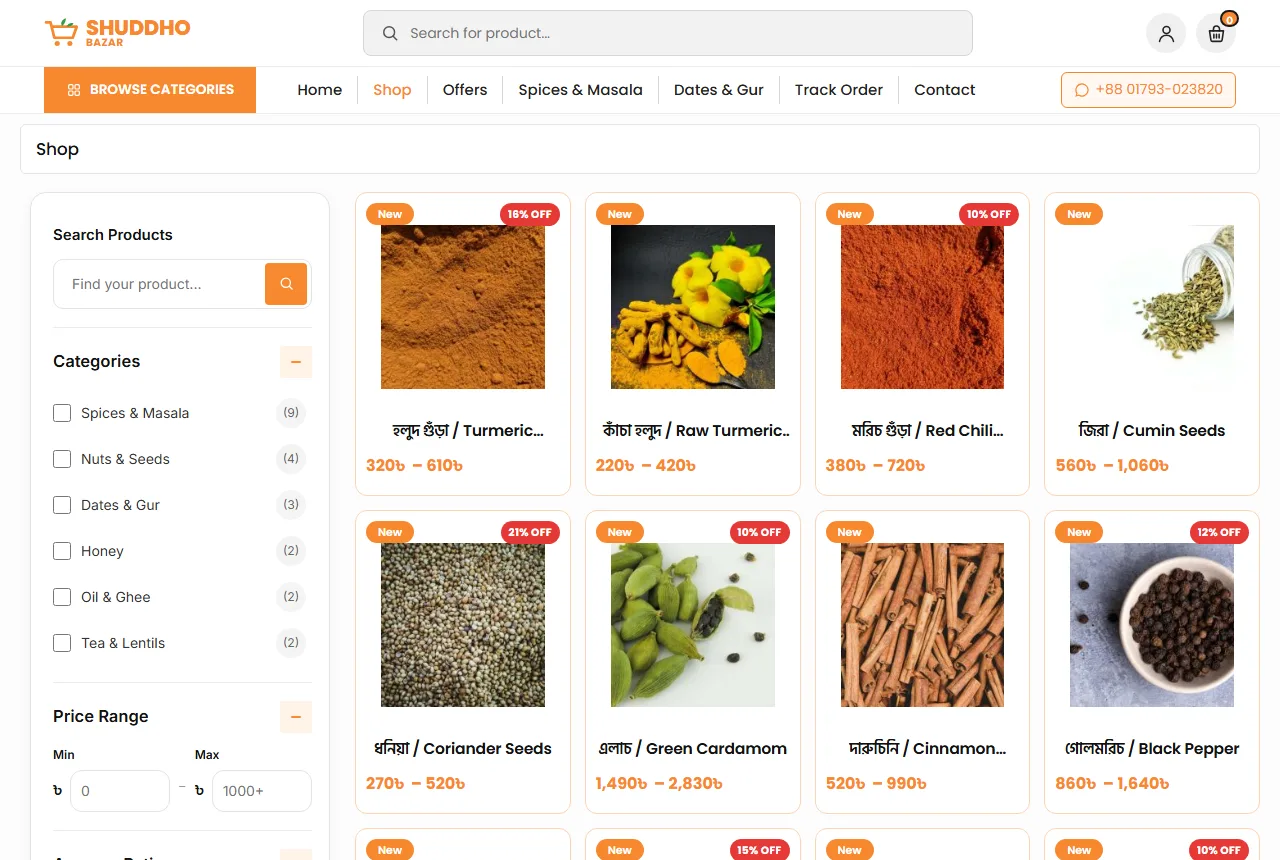
Use both Bangla and English names where you can, such as "Holud Gura / Turmeric Powder". Many buyers search in Banglish, so add words like "jira", "elach" or "kalojira" to titles or tags. Keep product links in simple English words, which are easier to share and read.
Put the weight in the title too. "Red Chili Powder 250 g" tells the buyer more than "Premium Chili". Good masala website design avoids clever names that hide what the pack is.
Photos that show purity
A spice is judged by colour and texture. Your photos have to show both. Shoot in daylight near a window, on one plain background, and keep the same angle for every product.
- One photo of the sealed pack with the label readable.
- One close-up of the powder or whole seeds in a small bowl.
- One photo of the spice in use, such as a curry or a cup of tea.
Never boost the colour of turmeric or chili in an editing app. When the parcel arrives and the powder looks different, the buyer feels cheated, and that review stays on your page for years. Honest photos are the cheapest trust tool in spices website design.
Honey, ghee and oil
Liquids are harder to shoot. Put honey or ghee in a clear jar against light so the colour shows. For mustard oil, show the bottle and a small bowl beside it. A photo of a spoon pulling thick honey says more than a paragraph about purity.
Pack sizes, prices and offers
Most spice buyers want to try a small pack first. Offer at least two sizes for every spice, such as 250 g and 500 g, and show them as buttons on the product page. The price should change as soon as the buyer taps a size.
Show prices in taka with the ৳ sign and no decimals, such as ৳380. When there is a discount, show the old price crossed out and a small percentage tag on the card. Keep the bigger pack slightly cheaper per gram, so regular buyers move up.
Do not put everything on sale. When every pack is discounted, nothing feels special. Keep real offers for a weekly band on the homepage, a season banner, or a welcome coupon for a first order.
Bundles that make sense
Bundles work well for spices. A "garam masala set" with cardamom, cinnamon, cloves and bay leaves before Eid, or an "iftar box" with dates, nuts and honey before Ramadan, saves the buyer time and raises your order value.
A homepage order that works
Buyers scroll a spice shop homepage like a bazaar lane. Each block should answer one question. Here is an order many shops use:
- Hero slider with one real offer, such as winter gur pre-orders.
- Category row so people can jump to what they came for.
- Latest products so regular buyers see new arrivals.
- Offer band with a short deal and a clear button.
- Best sellers as social proof.
- Promises such as clean packs, easy returns and cash on delivery.
- Reviews from real buyers, with names.
- FAQ about purity, delivery and storage.
- Blog posts with cooking and buying tips.
Two small banners beside the slider can push one premium item, such as saffron, and one new item, such as a new honey. Keep them to two, so the products are not pushed far down on a phone.
Product pages that answer questions
A buyer on a spice page wants five answers: what is it, where is it from, how much does it weigh, how much does it cost, and what if it is not good. Put all of them near the top.
- A gallery with the pack, the close-up and the in-use photo.
- The price with an In Stock pill beside it.
- A short text with the source and the packing month.
- Size buttons, quantity, Add to Cart and Buy Now.
- Small promise boxes for delivery, cash on delivery and returns.
- The payment logos you accept.
Below that, a careful spices website design uses tabs for the full description, the sizes and the reviews. In the description, add storage tips, such as keeping powder in an airtight jar away from the stove, and a simple use idea for each spice.
Many buyers in Bangladesh still like to ask before ordering. A WhatsApp button in the phone menu or on the help strip turns that habit into orders.
Spices website design for phones
Most orders in Bangladesh come from a phone, often on mobile data. Design the phone view first, then the desktop.
- A menu button, the logo and the cart in the top bar.
- A bottom tab bar with Home, Categories, Cart, Chat and Account.
- Product cards two per row, with the price easy to read.
- Size buttons and Add to Cart big enough for a thumb.
Test the shop on a cheap Android phone over 4G. If the homepage feels slow there, it is slow for most of your buyers. A light spices website design keeps photos small and avoids heavy page builders.
Keep the shop light
Compress photos before upload; most product photos are fine at 800 to 1200 pixels wide. Use a shop theme with small files. Keep plugins few, and remove the ones you do not use. Check your shop speed once a month, especially after adding a new plugin.
Checkout, delivery and payment
A long checkout loses orders. Ask only what the delivery needs: name, mobile number, district, area and a short address line.
Show delivery charges early. Many shops charge about ৳80 inside Dhaka and ৳120 outside Dhaka. Say this in the FAQ, on the product page and in the cart, so nobody feels tricked at the last step. One to two days inside Dhaka and two to four days outside is a common promise.
Packing spices, honey and oil
Seal powders in food-grade pouches and put them in a second bag, so the smell does not reach other items. Wrap glass jars of honey and ghee in paper or bubble wrap. Tape oil bottle caps. Write the order number on the parcel so the courier and your staff can find it fast.
Cash on delivery is still the main payment method. Add bKash, Nagad and card payments with a payment plugin as the shop grows, and show the logos of what you accept.
Accounts, reviews and repeat buyers
Spice shops live on repeat orders. A family that likes your turmeric will buy it again every month. Let buyers create an account with a mobile number or an email, so the address is saved and the next order takes a minute.
If fake cash on delivery orders become a problem, ask everyone to sign in before checkout. A wishlist and a Track Order page give buyers a reason to come back and sign in.
Ask happy buyers for a review after delivery, ideally with a photo of the dish they cooked. Reply to every review, including the unhappy ones, with a calm answer. New buyers read those replies, and they say more about your shop than any banner in your spices website design.
Common mistakes to avoid
- Photos with boosted colours that do not match the real powder.
- Titles with no weight.
- No source or packing date anywhere on the page.
- Delivery charges shown only at the last step.
- Sale timers that never end.
- Pop-ups on phones that hide the cart button.
- Product text copied from a supplier, word for word.
Google's guide to helpful content is a good reminder here. Write product text for buyers, in your own words, and answer the questions they really ask, such as how to spot real saffron.
Content, trust pages and the calendar
Buyers check help pages before their first order. Write these before launch:
- About: who runs the shop and where your spices come from.
- Shipping: areas, charges and delivery days.
- Return: what you take back, such as unopened packs within 7 days.
- FAQs: purity, storage, delivery and payment.
- Contact: phone, WhatsApp, address and a form.
- Track Order, Privacy and Terms.
Spice sales follow the calendar. Push dates, nuts and honey before Ramadan. Move whole garam masala, saffron and ghee up before Eid. Open khejur gur pre-orders when the cold starts. A seasonal spices website design tells regular buyers the shop is alive.
A small blog is part of spices website design too. Short posts, such as five uses of turmeric or how to store ghee, bring visitors from search and answer questions before they reach you.
A launch checklist
- Every product has a clear photo, a title with the weight, a price and stock.
- Every spice has at least two pack sizes.
- The source and packing month are in the short text.
- Search shows results as you type.
- Delivery charges are visible before checkout.
- Help pages are written and linked in the footer.
- You placed three test orders from a phone.
Track a few numbers every week after launch: visitors, orders, average order value and returning buyers. Change one thing at a time and watch whether the numbers move. Good spices website design is never finished; it gets a little better each month.
Building your spice shop with Shuddho
Good masala website design is easier when the theme already follows these rules. The Shuddho spice and masala shop theme for WordPress and WooCommerce has a hero slider with two side banners, round category photos with product counts, latest products, an offer band, best sellers, a promise strip, reviews, a FAQ with a WhatsApp strip and a blog block.
Its product page has weight buttons, an In Stock pill, a payment logo strip, Buy Now and promise boxes. Buyers get live search, shop filters, mobile number or email sign-in, a wishlist and a Track Order page. Every homepage block can be switched on or off. Import the demo, add your spices, and you can take orders the same week.
Frequently asked questions
What photos does a spices website design need?
A clear pack photo, a close-up of the powder or seeds, and one photo of the spice in use, all in daylight.
How many pack sizes should I offer?
At least two, such as 250 g and 500 g. A small pack lets new buyers try you first.
Should a spices website design show the source of each spice?
Yes. A short line about where it was grown and when it was packed builds trust quickly.
Do I need online payment from day one?
No. Cash on delivery is enough at first. Add bKash, Nagad or cards later.
How many products should I start with?
Start with 20 to 40 items you always have in stock, then grow.